The short answer
Manage industrial vacuum filters by evidence, not by calendar: record a suction baseline, clean filters as the manual specifies, replace them when cleaning no longer restores suction or the media or seals are damaged, and log every change. Check hoses, cuffs and seals for air leaks, and stock parts by criticality, consumption and the supplier's confirmed replenishment time.
Key takeaways
- Filters are part of a vacuum's dust class or ATEX approval; replace them by part number, not by fit.
- Judge filters by suction readings and inspection against the manual, not by a fixed interval.
- Air leaks from hoses, cuffs and seals are the most common cause of lost suction after the filter.
- On ATEX machines, fit only listed antistatic filters and conductive accessories, then check grounding.
- Set reorder points from your own consumption log and the supplier's confirmed replenishment time.
An industrial vacuum rarely fails all at once. Suction fades as the filter loads, a split hose cuff leaks air, a hardened seal lets dust bypass the filter, and operators work harder for worse results. In many plants the first sign is a storekeeper being asked for a filter that is not on the shelf.
Industrial vacuum filters, hoses and wear parts decide whether a machine keeps the suction and filtration it was bought for. This maintenance guide explains how the filter stages work, how to judge when to clean or replace a filter without guessing at intervals, which parts wear first, and how to build a spare parts stock for sites in Jordan, Saudi Arabia and Iraq, where many parts come from European manufacturers.
How do industrial vacuum filters protect suction and filtration?
The filter system separates dust from the air stream before the air passes the motor and leaves the machine; when a filter is loaded, damaged or badly seated, the vacuum loses suction, filtration or both. Most industrial vacuums work in stages:
- Separation in the container: heavier particles drop out as the air slows on entering the container or a pre-separator.
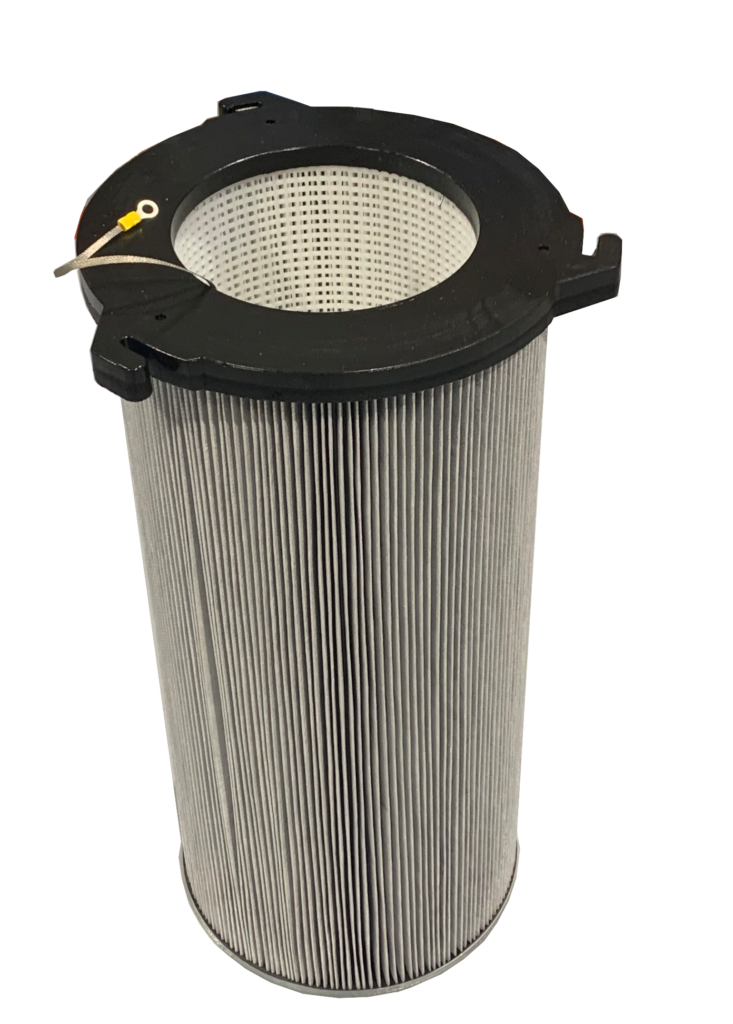
- Main filter: a star (pleated), cartridge, bag or pocket filter captures the bulk of the fine dust.
- Secondary or absolute filter: on machines that have one, a HEPA filter downstream captures the finest particles.
- Motor protection: depending on the design, a further filter or the layout of the air path keeps dust away from the motor.
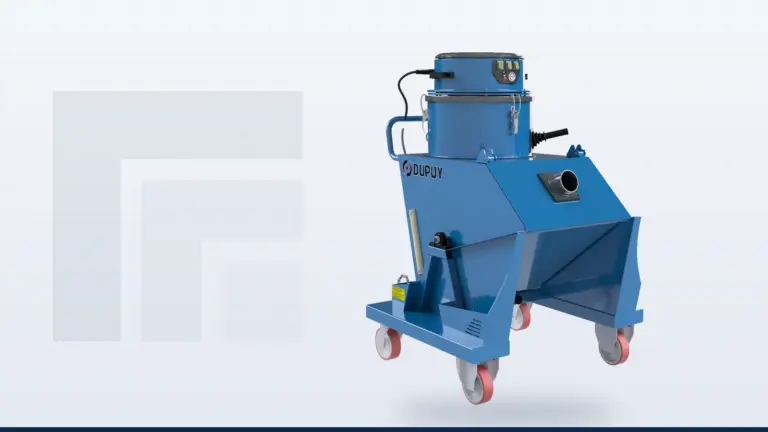
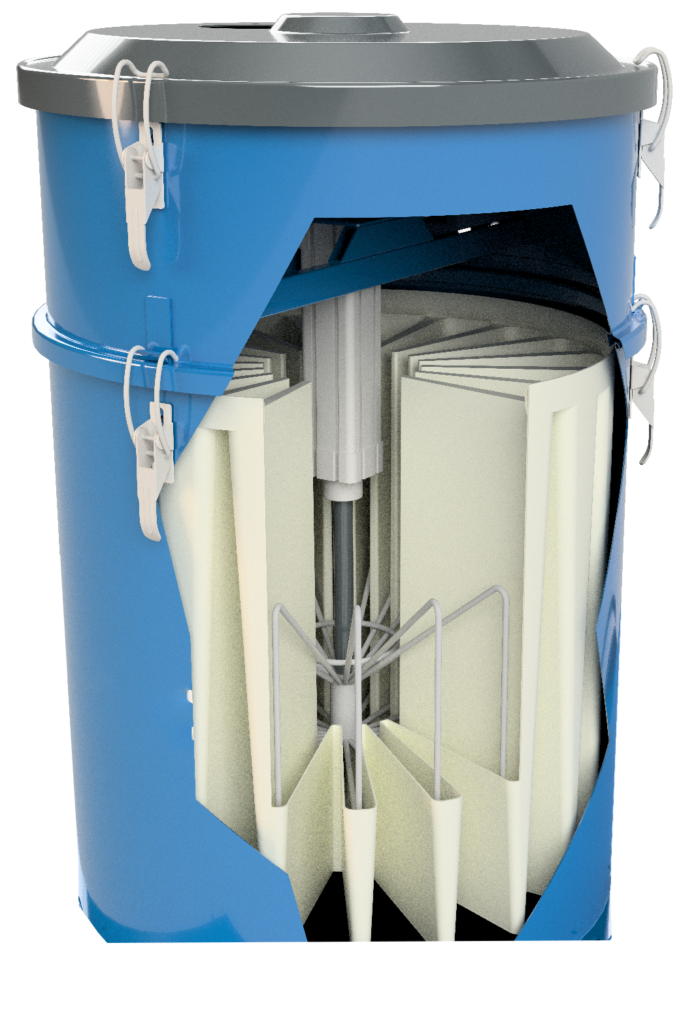
AFE’s description of the DUPUY range lists cartridge, bag and HEPA filters, and DUPUY states that its central vacuum systems can use pocket, cartridge and bag filters. Its DEDUST dust collectors combine a stilling chamber, where gravity drops out heavier particles, with “ultra-high-efficiency cartridge filters” and automatic filter cleaning by compressed air.
Which filter types and dust classes are you dealing with?
Start from the machine’s own documents: the nameplate, manual and spare parts list show which filter is fitted, which dust class the machine was approved for and whether it is an ATEX model. The filter is part of that approval, so a replacement has to match it.
For mobile vacuums, IEC/EN 60335-2-69 defines dust classes. According to Germany’s IFA, class L covers substances with an occupational exposure limit above 1 mg/m³ and allows filter penetration below 1%; class M covers limits of 0.1 mg/m³ or more, with penetration below 0.1%; class H covers carcinogenic, mutagenic or reprotoxic substances and limits below 0.1 mg/m³, with penetration below 0.005% for both the filter material and the ready-for-use filter element. In US regulation, OSHA defines a HEPA filter as “at least 99.97 percent efficient in removing mono-dispersed particles of 0.3 micrometers in diameter.”
| Filter type | Typical position | What to check | Watch out for |
|---|---|---|---|
| Star (pleated) filter | Main filter in many mobile vacuums | Pleats intact, no caked dust between pleats, clean seal seat | Cleaning methods that damage the media |
| Cartridge filter, including PTFE membrane types | Main filter in vacuums and dust collectors | Suction or pressure drop after cleaning, membrane damage, gasket condition | A cartridge of a different grade that fits the same housing |
| Bag or pocket filter | Large vacuums and central systems | Tears, seams, clamping and fit | Bags left in service with a damaged seam |
| HEPA or absolute filter | Secondary stage, where fitted | Seal integrity, physical damage, the manufacturer’s replacement criteria | Cleaning a filter the manual says to replace |
| Antistatic filter | ATEX models | Part number matches the model’s certified configuration | Substituting a standard filter |
| Disposal bag or liner | Container | Correct size and a sealable closure for hazardous dust | Emptying hazardous dust without containment |
How do you know when a filter needs cleaning or replacing?
Use evidence, not the calendar: suction or pressure-drop readings, visual inspection and the manufacturer’s criteria tell you when to clean a filter and when cleaning no longer restores it. Filter life depends on the dust, the running hours and the machine, so an interval that works on one site can be wrong on another.
Filter care cycle
- Check suction
- Clean the filter
- Inspect the seals
- Replace on criteria
- Record and reorder
- Set a baseline. With a new or freshly cleaned filter, note the reading on the machine’s vacuum gauge or clogging indicator, if it has one, or run a simple suction test at the hose end under the same conditions each time.
- Clean as the manual says. Use the shaker, reverse-pulse system or other method the manufacturer specifies, usually with the container emptied first.
- Re-check after cleaning. If the reading returns close to the baseline, the filter is still serviceable. If it stays well below after correct cleaning, the media is blinded and the filter is due for replacement.
- Inspect every time it is out. Look for tears, holes, damaged pleats, hardened or flattened gaskets, and dust on the clean side or around the motor, which signals bypass.
- Replace on the manufacturer’s criteria. Follow the manual for when a filter must be replaced rather than cleaned, especially HEPA and class H elements.
- Record and reorder. Log the date, hours, reading and action, and draw the replacement from stock so the reorder starts.
After a few months the log gives you the real consumption rate per machine and material, which is the number a stock plan needs. A filter that loads unusually fast is also a process signal: the machine may be collecting a material it was not selected for, such as the wet and oily residues covered in oil and chip vacuum selection.

DUPUY presents its new fan technology for the DEDUST PRO collectors with attention to maintenance; watch for how the filter and fan are reached, because easy access is what makes routine inspection happen.
Which hoses, wands and wear parts cause suction loss first?
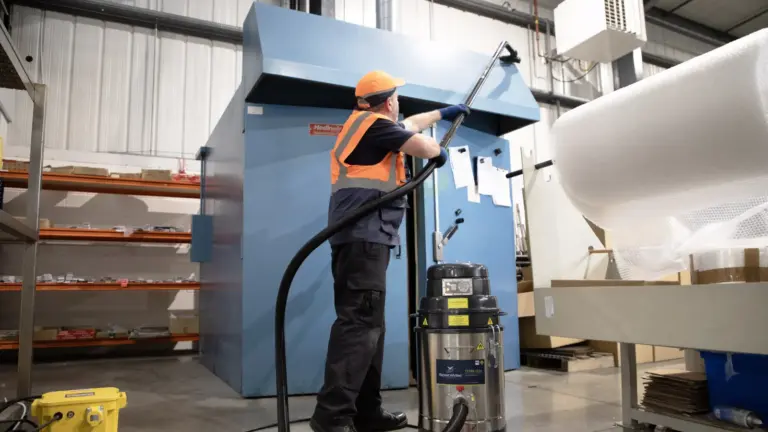
After the filter, air leaks are the most common cause of lost suction: every split hose, worn cuff or poor seal lets in air that should be coming through the nozzle. These parts are simple and inexpensive, which is exactly why they are so often missing from stock.
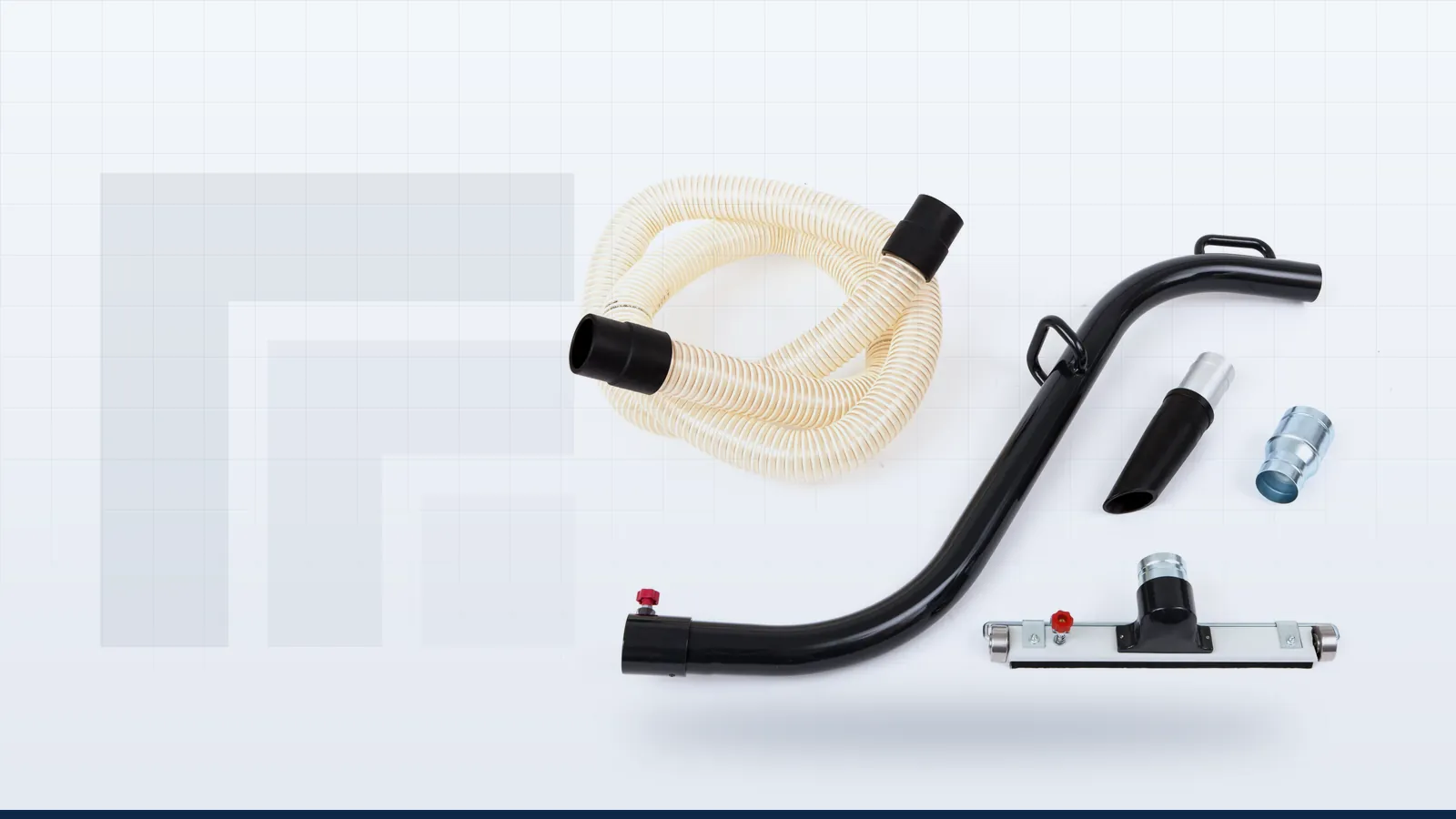
- Hoses: splits, kinks, crushed sections, worn cuffs and blockages; for combustible dust the replacement must also be conductive or static dissipative.
- Wands and nozzles: worn floor tools, cracked joints and bent wands that no longer seal.
- Container and lid seals: hardened, cracked or flattened gaskets that let air bypass the nozzle.
- Brushes and squeegee strips: worn edges that leave material behind.
- Motor wear parts: by-pass motors in many single-phase machines use carbon brushes that wear with running hours; brushless motors and side-channel blowers have different service needs, set out in their manuals.
- Wheels, castors and handles: damage here is a handling and safety issue, not a cosmetic one.

This DUPUY tutorial shows the carbon brushes being replaced on the by-pass motor of a single-phase vacuum; watch for the access steps and the parts involved, and follow your own model’s manual and electrical isolation rules before attempting the job.
AFE’s MRO and consumables offer covers these categories: it states that it supplies genuine OEM parts for all supported brands, consumables such as filters, hoses, brushes and accessories, and core components such as motors and drives.
What changes for ATEX and class H vacuums?
On ATEX and class H vacuums a replacement part is part of the safety configuration, so fit only parts that keep the machine within its certification or classification. A cheaper look-alike filter or hose can quietly turn a certified machine into an uncertified one.
DUPUY states that its ATEX models use “antistatic filters,” motors designed to prevent overheating and “accessories made of conductive materials” for ground discharge. OSHA’s combustible dust program, a US reference, sets conditions for portable vacuums that collect combustible dust in unclassified areas, including hoses that are conductive or static dissipative and conductive components, such as wands and attachments, that are bonded and grounded.
How should a store decide which spare parts to stock?
Stock by criticality and consumption, and set reorder points from the real replenishment time rather than a generic list. A practical method groups parts into three classes.
| Class | Examples | How to set the stock |
|---|---|---|
| Consumables | Main filters, HEPA elements, bags, liners, brushes | From the consumption log: reorder point equals usage during the replenishment time plus a safety margin |
| Wear parts | Hoses, cuffs, nozzles, seals, gaskets, carbon brushes, castors | From inspection findings and failure history; hold at least one set for each critical machine |
| Core components | Motors, blowers, drives, control boards | Per machine, weighing the cost of downtime against the cost of holding the part; agree availability with the supplier |
Build the list from the machine, not the catalogue:
- Record each machine’s model, serial number, voltage, dust class and any ATEX marking from the nameplate.
- Take part numbers from the manufacturer’s spare parts list for that model and serial range.
- Mark the critical machines: those that keep production, a shutdown or a safety-critical clean-up running.
- Ask the supplier for the replenishment time of each part to your site, in writing, and review it when supply routes change.
- Store filters and seals in their packaging, clean, dry and out of direct sun, as the manufacturer advises.
- Label shelves with the machine and part number so a near-identical filter is not fitted by mistake.
- Review quantities after every shutdown, when consumption peaks.
Replenishment time is the figure that matters most in the region, because it differs by part, origin and destination. A site that cannot afford to wait holds more stock or agrees a stocking arrangement with its supplier. AFE describes its Aqaba regional gateway as covering inventory management, distribution and after-sales support, so ask what it can hold for your machines.
What should you send AFE when asking about spare parts?
Send the machine data and your consumption history, and AFE can propose the parts and quantities to hold. AFE states that it supplies genuine OEM parts and consumables and offers service contracts with preventative maintenance plans. A useful enquiry includes:
- model, serial number and a photograph of each nameplate;
- the materials each machine collects and its running hours;
- your filter and parts log, even if incomplete;
- which machines are critical and which are ATEX or class H;
- parts you have struggled to source.
For fixed networks, filter and separator maintenance belongs in the design brief described in what a central vacuum system specification needs. Machines needed only for short periods may be better rented with maintenance included, as explained in industrial vacuum rental, and a used machine’s filters and seals should be checked before purchase, as set out in the used equipment inspection checklist. Equipment ranges are under industrial vacuum systems, and more guides are under industrial insights.
Al Faisaliah Enterprises · Aqaba
Keep the right parts on the shelf
Send AFE your machine models, serial numbers and filter log. AFE uses them to propose the filters, hoses and wear parts worth holding for your fleet.
Frequently asked questions
Can we wash an industrial vacuum filter with water?
Only if the manufacturer states that the specific filter is washable, and only by the method it gives. Washing a filter that is not designed for it can damage the media or the seal and reduce filtration. A washable filter must be completely dry before refitting. For HEPA and class H elements, follow the manual strictly, which in many cases means replacing rather than cleaning.
Is a non-original filter acceptable if it fits?
A filter that fits the housing is not necessarily equivalent. On class M and H machines the filter is part of the dust class, and on ATEX models it is part of the certified configuration, often as an antistatic type. Ask for documentation showing the replacement meets the same specification. AFE states that it supplies genuine OEM parts for the brands it supports.
How often should industrial vacuum filters be replaced?
There is no single interval. Filter life depends on the dust, its quantity, the running hours and the machine. Start from the manufacturer's manual, record suction readings before and after each cleaning, and replace the filter when cleaning no longer brings suction back close to the baseline or when inspection finds damage. Your log will soon show the real rate for each machine.
Why does a vacuum lose suction even with a new filter?
Usually because air is leaking in somewhere else or the path is blocked. Check for a split hose or worn cuff, a hardened lid or container seal, a filter that is not seated correctly, a full container, or a blockage in the hose or wand. If all of those are in order, have the motor or blower checked, since worn motor parts also reduce performance.
Should we keep a spare motor on the shelf?
Decide machine by machine. Compare the cost of the machine being out of service while a motor is sourced with the cost of holding one in stock, using the supplier's confirmed replenishment time to your site. For a single critical machine a spare may be justified; for a fleet of identical models, one shared spare can cover several machines.
Sources and references
- Testing of dust filters (dust classes L, M, H) · IFA / DGUV
- 29 CFR 1910.1053 Respirable crystalline silica · U.S. Occupational Safety and Health Administration
- Combustible Dust National Emphasis Program, CPL 03-00-008 · U.S. Occupational Safety and Health Administration
- ATEX certified industrial vacuum cleaners · DUPUY
- Centralized vacuum systems · DUPUY
- Industrial dust collectors for fine suspended dusts · DUPUY
This article is general technical guidance. Equipment suitability, ATEX conformity and hygiene performance must be confirmed for each site and application.
Written for plant, maintenance, HSE and quality teams in Jordan, Saudi Arabia and Iraq.