The short answer
Rent industrial cleaning equipment when the need is temporary, occasional or still uncertain, such as a shutdown, a trial or a peak; buy when the duty is regular, proven and long term. Compare total costs over the expected period, and make the rental agreement name the exact unit, period, maintenance scope, consumables, return condition and liability.
Key takeaways
- Rent for shutdowns, trials and peaks; buy for regular, proven duty; own the base load and rent for the peaks.
- Compare total cost over the expected period and find the break-even days of use per year.
- Make the agreement name the exact unit, period, maintenance scope, consumables, return condition and liability.
- Specify a rental unit like a purchase: material, filter class, zone, quantities, utilities and access.
- Never assume a rented unit is ATEX; check its marking and certificate against your zone drawing.
Plants in Jordan, Saudi Arabia and Iraq often need heavy cleaning capacity for only a few weeks a year: a kiln or mill shutdown, a clean-up after a conveyor failure, or a trial of a new method before anyone signs a capital request. Buying a machine for that work can tie up budget in equipment that then sits in a store for most of the year.
Industrial vacuum rental is the alternative: the plant pays for the equipment while it is needed and hands it back afterward. This decision guide explains when renting beats buying, how to compare the two on cost and risk, and what a rental agreement for industrial vacuums, vacuum loaders or steam generators should state before the unit arrives on site.
When does industrial vacuum rental make more sense than buying?
Rental usually makes more sense when the need is temporary, uncertain or occasional; buying makes more sense when the duty is regular, well defined and long term. Most needs sit in between, so test several factors.
| Factor | Points toward renting | Points toward buying |
|---|---|---|
| Frequency of use | Shutdowns, campaigns or one-off clean-ups | Daily or weekly housekeeping |
| Duration of the need | Days to months | Years of continuing duty |
| Certainty of the specification | Material, volumes or method still to be proven | Duty proven on site and model already known |
| Capital budget | No capex approved, or approval would arrive too late | Capex approved and the asset fits the maintenance plan |
| Maintenance capability | No in-house technicians or parts stock for this equipment | Trained technicians and a spare parts routine |
| Storage between uses | No clean, dry storage and no named owner | Dedicated storage and a responsible person |
| Capacity | Extra machines needed only during a shutdown | Base capacity needed all year |
| Special configuration | A certified or specialized unit for a single job | The same configuration needed repeatedly |
If most answers fall in the middle column, rent. If most fall in the right-hand column, buy, and rent only to cover peaks. A mixed result usually points to a split: own the machines used every week and rent extra capacity for shutdowns.
How do you compare the cost of renting and owning?
Compare the total cost of each option over the period you expect to use the equipment, not the rental rate against the purchase price, which leaves out most of the cost of owning.
A workable method is to list both columns for the same period, for example three years:
- Owning: purchase price, import and delivery, commissioning and training, planned maintenance, filters and wear parts, repairs, storage, insurance and the cost of downtime while the machine is out of service, minus its expected resale value at the end of the period.
- Renting: rental charges for the expected days or weeks of use, delivery and return transport, consumables not covered by the agreement, any operator or supervision charges, cleaning or damage charges on return, and the internal effort of booking and receiving the unit.
Then find the break-even point: the number of days of use per year at which the cumulative cost of renting equals the cost of owning. Below that point rental is cheaper; above it, ownership starts to pay. The result is only as good as the usage estimate, so base it on records of past shutdowns and clean-ups rather than on a hopeful guess.
Which jobs suit rental: shutdowns, trials and peaks?
Three situations account for most rental needs: planned shutdowns, trials before a purchase, and peaks that exceed the capacity the plant owns. AFE describes its equipment rental in those terms, stating that “for shutdowns, trials, or temporary needs” it provides flexible rental options intended to reduce capital expenditure and downtime.
Planned shutdowns
A shutdown concentrates months of cleaning into a few days. Rented vacuum loaders, extra industrial vacuums or steam generators add capacity for exactly that window. Book them as part of the shutdown plan, on the same timetable as other contractors and hired equipment; the sequencing of dry steam degreasing during a maintenance shutdown is covered in a separate guide.

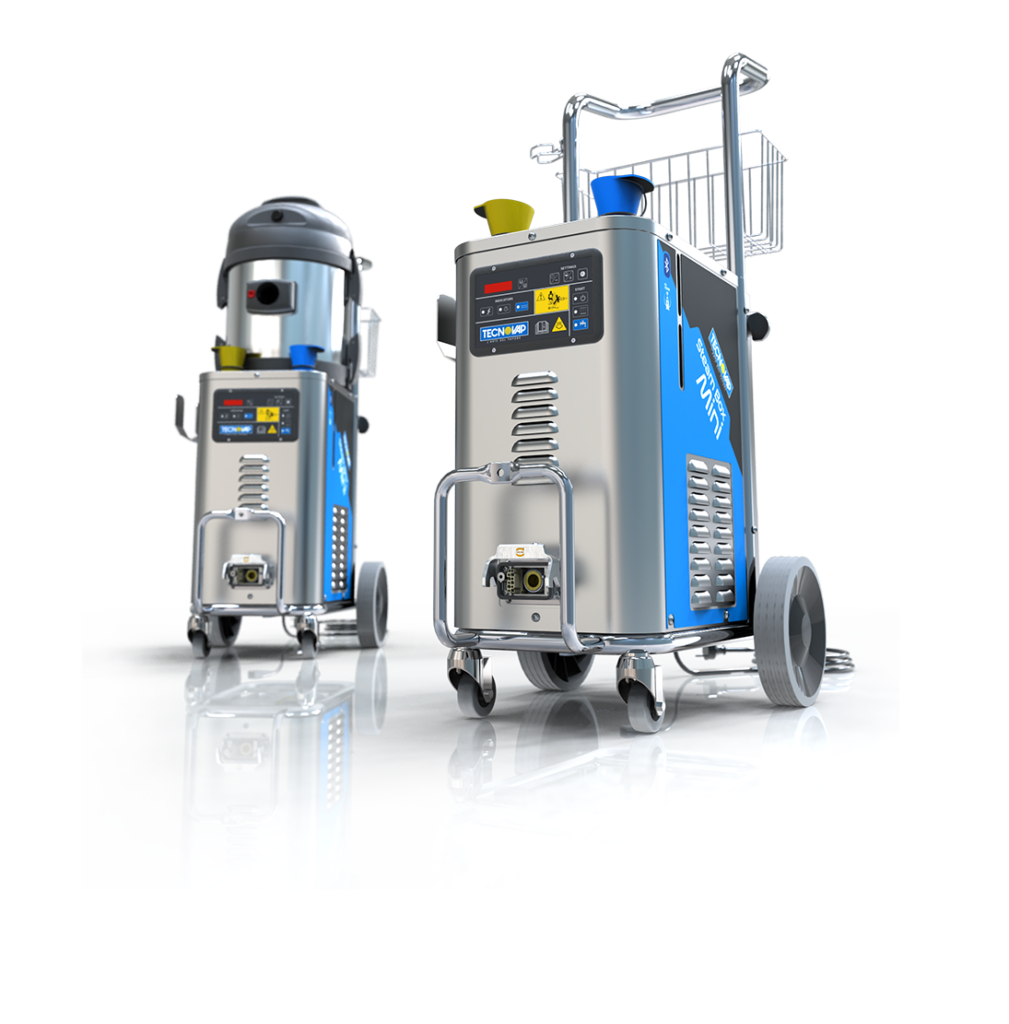
TECNOVAP shows dry steam removing oil, grease and encrustation from machinery and tools; watch the set-up around the machine, because hose routing, power and drainage are what a rented steam generator needs on your site too.
Trials before a purchase
A rental trial lets the plant test a machine on its own material before committing capital. Define success before the unit arrives: materials and areas, the pace required, how the filter copes with your dust and whether operators accept the machine. Record the results so the purchase request rests on site data.
Temporary peaks
Spillage after a conveyor or silo failure, or a one-off project, can exceed what the site owns; rental bridges the gap without leaving surplus machines.
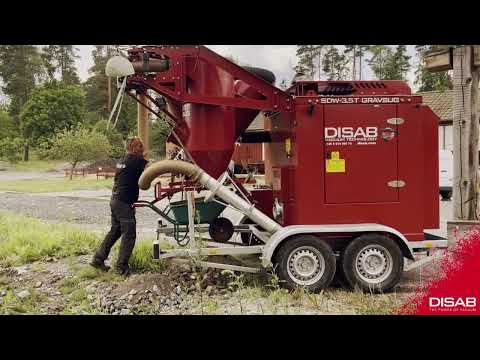
DISAB presents this trailer-mounted diesel unit as one to rent or buy; watch how it is positioned and connected, because transport, set-up and hose runs are part of what a rental agreement has to cover.
What should an industrial vacuum rental agreement state?
A rental agreement should identify the exact unit and the period, set out who does what at delivery, during use and at return, and spell out what “maintenance included” means in practice. AFE states that its rental requires no capital commitment and that full maintenance is included; the agreement is where those statements become specific to your job.
| Clause | What it should state | Question to ask |
|---|---|---|
| Equipment | Model, serial number, configuration, accessories, filter class and, where relevant, ATEX marking and certificate | Is this the exact unit that will arrive, and can we see its documents first? |
| Period | Start and end dates, any minimum term, extensions and early return | What happens if the shutdown overruns? |
| Delivery and return | Delivery point, transport, loading and unloading responsibilities | Who provides lifting equipment on site, and who books return transport? |
| Maintenance | Which servicing, repairs, filters and wear parts are included, and how breakdowns are handled | What happens if the unit fails mid-shutdown? Is a replacement provided? |
| Consumables | Which filters, bags, liners and hoses are included and which are charged | How is consumption on our material measured and priced? |
| Operation and training | Whether the unit comes alone or with an operator, and what handover training is given | Who trains our operators, and is the training recorded? |
| Condition | A check sheet with photographs at delivery and at return | How are normal wear and damage told apart? |
| Use limits | Materials, locations and zones in which the unit may be used | Is it suitable for our material, including any toxic or combustible dust? |
| Return condition | Emptying, cleaning and decontamination before return | Who empties the unit, and how are used filters handled? |
| Liability and insurance | Damage, loss and third-party cover while the unit is on site | Which party insures the unit during the rental? |
Two clauses cause most disagreements: consumables and return condition. A vacuum that has collected toxic or combustible dust cannot simply be loaded onto a truck, so agree in writing who empties it, how filters are changed and how the collected material enters your waste route. Classification, transport and disposal of that material stay with the site and its own licensed waste contractor; the rental supplier does not take them over.
AFE states that its rental covers Jordan, Saudi Arabia and Iraq. For a site across a border, ask how the unit will travel, who prepares the documents and how that affects your dates, and write the answers into the agreement.
How do you specify a rented vacuum for the material and the zone?
Specify a rental unit exactly as you would a purchase: from the material, the quantity, the location and any hazardous-area classification.
- Material: name, safety data sheet, particle size if known, and whether it is dry, wet, sticky, abrasive or hot.
- Filter class: for mobile vacuums, the dust classes of IEC/EN 60335-2-69 set maximum filter penetration below 1% for class L, below 0.1% for class M and below 0.005% for class H, according to Germany’s IFA. Carcinogenic dusts and those with very low exposure limits need class H.
- Combustibility and zone: if the dust can burn, the site’s area classification decides which equipment category is allowed. Under the EU workplace directive 1999/92/EC, zone 22 permits category 1, 2 or 3 equipment, while zone 21 needs category 1 or 2.
- Quantity and distance: volume per shift, hose length and lift, which decide between a mobile vacuum and a vacuum loader.
- Utilities: single- or three-phase power, compressed air for pneumatic units, and water and power for steam generators. TECNOVAP states that its stainless steel steam range spans power outputs from 2.45 kW to 40 kW, so check the supply at the point of use, not only at the main board.
- Access: door widths, floor loading, ramps and parking space for truck-mounted units.
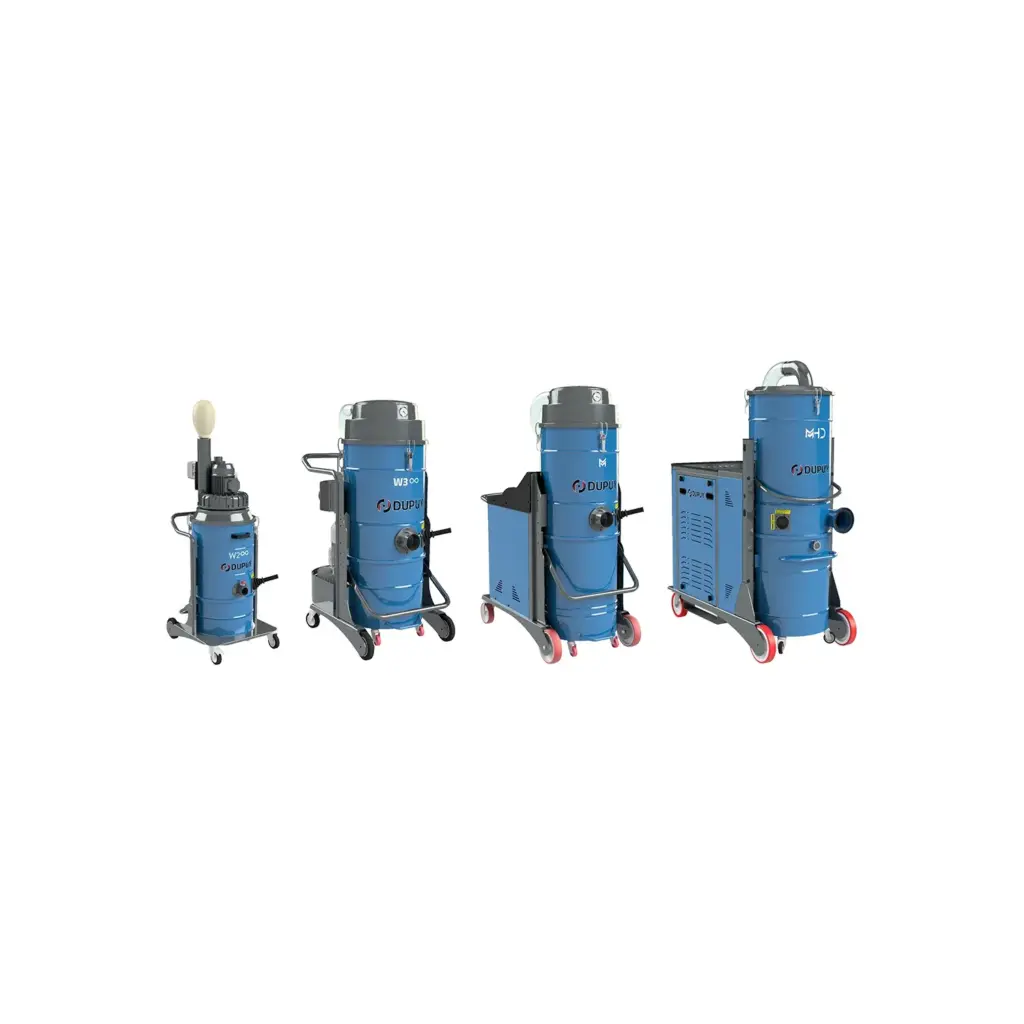
The checklist of questions to ask before selecting an ATEX vacuum sets out the dust and zone data a supplier needs.
How do you prepare the site before a rental unit arrives?
Prepare for a rental unit as you would for a contractor: confirm the job, the access, the utilities and the people before the delivery date.
Rental job flow
- Define the job
- Confirm the unit
- Prepare the site
- Inspect on arrival
- Clean and return
- Define the job. List the areas, materials, quantities and the date by which the work must be finished.
- Confirm the unit. Receive the model, documents and accessory list in writing and check them against the job and the zone drawing.
- Prepare access and utilities. Clear the delivery route, confirm power, compressed air or water at the point of use, and reserve parking for any truck-mounted unit.
- Plan permits and people. Include the unit in the permit-to-work, name the operators and book the handover training.
- Inspect on arrival. Complete the condition check sheet with photographs, test the unit and record any defect before work starts.
- Close out. Empty and clean the unit as agreed, pass collected material to the site waste route and sign the return check sheet.
What should you send AFE for a rental quote?
Send the job, not just a machine name; a rental quote is only as precise as the information behind it. AFE states that it offers short- and long-term rental of industrial cleaning equipment across Jordan, Saudi Arabia and Iraq, with no capital commitment, full maintenance included and what it calls immediate site deployment. To quote, it will need:
- the site location and the dates, including any risk of overrun;
- the materials, with safety data sheets and any combustibility test data;
- the area classification drawing if combustible dust is present;
- quantities, hose distances and the areas to be cleaned;
- available utilities and any access constraints;
- whether you need the equipment alone or together with a cleaning service.
If the duty proves permanent, the trial data supports a purchase of industrial vacuum systems, heavy-duty vacuum loaders or dry steam generators. If the budget is the constraint, certified used equipment is a third option to compare, and owned machines need a routine like the one in our guide to industrial vacuum filters and spare parts. More planning guides for manufacturing sites are under industrial insights.
Al Faisaliah Enterprises · Aqaba
Plan your shutdown rental
Send AFE your dates, materials, zone drawing and site conditions. AFE uses them to propose rental equipment matched to the job and the terms that go with it.
Frequently asked questions
What does 'maintenance included' usually cover in an equipment rental?
It varies by supplier, so ask for it in writing. AFE states that full maintenance is included in its rental. Confirm whether that covers planned servicing, repairs, filters and wear parts, how quickly a breakdown is handled, and whether a replacement unit is provided. Also confirm which consumables are charged separately, since filter use depends heavily on your material.
Can rental fees be credited toward buying the unit later?
Do not assume so. Some suppliers offer rent-to-buy or trial-to-purchase arrangements and others do not. If a trial may lead to a purchase, ask before signing whether any part of the rental can be credited against the purchase price, and write the answer into the agreement together with the trial's success criteria.
Can we rent an ATEX vacuum for a single shutdown?
Only if a unit certified for your zone is available, so ask early. Send your area classification drawing and dust data with the enquiry. On delivery, check the nameplate marking against the certificate for that model and against the zone, and confirm that hoses and accessories are conductive and grounded. If any of this cannot be shown, do not use the unit in the classified area.
Do we need our own operators for rented equipment?
That depends on whether the agreement is for equipment only or includes an operator. For equipment-only rental, name trained operators and book handover training. For truck-mounted units, also confirm who drives the vehicle and holds any road permits. If you need the cleaning carried out for you, ask whether it can be combined with a service visit instead.
How early should rental equipment be booked for a shutdown?
Book it as soon as the shutdown dates are fixed, on the same timetable as other contractors and hired equipment. Ask the supplier to confirm availability and the delivery date in writing, allow time for documents to be checked before the unit arrives, and for sites across a border, ask how transport and paperwork affect the dates.
Sources and references
- Testing of dust filters (dust classes L, M, H) · IFA / DGUV
- Directive 1999/92/EC on the protection of workers potentially at risk from explosive atmospheres · European Union (EUR-Lex)
- ATEX certified industrial vacuum cleaners · DUPUY
- DISAB: vacuum trucks, vacuum systems and services · DISAB
- Stainless steel steam generators · TECNOVAP
This article is general technical guidance. Equipment suitability, ATEX conformity and hygiene performance must be confirmed for each site and application.
Written for plant, maintenance, HSE and quality teams in Jordan, Saudi Arabia and Iraq.