The short answer
Textile lint cleaning in spinning and weaving mills works best as zoned, scheduled vacuum capture: industrial vacuums with suitable hoses and tools on isolated machines and floors, and ground-based high-reach pole systems for light fittings, ledges and roof structure. Avoid brooms and compressed-air blow-down, which spread fly, and treat oily fly near electrics as fire load.
Key takeaways
- HSE lists fly deposits among the factors that raise fire risk in textile mills, singling out light fittings and high ledges.
- Weaving's main fire hazard, per HSE, is fly ignited by electrical faults; spinning fly contaminated with oil burns readily.
- Capture fly with a vacuum: HSE and OSHA's cotton dust standard both steer away from brooms and compressed air.
- Size vacuums for bulky, low-density fibre: container volume, filter area and hose diameter matter more than peak suction.
- Set cleaning intervals per zone from what accumulates, and record them so the plan can be adjusted.
Every spinning and weaving mill makes two products: yarn or cloth, and fly. Opening, carding, drawing, spinning, winding and weaving all release short fibres that float on the mill’s air currents and settle wherever a surface lets them, from the top of a ring frame to the light fittings and roof steel above it. Left alone, they build a grey felt that is combustible, sheds back onto the product and hides what maintenance needs to see.
Textile lint cleaning is therefore a production discipline, not an occasional tidy-up. This guide explains why fly matters, where it collects in a spinning or weaving mill, how to remove it from machines and overhead without spreading it, and what to look for when selecting the vacuum equipment to do it.
Why are lint and fibre fly a risk in textile mills?
Fly is a fire risk first and a health and quality issue second. The UK Health and Safety Executive’s textiles fire guidance states that in the textile industry “nearly all materials being used are flammable to some degree”, and lists deposits of fluff and dust (fly) among the factors that increase fire risk, noting that “dust on light fittings is a particular risk.” It adds that cotton fly is hard to extinguish because it is light and “gets blown about by even light jets of water.”
HSE is also specific about processes. Traditional spinning causes deposits of fly that are “particularly flammable” when contaminated by oil, and in weaving “the main hazard is ignition of fly by electrical faults, usually insulation failures caused by mechanical vibration.” Its recommended controls are good housekeeping, “especially high ledges”, together with good standards of electrical and machinery maintenance.
The health side is well documented too. HSE notes that textile process dusts, in particular wool and cotton, can cause byssinosis, occupational asthma and respiratory irritation. In the US, OSHA’s cotton dust standard sets separate exposure limits for yarn manufacturing and for slashing and weaving, and its combustible dust program lists certain textiles among the dusts it covers. These are UK and US references, not law in Jordan, Saudi Arabia or Iraq, but they describe the hazard well.
Where does fly collect in spinning and weaving mills?
Fly collects on and around the machines that generate it, and on every horizontal surface above them. A survey usually finds the same pattern:
| Area | Where fly settles | Why it matters | Suggested method |
|---|---|---|---|
| Opening and carding | Machine tops, guards, floor around feeds, ducting exteriors | Heavy generation; HSE notes sparks from foreign bodies and fire spread through ducting | Mobile industrial vacuum with wide hose; daily capture |
| Drawing, combing, roving | Creels, drafting zones, machine frames | Fly sheds back into the sliver and yarn | Vacuum with crevice and brush tools, machines stopped |
| Ring spinning and winding | Frame tops, spindle rails, floor under frames | Oil-contaminated fly burns readily | Vacuum capture; frequent short cycles |
| Weaving | Loom frames, motors, warp beams, cable routes | HSE: fly ignited by electrical faults is the main hazard | Vacuum around isolated looms; electrical parts left to electricians |
| Overhead | Light fittings, high ledges, trusses, cable trays, pipework, duct exteriors | Large area; falls back onto machines and product | Ground-based high-reach pole system and vacuum |
OSHA’s combustible dust program also points facilities toward reducing horizontal surfaces such as beams and ledges, which is worth remembering when a mill is extended or re-roofed.
Why should textile lint cleaning capture fly instead of blowing it?
Because blowing and brushing only move fly to the next surface and put it back in the air. HSE’s textiles dust guidance is direct: cleaning “should be done using something like a vacuum cleaner, not a broom or brush or compressed air.” OSHA’s cotton dust standard, 29 CFR 1910.1043, prohibits compressed-air blow-down “where alternative means are feasible” and requires floor sweeping “with a vacuum or with methods designed to minimize dispersal of dust.”
There is a fire reason as well. HSE warns that ground flock dispersed into the air “when cleaning down” can cause an explosion or fire. A cleaning method that raises a cloud of fibre next to motors, lights and hot bearings works against the housekeeping it is meant to deliver.
How should machines be cleaned?
Machines should be cleaned stopped and isolated, top down, with the vacuum capturing fly at the tool. A practical sequence for a frame or loom:
- Agree the scope. Production and maintenance name the machines and the surfaces that may be cleaned during the stop.
- Stop and isolate. The mill’s own competent staff stop and isolate each machine under the site procedure.
- Clean from the top. Frame tops and creels first, then drafting zones and sides, then the floor beneath, so nothing falls onto a cleaned surface.
- Keep away from electrics. Vacuum around motor housings and cable routes from outside; opening panels is a job for the electricians.
- Empty and check. Empty the container before it is full and check the filter before moving to the next machine.
- Hand back. Maintenance restores the machine and production checks the area before restart.
How is fly removed from light fittings and roof structure?
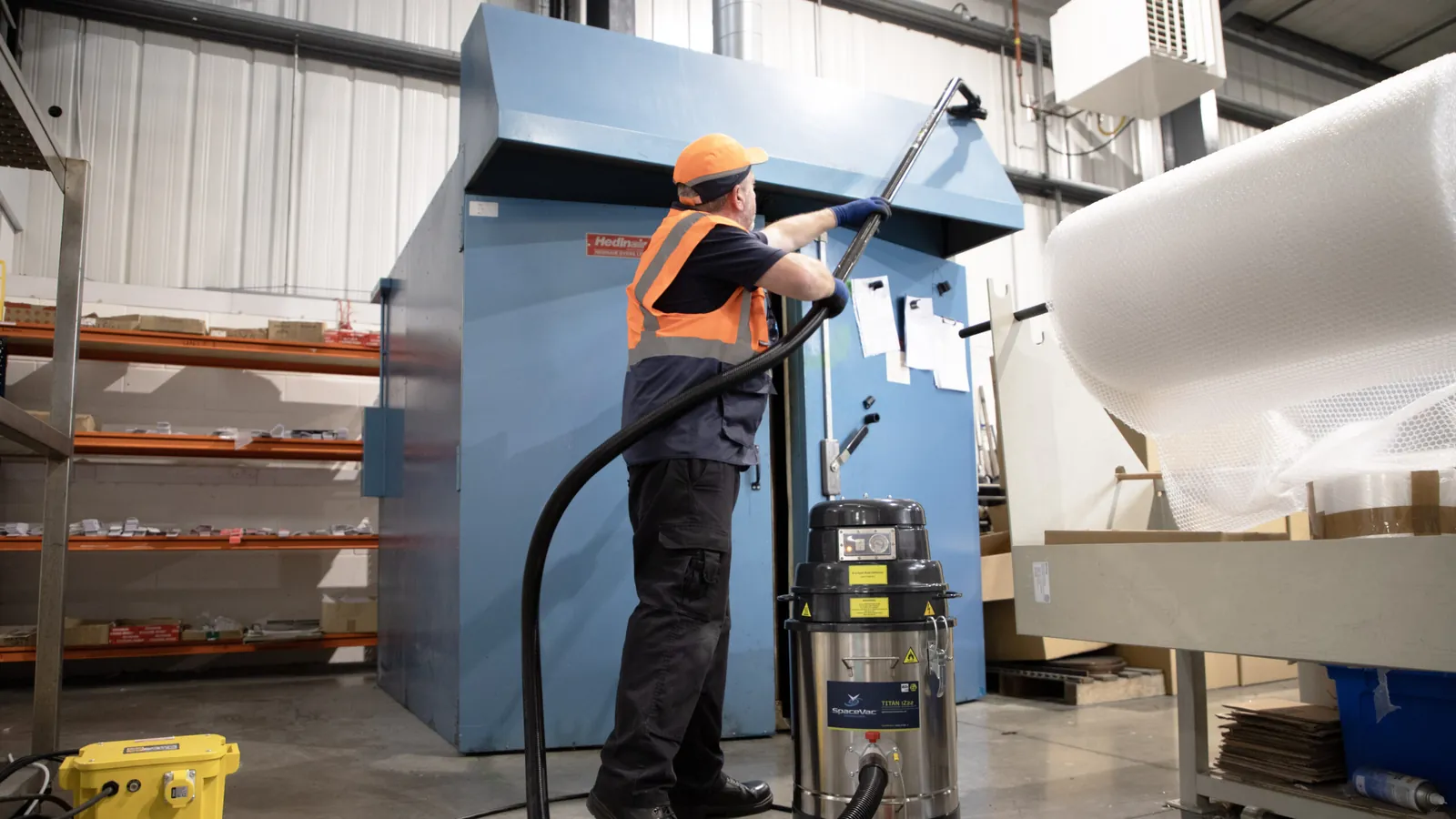
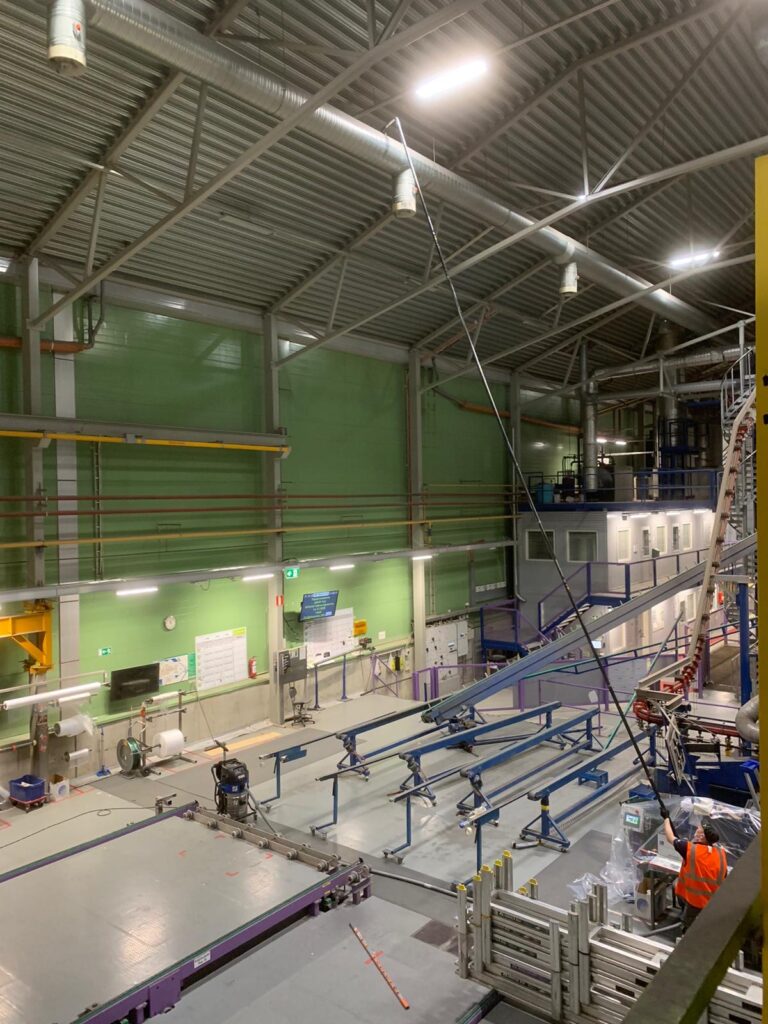
Overhead fly is best removed from the ground with a high-reach pole system connected to a vacuum, so it is captured at the head instead of falling onto running frames. SpaceVac describes its systems as interlocking lightweight poles, mostly carbon fibre, that let operators clean high areas “from the ground.” Reach differs between SpaceVac’s regional product pages, so confirm the working height of the specific kit against the height of your trusses and fittings.

The film shows high-reach poles removing lint from overhead surfaces in a textiles and laundry setting. It features SpaceVac’s ATEX range; whether your mill needs ATEX-rated equipment depends on a site assessment, not on the video.
Work overhead in zones, keep an exclusion area beneath the head, and protect product and open creels below. Mills that prefer not to tie up their own teams can use AFE’s Internal high clean dust removal service for the overhead work, with the ground-based high-reach approach keeping access equipment off the production floor where the survey allows.
What should you look for in the vacuum equipment?
Look for capacity and airflow suited to bulky, low-density fibre, and filtration and static control suited to the dust assessment. Fibre fills a container and blinds a filter much faster than its weight suggests. A buyer’s checklist:
- Container volume and emptying: a larger container and easy discharge reduce stops in high-generation areas.
- Filter area and cleaning: ask about filter surface and the filter-shaking or automatic cleaning system offered.
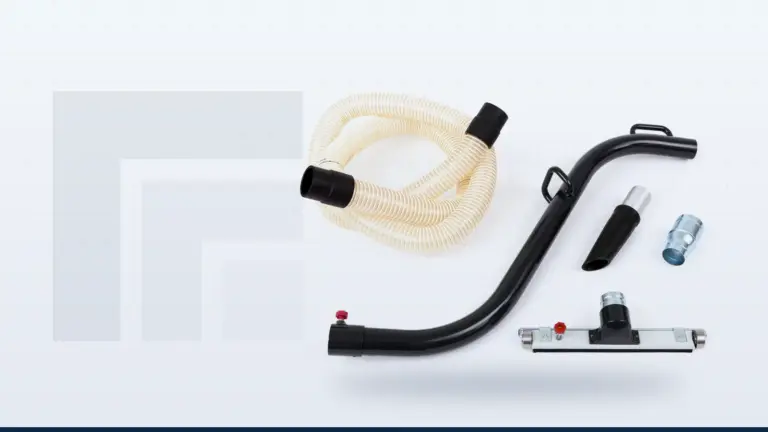
- Hose diameter and tools: fibre wraps and bridges in narrow hoses; match diameter and tools to the surfaces.
- Duty: three-phase machines suit long daily use; single-phase units suit short tasks and maintenance.
- Static and combustibility: if fly is assessed as a combustible dust, OSHA’s program sets conditions for portable vacuums in unclassified areas, including conductive or static-dissipative hoses, bonded and grounded components, and no dust-laden air passing through the fan or blower (US guidance; ask the maker how a given model meets each point).
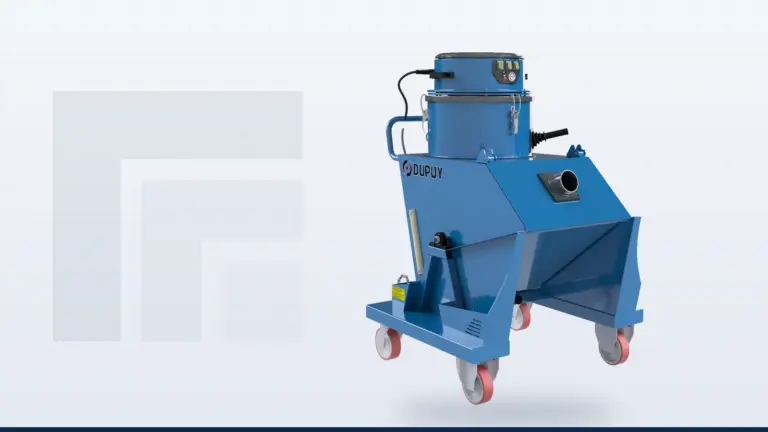
- ATEX only by model: where a zone has been classified, choose a model whose certificate matches it. DUPUY sells both ATEX and non-ATEX models.
- Fixed pipework option: a central vacuum system moves material through fixed pipes to one discharge point, which can suit large mills with many cleaning points.
DUPUY lists textile among the industries it serves and offers mobile industrial vacuums, central vacuum systems and dust collectors. The guides on antistatic vacuum hose and grounding and how often to clean settled combustible dust go deeper on two of the points above.
How often should a mill clean for fly?
Set the interval per zone from what accumulates, then adjust it from records. There is no single frequency: opening, carding and spinning rooms may need cleaning every shift, while roof structure above warehouses may need it far less often.
Textile lint cleaning cycle
- Survey fly build-up
- Set zone intervals
- Clean machines, overhead
- Record and adjust
Use photos from fixed points before and after each cycle, note any oily or heavy deposits near electrics, and shorten the interval where fly returns quickly. The approach used in hospital laundry lint removal translates well to the overhead side of a mill.
How AFE supports textile mills
AFE supplies DUPUY industrial vacuums, central vacuum systems and SpaceVac high-reach pole systems to plants in Jordan, Saudi Arabia and Iraq, and can propose rental units for trials or shutdowns where a mill wants to test a set-up first. Filters, hoses and tools come through AFE’s MRO and consumables service. Where combustibility or zoning is an open question, the consulting and ATEX compliance checks can come before equipment selection.
Al Faisaliah Enterprises · Aqaba
Choose equipment for fly control in your mill
Send your mill layout, machine list, roof and fitting heights and photos of the worst deposits. AFE will suggest vacuum and high-reach equipment for machines and overhead, zone by zone.
Frequently asked questions
Is cotton fly a combustible dust?
Fly is combustible material: the UK HSE lists fly deposits among the factors that increase fire risk in textile mills, and the US OSHA combustible dust program lists certain textiles among the dusts it covers. Whether a particular mill's fly creates an explosion hazard depends on the material, particle size and conditions, which only an assessment can establish. Until then, treat heavy or oily deposits near electrics as fire load.
Can we keep using compressed air to blow down frames between shifts?
It is better to replace it with vacuum capture. HSE advises against brooms, brushes and compressed air for textile dust, and OSHA's cotton dust standard prohibits blow-down where alternative means are feasible. Blowing puts fly back into the air, onto other frames and into motors and light fittings, so the area is not actually cleaner afterwards.
Does a spinning mill need ATEX vacuums?
Not automatically. ATEX equipment is needed where the employer's assessment has classified a zone for combustible dust, and the model chosen must carry a certificate matching that zone. Many mills first commission a combustibility assessment. AFE's consulting team can help define the questions, and the vacuum is then selected model by model.
Is a central vacuum system worth it in a large mill?
It can be, where many cleaning points are used every shift. A central system moves fly through fixed pipes to one discharge point, so operators carry only hoses and tools and the collected material is handled in one place. It needs design work for pipe routes, simultaneous users and discharge. Mobile vacuums remain useful for overhead work and remote areas.
Sources and references
- Textiles: Fire and explosion · UK Health and Safety Executive
- Textiles: Dust · UK Health and Safety Executive
- 29 CFR 1910.1043 Cotton dust · US Occupational Safety and Health Administration
- Revised National Emphasis Program: Combustible Dust (CPL 03-00-008) · US Occupational Safety and Health Administration
- Internal high-level cleaning · SpaceVac International
- Centralized vacuum systems · DUPUY
This article is general technical guidance. Equipment suitability, ATEX conformity and hygiene performance must be confirmed for each site and application.
Written for plant, maintenance, HSE and quality teams in Jordan, Saudi Arabia and Iraq.