The short answer
An oil and chip vacuum collects coolant, oil and metal chips in one pass and separates them inside the machine: a perforated or grated basket holds back chips while the liquid drains into a separate tank, from where it is pumped back or drained. Choose the model from fluid type, chip form and load, sump access and discharge needs.
Key takeaways
- An oil and chip vacuum separates chips from liquid in a basket, so each stream can be reused, recycled or disposed of properly.
- Fluid type, viscosity, chip form and weekly chip load decide the machine more than tank volume does.
- Plan sump cleaning as scheduled maintenance: isolate, collect, decide the fluid's destination, refill and record.
- Flammable liquids, solvents and fine aluminum or magnesium particles need equipment certified for the assessed hazard.
- Agree spare baskets, filters, hoses and seals at the time of order.
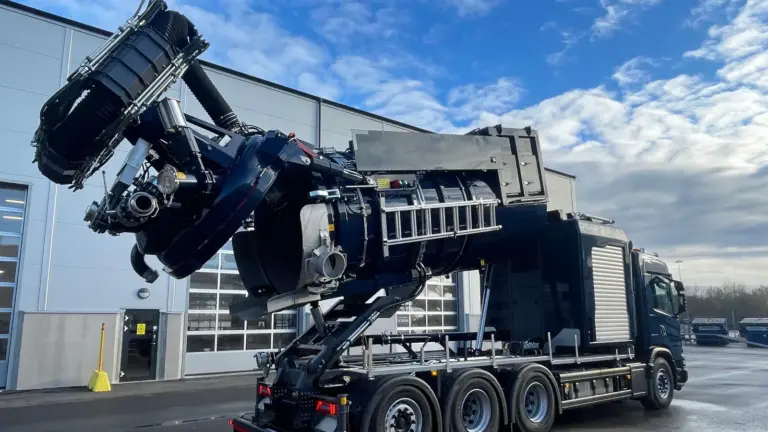
Every machine tool in a steel workshop produces two waste streams that end up mixed: metal chips and the coolant or oil that carried them away from the cut. When chips and sludge build up in sumps and around machines, they are usually cleared by hand with shovels, buckets and absorbents while the machine stands idle. An oil and chip vacuum for steel workshops collects both in one pass and separates them, so each can go to the right place.
For a workshop manager, the questions are practical: which machine fits our fluids and chips, how a sump clean should be organized, and where the limits are. This application guide answers them in that order.
How can oil and chips be collected and separated?
They are drawn up together by suction, separated inside the vacuum by a basket, and then discharged separately. The mixture enters the tank through the hose; a perforated or grated basket holds back chips and coarse sludge, while the liquid drains through into a separate chamber.
DUPUY states that the grated metal baskets in its oil and chip vacuums let the emulsion “be instantly separated from sludge and slurries”, “facilitating the recycling of the sucked oil”. The liquid is then emptied by pump or drain: DUPUY lists a drain pump on the Oilvac 130P and an ejector pump on the Oilvac 130. Whether recovered coolant goes back into the machine is a decision for your fluid management, based on its condition; the vacuum only makes the choice possible.
How an oil and chip vacuum works
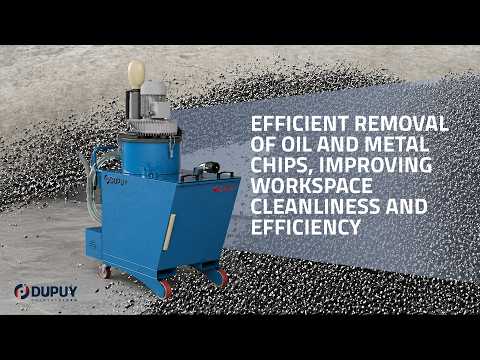
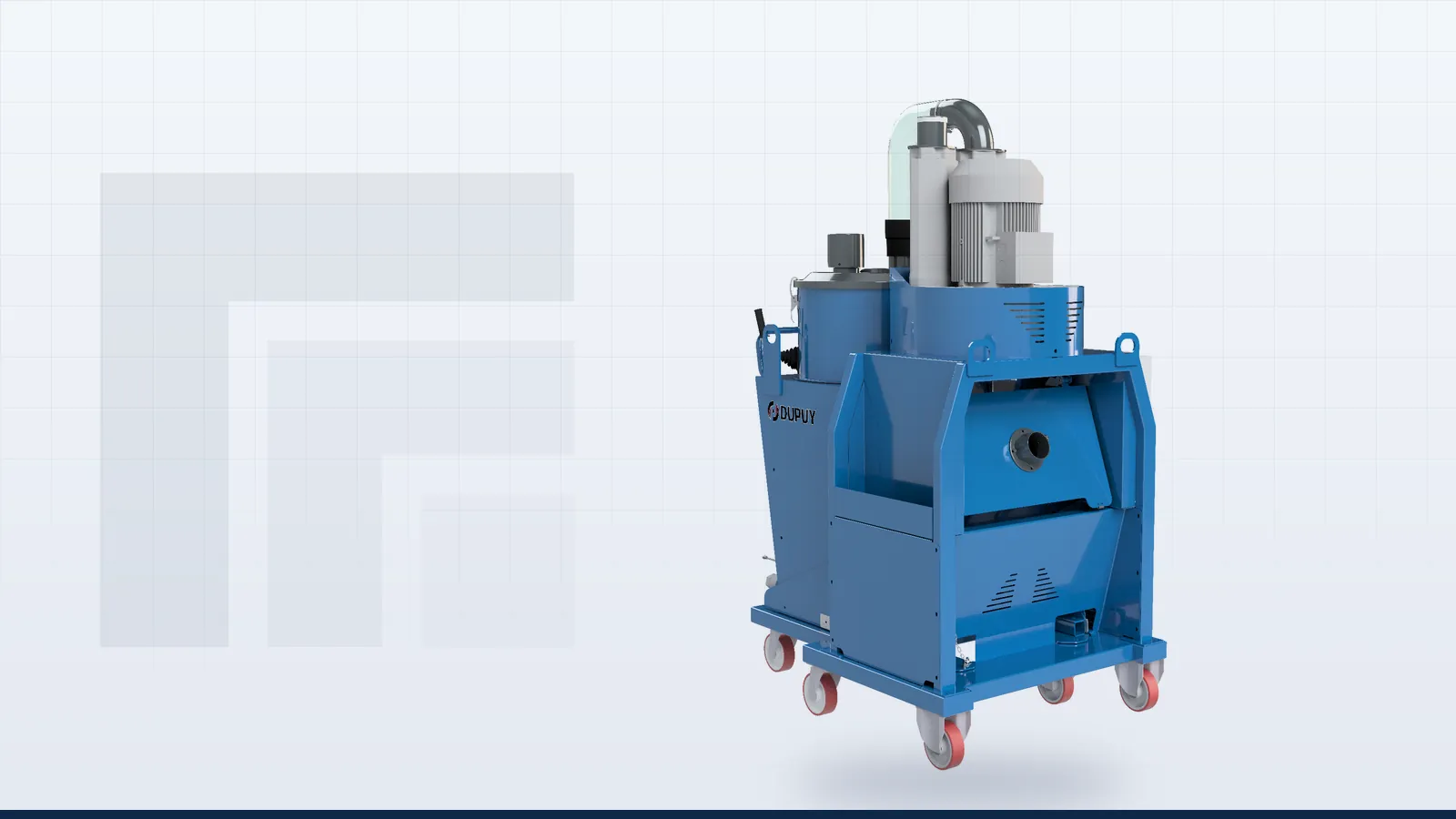
DUPUY’s short film presents the Oilvac 200 T recovering and separating oil, metal chips and sludge; watch where the chips stay and where the liquid goes, and compare that with the layout of your own sumps.
Which fluid and chip details decide the right oil and chip vacuum?
The fluid, the chip form and the volumes decide the machine, so describe them before comparing models. The table shows what to tell a supplier and why each item matters.
| What to tell the supplier | Why it matters |
|---|---|
| Fluid type: water-miscible emulsion, neat cutting oil, or hydraulic and lubricating oil | Affects pump, seals and filtration, and whether the fluid can be returned to the machine |
| Fluid viscosity and working temperature | Thick or warm fluids change suction and pumping performance |
| Chip form: long and stringy, short and broken, or fine grinding sludge | Long chips can bridge hoses and baskets; fines pass coarse baskets and need finer separation |
| Chip and sludge quantity per machine per week | Sets tank and basket capacity and how often the unit must be emptied |
| Sump volume, depth and access | Decides hose diameter, tool shape and whether a pump-back function is useful |
| Materials machined (steel, cast iron, aluminum or others) | Mixed materials may need segregated chips; fine aluminum or magnesium particles raise combustible-dust questions |
| Destination of the liquid: back to the machine, a holding tank or the waste route | Decides pump type and hose connections |
| How chips are emptied: tipping container, removable basket or bin | Affects handling, lifting and the space needed beside machines |
| Any solvents or flammable liquids present | May require equipment certified for hazardous areas |
| Number of machines served and power supply | Shared mobile unit or dedicated unit per machine |
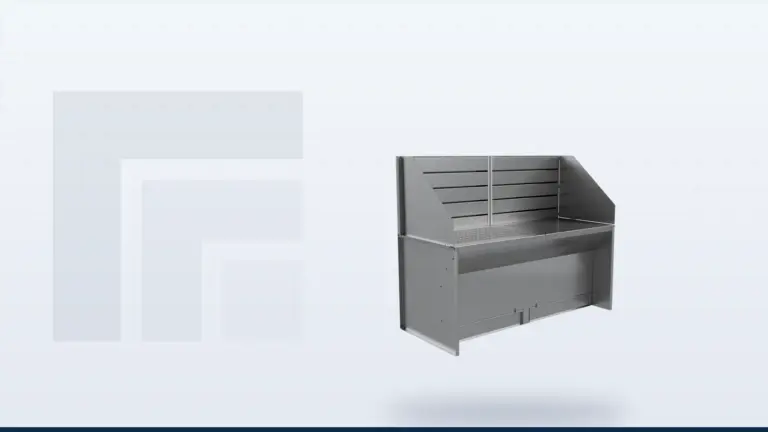
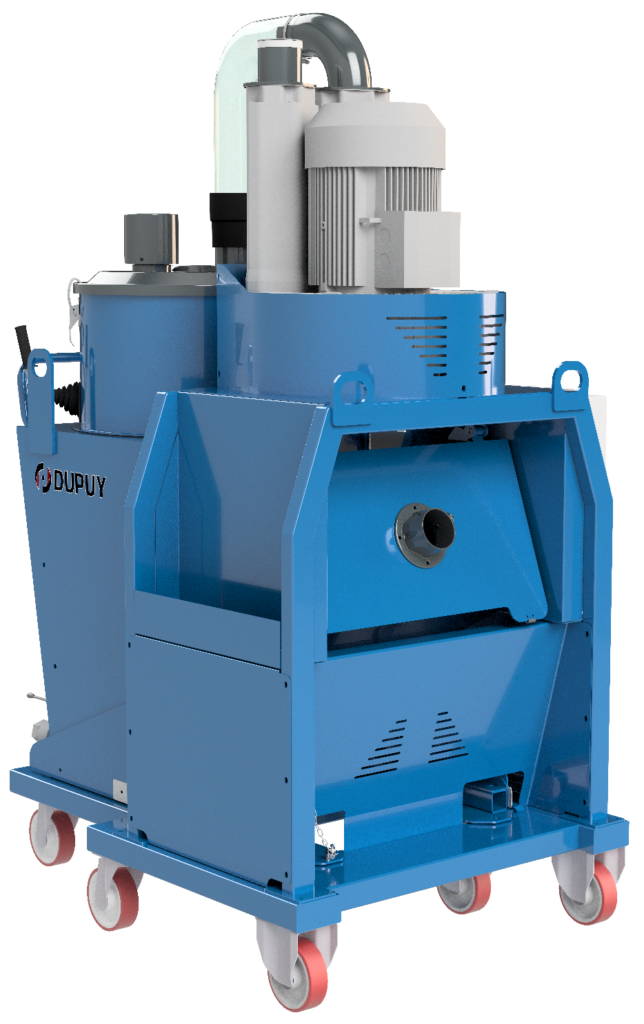
DUPUY’s oil and chip range includes the Chipvac 200, 400 and 400M and the Oilvac series from the Oilvac 60 to the Oilvac 600HV; DUPUY describes the Oilvac 500 as a “vacuum cleaner for coolant, oil and chips”. The range page gives no tank volumes, so take capacities and pump data from the datasheet of the model you are offered.
How should coolant sump cleaning be planned?
Plan sump cleaning as a scheduled maintenance task with a defined end point, not as an emergency job. A typical sequence:
- Schedule with production. Use planned stops, and group machines so one vacuum serves several in a shift.
- Stop and isolate the machine. Follow your site’s isolation procedure before anyone reaches into the sump or the chip conveyor area.
- Collect liquid and chips. Vacuum the sump contents into the separator, then remove settled sludge from corners and baffles.
- Decide the fluid’s destination. Return filtered coolant only if its condition meets your fluid management criteria; otherwise send it to the site’s waste route.
- Clean, refill and record. Remove remaining residues, refill or top up the coolant, check its concentration, and record what was removed and when.
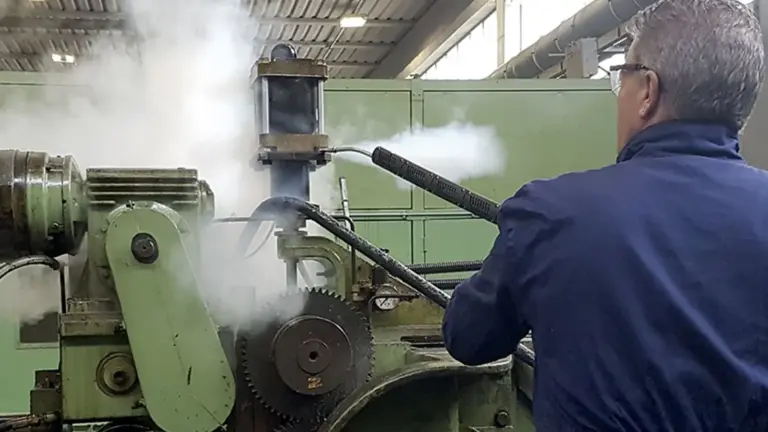
If machine surfaces also need degreasing, dry steam is one option. Machine conditioning with dry steam and oil recovery covers how the tasks can be sequenced, and dry steam degreasing during machine maintenance covers the steam step on its own.
Where else does an oil and chip vacuum fit in a steel workshop?
Beyond sumps, the same equipment clears chips and coolant around machines, beneath chip conveyors and on floors after spills. DUPUY also lists “stationary vacuum units on board the machine” among its industrial vacuum families, which may suit machines that need frequent chip removal; ask for details for your machine type.
Airborne oil mist is a separate problem that a floor-level vacuum does not solve. DUPUY’s SKY oil mist extractors work on “the principle of coalescence”, and DUPUY says the collected oil “can therefore be recovered and reused”.

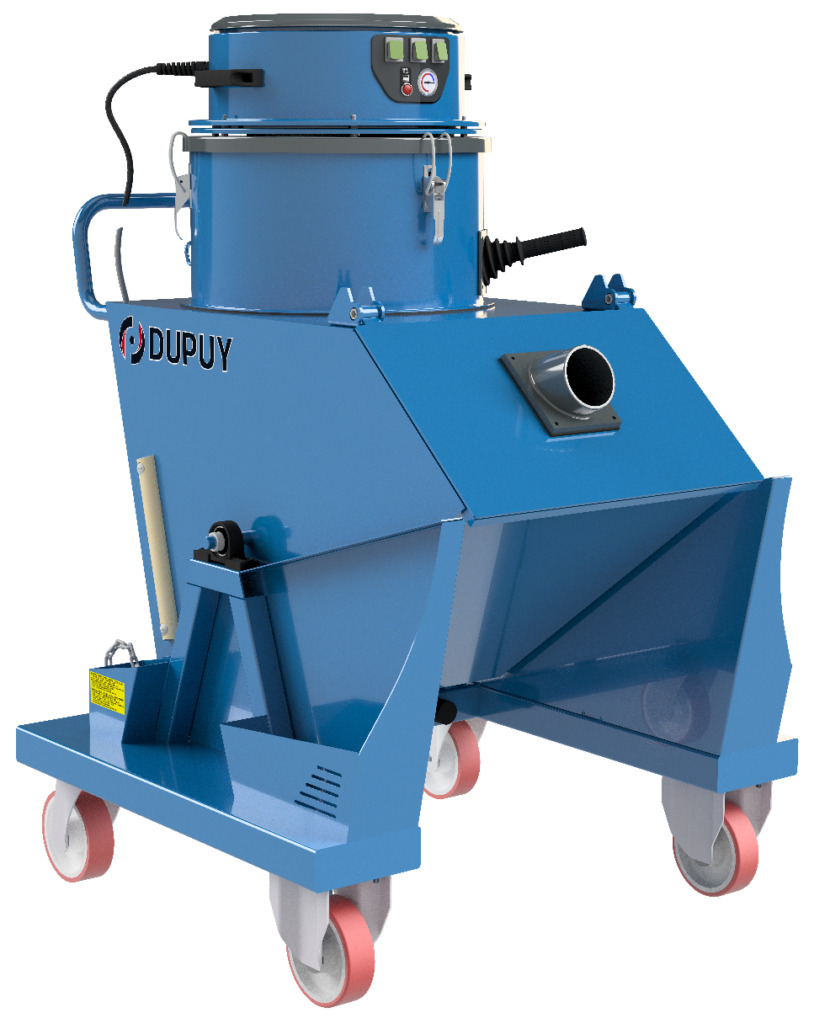
DUPUY presents the Oilvac 130 as a vacuum made to extract, recover and separate lubricants or oil from metal chips; note how the liquid is emptied and ask whether that suits where your fluid needs to go.
What safety and environmental checks apply?
Check the hazards of what you are collecting before choosing the machine, and agree where every output goes before the first clean.
- Sharp chips. Use suitable gloves and lifting aids when emptying baskets and containers.
- Skin contact with fluids. Follow the coolant’s safety data sheet for handling and personal protection.
- Waste routes. Recovered chips and spent coolant follow your site’s own waste and recycling procedures. AFE supplies equipment and advice; it does not provide waste transport or disposal.
What should you measure to judge the result?
Measure the job before and after the change, so the decision rests on your own workshop’s data rather than on general claims. The useful measures are simple to record on a sheet beside each machine:
- Time per sump clean, from machine stop to restart, including emptying the vacuum.
- Cleaning frequency per machine, and how often unplanned stops are caused by chip build-up.
- Coolant top-up volume per month, which shows how much fluid is recovered or lost.
- Chips and sludge removed per clean, which checks the sizing assumptions behind the equipment.
- Mixed residues sent off site, before and after separation is introduced.
Where a unit can be made available for a trial, testing it on the machines with the heaviest chip load is the quickest way to collect these figures and confirm the model before buying several.
Which mistakes do workshops make with oil and chip vacuums?
- Using a general wet and dry vacuum. Without separation, the operator ends up with a tank of mixed waste that is hard to empty, reuse or recycle.
- Sizing on tank volume alone. Basket capacity, pump rate and emptying method decide how many sumps can be cleaned per shift.
- Ignoring fines. Grinding sludge passes coarse baskets, so ask how fines are handled.
- No plan for the liquid. Decide in advance whether coolant returns to the machine, goes to a holding tank or to waste, and with which hose and pump.
- No spares. Baskets, filters, hoses and seals wear, so agree a spares list at the time of order.
How AFE supports oil and chip recovery in workshops
AFE supplies DUPUY oil and chip vacuums and industrial vacuums and helps workshop managers match the model to the fluid, chip load and sump layout. Through its MRO and consumables service, filters, hoses and core components can be planned with the equipment; because the units come from Italy through AFE’s Aqaba regional gateway, agree the spares list at the time of order.
Where machines also need degreasing, AFE’s industrial steam cleaning and degreasing service is a separate option. For fume from welding in the same workshop, see selecting welding fume extraction for fabrication bays, and find more guides in AFE’s steel insights.
Al Faisaliah Enterprises · Aqaba
Match the vacuum to your fluid and chips
Tell AFE your fluid type, chip form and load, sump sizes and number of machines. You get advice on the DUPUY oil and chip vacuum and accessories that fit.
Frequently asked questions
Can coolant recovered with an oil and chip vacuum be reused?
Sometimes. DUPUY states that its baskets separate emulsion from sludge and slurries, which makes reuse possible, but whether the coolant goes back into the machine depends on its condition. Check it against your fluid management criteria, such as concentration and contamination, or ask your coolant supplier. Coolant that does not meet them should go to the site's waste route.
Can an oil and chip vacuum handle grinding sludge?
It can collect it, but separation is harder. Grinding produces very fine particles that pass through coarse chip baskets and stay suspended in the liquid. Tell the supplier the proportion of fines and the grinding processes involved, and ask how the model handles them, for example with finer baskets, filtration or settling time before the liquid is pumped back.
Is one mobile unit enough for a whole workshop?
It can be, if the cleaning schedule allows it. Count the sumps, their volumes and how often each needs cleaning, then compare that with the time one unit takes per sump, including emptying. Workshops with many machines or heavy chip loads may need a second unit, or stationary units on the machines that produce the most chips.
Can we use the same oil and chip vacuum for aluminum and steel chips?
Mixing materials can reduce the value of recycled chips, so many workshops keep them separate. Fine aluminum or magnesium particles also raise a different safety question: US OSHA's combustible dust program lists them among combustible metal dusts. Tell the supplier every material you machine and ask whether the model is suitable for each, with its documentation.
Which spare parts should we keep for an oil and chip vacuum?
Keep the parts that wear or clog in normal use: chip baskets, filters, hoses, tools and seals, plus any pump wear parts named by the manufacturer. Agree the list with the supplier when ordering, based on your chip load and cleaning frequency, so a single damaged hose or blocked filter does not stop sump cleaning.
Sources and references
This article is general technical guidance. Equipment suitability, ATEX conformity and hygiene performance must be confirmed for each site and application.
Written for plant, maintenance, HSE and quality teams in Jordan, Saudi Arabia and Iraq.