The short answer
To select a welding fume extractor, you need the welding process, base metal and coatings, consumables and their safety data sheets, arc time, the number and layout of welding stations, workpiece size and how welders move. These decide the capture method (on-torch, arm, bench or booth), the airflow and the filtration, including whether cleaned air can be recirculated.
Key takeaways
- IARC classified welding fumes as carcinogenic to humans (Group 1) in 2017; UK HSE says general ventilation does not achieve the necessary control.
- Process, base metal, coatings, consumables and arc time decide the capture method and filtration, so collect them first.
- Choose capture that stays close to the arc for how welders really work: on-torch, arm, bench, booth or central system.
- Ask for the filter specification and test basis of the exact model before allowing recirculation.
- Verify after installation: airflow at each hood, observed capture, welder training and personal exposure monitoring.
Welding fume extraction in steel fabrication is harder than a datasheet suggests. Fabrication bays combine large workpieces, several welders working at once, grinding between passes and cranes moving overhead, so a single extractor in the corner rarely protects anyone.
For an HSE manager, the real task is to give a supplier enough information to propose the right capture method and filtration, and then to prove the system works. This guide sets out that information, why each item matters, and how to check the installation afterwards.
Why does welding fume need capture at the source?
Because general ventilation does not reliably control it. The International Agency for Research on Cancer (IARC) classified welding fumes as carcinogenic to humans (Group 1) in 2017, based on sufficient evidence of increased lung cancer risk in welders. IARC estimates that about 11 million workers worldwide have the job title of welder, and around 110 million more probably have welding-related exposure.
The UK Health and Safety Executive changed its enforcement expectations in 2019. It states that mild steel welding fume “can cause lung cancer and possibly kidney cancer in humans”, that “general ventilation does not achieve the necessary control”, and that employers need engineering controls such as local exhaust ventilation (LEV) for all indoor welding, supplemented by respiratory protection where LEV alone is not adequate.
US OSHA adds that prolonged exposure to manganese fume can cause Parkinson’s-like symptoms, and advises keeping “fume hoods, fume extractor guns and vacuum nozzles close to the plume source”. It also notes that welding outdoors or in open workspaces “does not guarantee adequate ventilation”, a point worth remembering in bays that run with the doors open for heat relief. These are UK and US references rather than Jordanian, Saudi or Iraqi law, but they are widely used as good practice.
What information is needed to select a welding fume extractor?
A supplier needs to know what is being welded, how, for how long and where. The table lists the items that change the recommendation and where to find each one.
| Information | Why it matters | Where to find it |
|---|---|---|
| Welding process (MIG/MAG, flux-cored, MMA, TIG; also gouging or plasma cutting) | Fume quantity and plume behavior vary by process; on-torch extraction suits some processes and not others | Welding procedure specifications |
| Base metal and coatings (mild steel, stainless, galvanized, painted or primed) | Alloys and coatings change what is in the fume, and therefore the filtration and exposure limits that apply | Drawings and material specifications |
| Consumables (wire, electrodes, flux, shielding gas) | Safety data sheets list fume constituents and hazards | Consumable safety data sheets |
| Arc time and shift pattern | Drives filter loading and maintenance intervals | Production records |
| Number of stations and simultaneous welders | Decides between individual units and a centralized system | Bay layout |
| Workpiece size and welder movement | Fixed benches suit hoods or back-draft capture; large fabrications need movable arms or on-torch capture | Observation, photos and videos |
| Grinding, sparks and spatter | Sparks reaching filters are a fire risk; grinding dust adds load | Task observation |
| Building and air movement | Ceiling height, cross-drafts, open doors and crane paths affect capture and recirculation | Site survey |
| Discharge choice | Recirculating cleaned air or exhausting it outside changes the filtration needed | HSE policy and building layout |
| Power and compressed air | Affects unit selection and filter cleaning | Facilities data |
Alloys deserve particular attention. If the shop welds stainless or other chromium-bearing steels, note that US OSHA sets a separate permissible exposure limit for hexavalent chromium of 5 µg/m³ (8-hour TWA); a supplier will ask about alloys for that reason.
Which capture method fits a fabrication welding station?
The best capture method is the one that stays closest to the arc for the way your welders actually work. The main options, from closest to the plume to furthest, are:
- On-torch extraction (fume extractor guns): capture moves with the torch, useful on large workpieces and long weld runs where an arm would need constant repositioning. Check process suitability, torch weight and the effect on shielding gas.
- Articulated arms with hoods: flexible for benches and medium workpieces, but effective only when the welder repositions the hood as the work moves. DUPUY describes all its FUMEBUSTER units as having “a self-supporting articulated arm ideal for localized suction”.
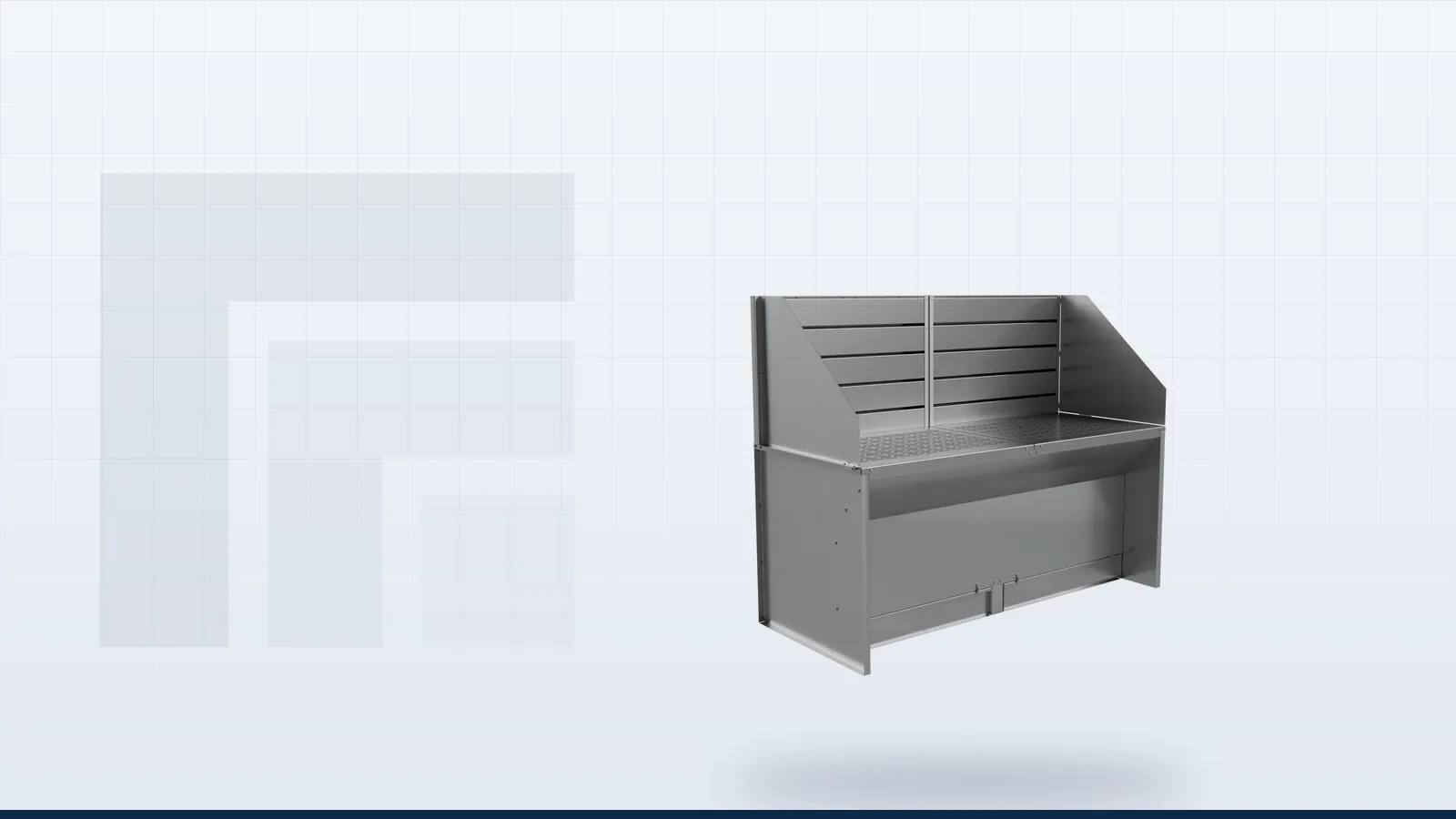
- Extraction benches and back-draft tables: suit repetitive work on small parts at fixed positions.
- Booths and enclosures: contain the plume for repetitive work, provided extraction is matched to the enclosure.
- Centralized systems connecting several arms or hoods to one collector: suit bays with many fixed stations. DUPUY lists welding fumes among the applications of its DEDUST dust collectors.
General air cleaning can reduce background fume in a large bay, but on the evidence above it supplements source capture rather than replacing it.
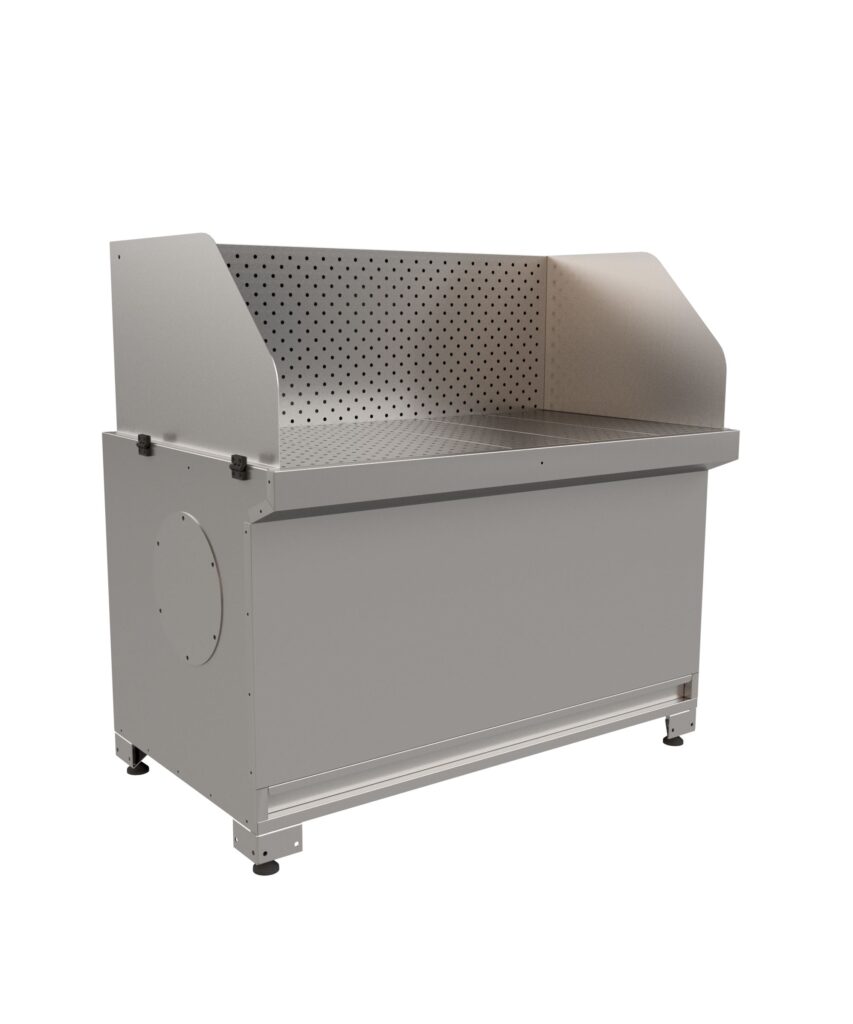
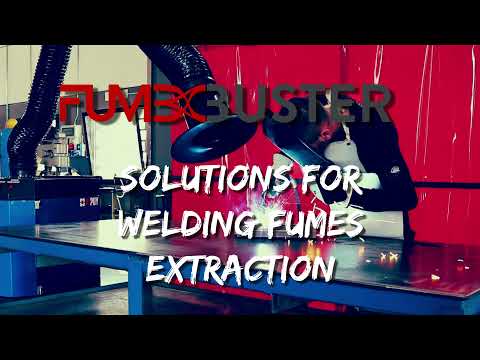
Use DUPUY’s product film to see the parts of a mobile fume extractor (arm, hood and filter housing), then judge whether your welders could keep a hood that close to the arc on your own workpieces.
How should welding fume filtration be specified?
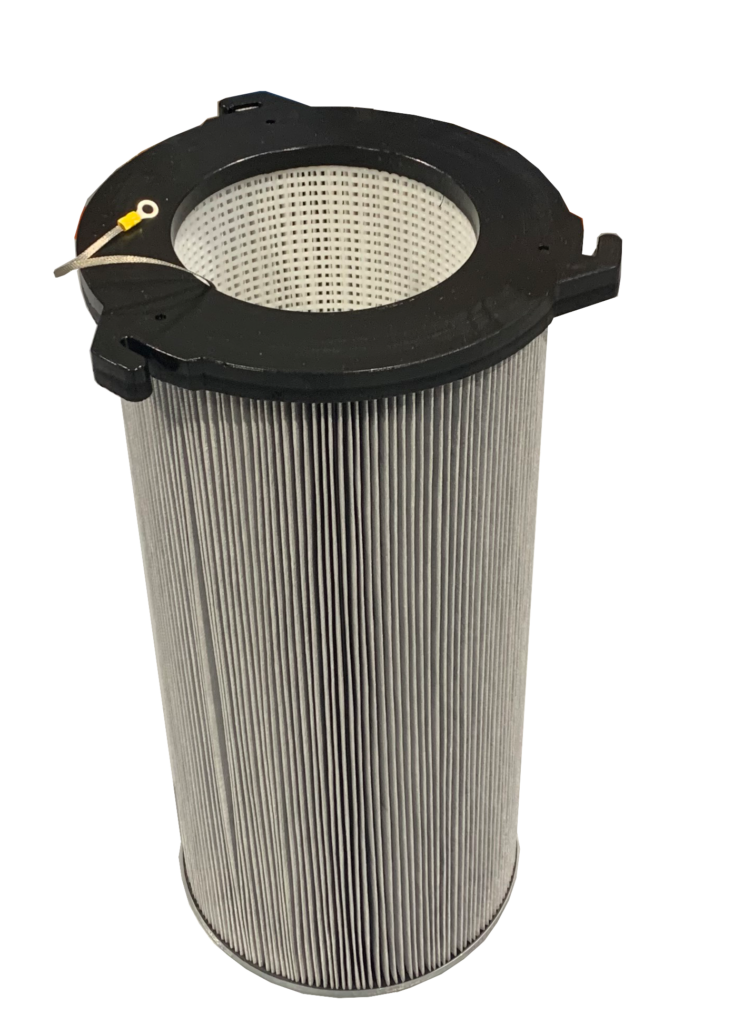
Specify filtration by what is in the fume and where the cleaned air goes. Welding fume is mostly very fine particulate, so particulate filtration is the core; gases and odors need a different medium, such as activated carbon.
DUPUY offers FUMEBUSTER in three versions: FUMEBUSTER AC (“Activated Carbon”), FUMEBUSTER PRO (“Compact and handy”) and FUMEBUSTER H (“Fume extractor with hepa filter”), all described as “mobile and compact”. Before deciding whether cleaned air can return to the bay, ask for the filter specification and test basis of the exact model you are offered.
The international reference for this equipment is ISO 21904-1:2020, which covers the capture and separation of welding fume and replaced the ISO 15012 series; Part 2 deals with testing and marking of separation efficiency. Where a supplier claims a separation class under ISO 21904, ask for the test report, not only the label.
What should an HSE manager prepare before requesting quotes?
Prepare a short data pack so every supplier quotes against the same facts; it also makes proposals comparable.
- A list of welding stations with the process, base metal and consumables used at each
- Safety data sheets for the wires, electrodes and fluxes in current use
- Typical arc time per shift and the number of welders working at once
- Photos or short videos of welders at work on typical and largest workpieces
- A bay layout with door positions, crane paths, ceiling height and existing ventilation
- Exposure monitoring results, if available, and the current respiratory protection policy
- Whether cleaned air may be recirculated or must be exhausted outside
- Available power, compressed air, and floor or wall space for units and ducting
- Who will change filters, and how used filters and collected dust will be handled under site rules
How do you check that welding fume extraction is working?
Check capture during real work, not just that the fan runs. The sequence below runs from the initial description of the welding through to verified exposure.
Selecting welding fume extraction
- Describe the welding
- Choose capture method
- Specify filtration
- Commission and train
- Verify exposure
- Commission against the specification. Measure airflow at each hood or nozzle and record it as the baseline.
- Observe real work. Watch whether the plume is drawn into the hood during typical welds; a smoke test helps make the airflow visible.
- Train welders. Hood position is the welder’s job, so show the effective capture distance and make repositioning routine.
- Monitor exposure. Use personal air sampling by a competent person to confirm the controls work for each process.
- Maintain and re-check. Track filter condition or cleaning cycles, replace filters on schedule, and re-measure airflow periodically.
Which mistakes undermine fume extraction in steel fabrication?
- Relying on open doors or roof fans. Both move air around the bay but do not pull the plume away from the welder’s breathing zone.
- Leaving hoods too far from the arc. Capture falls off quickly with distance, so a hood parked out of the way protects no one.
- One mobile unit for a whole bay. A single unit serves one welder at a time; plan capacity for the number of welders working at once.
- Ignoring alloy and coating changes. A unit chosen for mild steel may not suit stainless or galvanized work taken on later.
- No spark protection or filter plan. Ask how the unit handles sparks from welding and grinding, and keep spare filters in stock.
How AFE supports welding fume extraction projects
AFE supplies DUPUY welding fume extractors, dust collectors and industrial vacuums, and helps HSE and engineering teams turn the information above into a specification. Its consulting and engineering service covers process analysis and system design, and replacement filters and consumables can be planned with the order so units are not left running on blinded filters. DUPUY catalogs are available in AFE’s resources section.
If the same workshop struggles with machining residues, see managing oil and metal chips around machine tools; for the same source-capture principle applied to process dust, see how source extraction and housekeeping work together. More steel-sector guides are in AFE’s steel insights.
Al Faisaliah Enterprises · Aqaba
Turn your welding data into a specification
Send AFE your welding processes, materials, consumable safety data sheets and bay photos. You get advice on capture method, filtration and the DUPUY equipment to match.
Frequently asked questions
Is one mobile fume extractor enough for a fabrication bay?
Usually not. A mobile extractor with an arm serves one welder at a time and only works when the hood is kept close to the arc. In a bay with several welders, plan capture for every welder working at the same time, either with several units, on-torch extraction or a centralized system with multiple arms. Base the number on your arc-time and station data.
Can filtered welding fume air be returned to the workshop?
Sometimes, but only on documented evidence. Recirculation depends on what is in the fume, such as alloying elements from stainless steel, and on the tested performance of the exact filter. Ask the supplier for the filter specification and test report, review them with your occupational hygienist, and confirm with personal exposure monitoring after installation. If the evidence is weak, exhaust outside.
Do welders still need respiratory protection when extraction is installed?
It depends on the measured result. UK HSE expects local exhaust ventilation for indoor welding and says it should be supplemented by respiratory protective equipment where LEV alone does not give adequate control, and that suitable RPE should be provided for welding outdoors. Personal exposure monitoring shows whether extraction alone is enough for each process and task.
What is ISO 21904 and why should buyers ask about it?
ISO 21904-1:2020 sets general requirements for equipment that captures and separates welding fume, including mobile and stationary units, and replaced the ISO 15012 series. Part 2 covers testing and marking of separation efficiency. Asking for the test basis behind any separation claim helps you compare units on evidence rather than on catalog wording.
Does welding in an open or outdoor area remove the need for extraction?
No. US OSHA notes that welding outdoors or in open work spaces does not guarantee adequate ventilation, and UK HSE says appropriate respiratory protection should be provided for welding outdoors. Wind can carry fume away from the welder or straight through the breathing zone, so assess each position rather than assuming open air is enough.
Sources and references
- IARC Monographs Volume 118: Welding, Molybdenum Trioxide, and Indium Tin Oxide — International Agency for Research on Cancer
- Falcone et al. (2018), PLoS One 13(12): e0209413 — PLoS One / NIOSH authors
- Safety Alert STSU1-2019: Change in enforcement expectations for mild steel welding fume — UK Health and Safety Executive
- FactSheet FS-3647: Controlling Hazardous Fume and Gases during Welding — US OSHA
- Welding fume extractors — DUPUY
- ISO 21904-1:2020 Equipment for capture and separation of welding fume, Part 1: General requirements — ISO
This article is general technical guidance. Equipment suitability, ATEX conformity and hygiene performance must be confirmed for each site and application.
Written for plant, maintenance, HSE and quality teams in Jordan, Saudi Arabia and Iraq.