The short answer
Dry steam degreasing fits a maintenance shutdown after the machine is isolated, cooled and cleared of loose chips and free oil, and before inspection, repair, re-lubrication and painting. Plan it like any other shutdown task: test a patch first, protect electrics, bearings and seals, collect oily condensate, and check each machine against an agreed standard before sign-off.
Key takeaways
- Schedule steam degreasing after isolation and bulk oil and chip removal, and before inspection, repair, re-lubrication or coating work.
- Run a test patch on each residue and substrate first; results depend on residue type, age and the surface underneath.
- TECNOVAP's published steam temperatures are generator-side figures, not surface temperatures, so judge results on the machine itself.
- Protect or exclude electrics, sensors, open bearings and seals, and dry and re-oil bare steel afterwards.
- AFE can supply TECNOVAP generators or deliver steam cleaning and degreasing on site; a site assessment confirms the scope.
In a steel plant or metalworking shop, a shutdown window is short and every hour is already booked. Machines come down coated in lubricant residue, hydraulic oil film and grease mixed with scale and metal fines. That layer hides leaks and cracks, slows inspection and gets in the way of repair work. Dry steam degreasing of industrial machinery can remove much of it with heat and a low volume of water, but only when it is planned as a shutdown task with its own sequence, permits and acceptance check.
This guide is written for maintenance managers. It explains where steam degreasing sits in the shutdown sequence, which machine areas suit it, what the surface test and work procedure must cover, and how to choose between buying TECNOVAP equipment through AFE and contracting AFE’s on-site service.
What does dry steam degreasing do on industrial machinery?
Dry steam degreasing uses a generator that produces dry saturated steam, steam with a low moisture content, to soften oils and greases so they can be lifted, wiped or vacuumed off the surface. Heat does most of the work; the steam jet and the tool (lance, brush or cloth) do the rest.
TECNOVAP, the Italian steam generator manufacturer AFE works with, states that its stainless-steel range covers power outputs from 2.45 kW to 40 kW. It describes the Steam Power Plus as delivering “dry saturated steam at 183° C” and the Steam Box Vac Industrial as pairing the same steam output with a built-in wet/dry vacuum. Treat these as generator-side figures. They do not tell you the temperature at the nozzle or on the machine, which falls with distance, travel speed and the mass of cold steel underneath.
Results depend on three things you can only judge on site: the residue (a fresh lubricant film, oil mixed with fines and scale, or aged, oxidized deposits near hot zones), how long it has built up, and the substrate (bare machined steel, painted guards, rubber or plastics). That is why every application starts with a test patch, not a promise.
Where does steam degreasing fit into a maintenance shutdown?
Steam degreasing belongs after isolation, cool-down and bulk removal of chips and free oil, and before inspection, repair, re-lubrication and painting. Done earlier, it means working on live or hot equipment; done later, it re-soils repaired parts and wastes inspection time on dirty surfaces.
| Shutdown phase | Steam degreasing activity | Why it sits here | Typical owner |
|---|---|---|---|
| Before the window | Survey machines, photograph residues, run a test patch, agree the work procedure | Proves the method on your residue and substrate before hours are committed | Site maintenance with AFE |
| Start of the window | Lockout/tagout, depressurize hydraulics, let hot parts cool | Steam work on energized, pressurized or hot plant is not acceptable | Site maintenance and electrical team |
| Bulk removal | Drain sumps; vacuum chips, sludge and free oil | Steam is the wrong tool for heavy loose material; it scatters chips and wastes time | Site team, using equipment such as an oil and chip vacuum |
| Steam degreasing | Work top-down, component by component, collecting condensate and residue | Gives clean surfaces for inspection and repair | AFE service crew or trained site staff |
| Inspection and repair | Non-destructive testing, leak checks, part replacement | Cracks and leak paths are easier to see on clean metal | Site maintenance and inspectors |
| Re-protection and restart | Dry, re-oil bare steel, re-grease, remove covers, restart | Restores the protection that degreasing removed | Site maintenance |
Where steam degreasing fits in a shutdown
- Survey and test patch
- Isolate and cool
- Remove bulk oil, chips
- Steam degrease
- Dry, inspect, re-protect
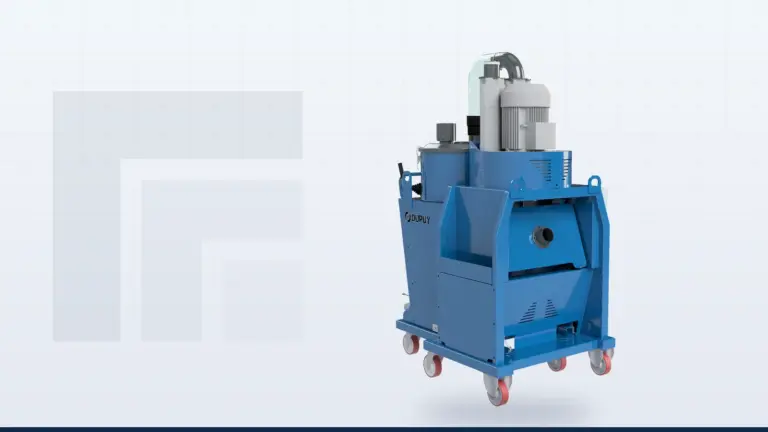
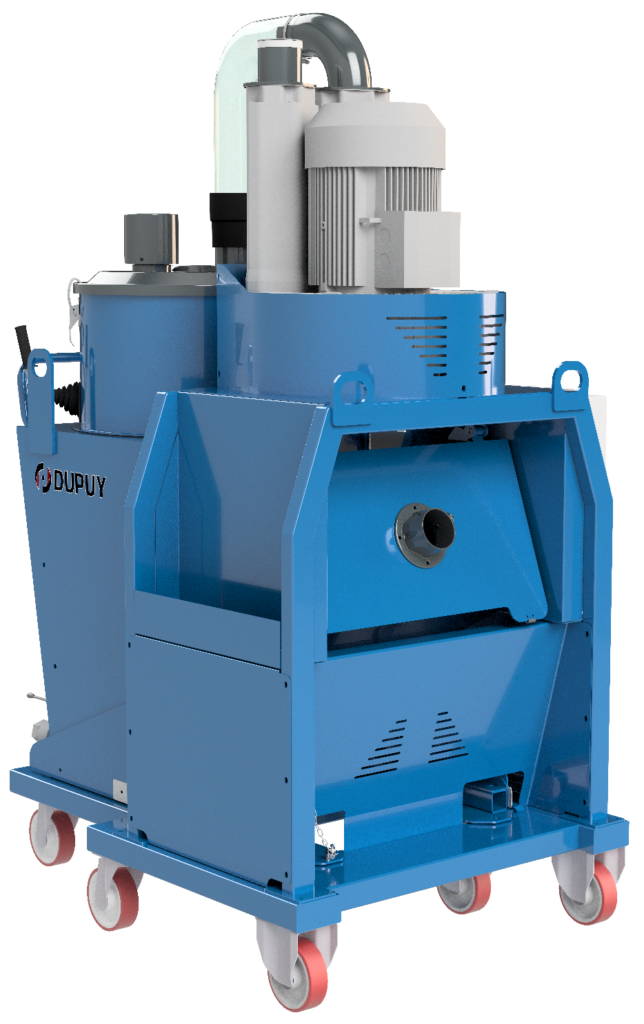
For the bulk-removal step, a dedicated oil and chip vacuum avoids pushing swarf and coolant around with steam. DUPUY states that its Oilvac range uses grated metal baskets so emulsion can “be instantly separated from sludge and slurries,” which helps the site handle each fraction under its own procedures. The guide on collecting oil and metal chips around machine tools covers that equipment in detail.
Which machine areas suit steam, and which need protection?
Frames, guards, housings and hydraulic block exteriors usually suit steam once the machine is isolated; electrics, open bearings and seals need protection or exclusion. Agree the list machine by machine and mark it on the work procedure.
| Machine area | Typical approach | Precaution |
|---|---|---|
| Frames, bases, guards, covers | Generally suitable | Test painted surfaces and labels first |
| Hydraulic power units, valve blocks, cylinder exteriors | Suitable after isolation | Depressurize, cap open ports, keep the jet off rod seals |
| Gearbox and housing exteriors | Suitable | Cover breathers and vents so moisture cannot enter |
| Open bearings, lip seals, couplings | Avoid the direct jet | Steam can drive water and dirt past seals and wash out grease; re-grease afterwards |
| Motors, terminal boxes, sensors, encoders, control cabinets | Exclude or protect | Site electrical approval required; AFE does not carry out electrical work |
| Bare machined surfaces such as slideways, shafts and rolls | Test first | Dry immediately and re-oil to prevent flash rust |
| Rubber, plastics, cable sheaths | Test first | Heat can soften or deform some materials |
What should the surface test and work procedure cover?
The surface test proves the method on your residue; the approved work procedure turns that result into repeatable, safe steps. Both should be signed off before the shutdown starts.
- Residue and substrate: lubricant or hydraulic fluid type, how long it has built up, whether it is mixed with scale or fines, and the surface beneath.
- Equipment settings: generator model, accessory, stand-off distance, travel speed and number of passes used on the test patch.
- Isolation: the site’s lockout/tagout points, depressurized circuits and the permit-to-work reference.
- Protection list: which electrics, bearings, seals, breathers and sensors are covered or excluded, and who checks the covers before steam starts.
- Residue and condensate collection: drip trays, absorbents or vacuum pick-up, plus the site’s own waste classification and disposal route.
- Hot-work hazards: burn protection, face and hand PPE, hot surfaces and heat stress during summer shutdowns.
- Acceptance check: a visual standard, a clean-cloth wipe test, before-and-after photos and, where a coating follows, the coating supplier’s surface preparation requirement.
- Re-protection: drying method, rust preventive or oil for bare steel, and the re-greasing points.

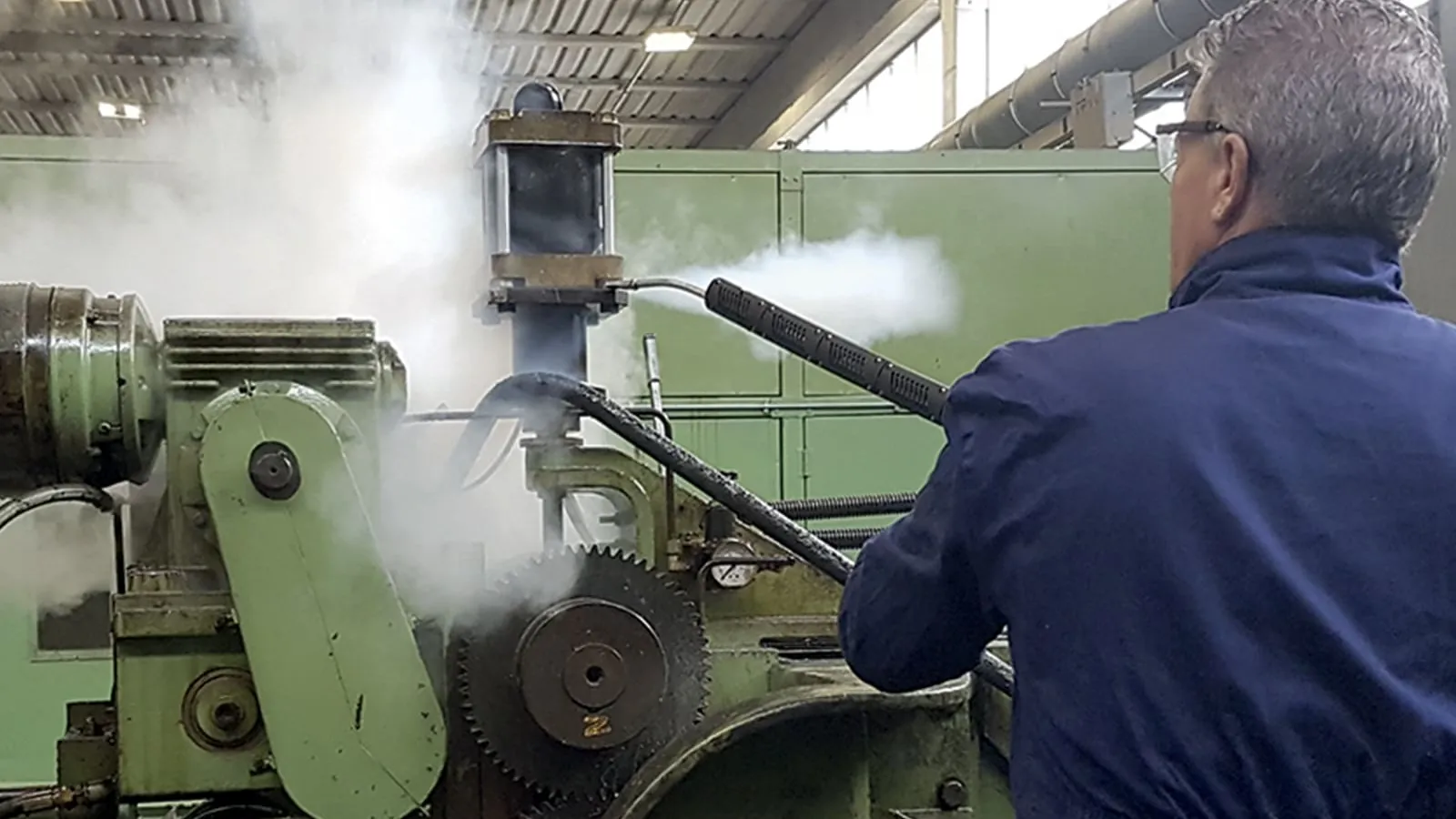
Watch how the operator works component by component on oily hydraulic parts, and note the tool, distance and pace used: these are the same variables your own test patch should record.
How do you measure the result and plan the next shutdown?
Measure each machine against the acceptance check and record the effort it took, so the next shutdown plan rests on data rather than estimates.
- Time per machine or area, including setup, protection and re-protection, not only steam time.
- Re-passes needed on aged or baked deposits, which shows where mechanical or chemical help may be needed next time.
- Residue and condensate collected, so waste handling and absorbent stock can be planned.
- Findings revealed by the clean surface, such as weeping seals, cracked welds or loose fittings, logged as work orders.
- Re-soiling after restart: a fast return of oil film usually points to a leak, not a cleaning problem.
These records also answer the commercial question of how much steam degreasing the plant really needs each year, and whether owning equipment or contracting the work makes more sense.

Compare how the technique scales from small components to a full machine, and use it to estimate how long a similar machine would take in your own shutdown plan.
Should you buy steam equipment, rent it or contract the service?
Buy when steam degreasing is a routine task for a trained in-house team; contract AFE’s service when the work is concentrated in shutdowns or you lack trained operators; trial first when results on your residue are uncertain.
| Situation | Better fit | Why |
|---|---|---|
| Weekly or continuous machine cleaning with trained staff | Buy TECNOVAP equipment through AFE | Used often enough to justify ownership and training |
| One or two planned shutdowns a year | Contract AFE’s steam cleaning and degreasing service | Crew, equipment and method arrive together for a defined scope |
| New residue, new substrate or unproven method | Test patch or trial before committing | Confirms performance and cycle time on your machines |
| Large shutdown with many machines in parallel | Combine owned units with an AFE crew, or ask about rental | Matches capacity to a short window |
If you plan to buy, order with the shutdown date in mind. Equipment from Italy reaches Jordan, Saudi Arabia and Iraq through import and customs steps, so ask AFE for a current lead time rather than assuming stock, and plan accessories and spare parts at the same time through MRO and consumables support. For short peaks, ask whether equipment rental is available for your dates.
How does AFE support steam degreasing in steel and metalworking plants?
AFE supports both routes: it supplies TECNOVAP dry steam generators for in-house teams and delivers on-site steam cleaning and degreasing for defined shutdown scopes. Where the task list grows, its consulting and engineering team can help sequence steam, vacuum and inspection tasks.
AFE works within your isolation and permit system. It does not carry out electrical isolation or electrical work, and it does not transport or dispose of waste; those stay with the site. For a combined workflow with oil recovery and chip removal, see how to sequence machine conditioning tasks, or browse more steel-sector guides.
Al Faisaliah Enterprises · Aqaba
Plan steam degreasing into your next shutdown
Send AFE your machine list, photos of the residues and the shutdown window. We will propose a test patch, the equipment or service scope, and the checks needed before sign-off.
Frequently asked questions
Can dry steam degreasing be done while a machine is running?
For manual degreasing of machinery, no. The machine should be isolated, depressurized and cooled under the site's lockout/tagout and permit system before steam work starts. TECNOVAP states that some of its conveyor belt systems can work during the production cycle when mounted under the conveyor, but that is a dedicated belt application, not hand-held degreasing of running equipment.
Does steam degreasing replace solvent or detergent cleaning?
Not always. Fresh lubricant films often respond well to heat, while aged, oxidized or baked deposits may need extra passes, brushing or an approved cleaning chemical. TECNOVAP offers models with detergent injection, such as the EVO, according to the manufacturer. A test patch on your own residue is the only reliable way to decide, and any chemical must be approved by the site.
What happens to the oil and water removed from the machine?
Loosened residue and condensate should be collected with drip trays, absorbents or vacuum pick-up, then classified and handled under the site's own waste procedures. AFE does not transport or dispose of waste. Where large volumes of coolant and chips are involved, removing them first with an oil and chip vacuum keeps the steam step smaller and the waste streams separate.
Will steam cause rust on machined steel surfaces?
Bare steel that has been degreased and exposed to moisture can flash rust if it is left wet. The work procedure should state how each bare surface is dried straight after steam work and which rust preventive or oil is re-applied. Slideways, shafts and other precision surfaces should be included in the test patch so the drying and re-protection steps are proven before the shutdown.
What should we send AFE before a site assessment?
Send a list of the machines, photos of the residues, the lubricants and hydraulic fluids in use, the shutdown dates and length, and a summary of your isolation and permit arrangements. Add any areas you already know must be excluded, such as control cabinets. With that, AFE can propose a test patch, an equipment or service scope, and the checks needed for sign-off.
Sources and references
- TECNOVAP: steam cleaners (company and ranges) — TECNOVAP
- Stainless steel steam generator range — TECNOVAP
- Steam Power Plus — TECNOVAP
- Steam Box Vac Industrial — TECNOVAP
- EVO steam generator with detergent injection — TECNOVAP
- Conveyor belt steam cleaning systems — TECNOVAP
- Oil and chips industrial vacuum cleaners — DUPUY
This article is general technical guidance. Equipment suitability, ATEX conformity and hygiene performance must be confirmed for each site and application.
Written for plant, maintenance, HSE and quality teams in Jordan, Saudi Arabia and Iraq.