The short answer
Furniture and joinery factories should capture wood dust at each machine with local extraction, then remove what escapes with an industrial vacuum of at least Class M, never by sweeping or compressed air. Overhead layers need planned removal, and in classified dust zones every vacuum must be certified for that zone, model by model.
Key takeaways
- IARC classifies wood dust as carcinogenic to humans (Group 1); HSE links it to nasal cancer and asthma.
- Capture at the machine comes first; cleanup handles what escapes.
- HSE advises a vacuum of at least Class M and no sweeping or compressed air.
- Many wood dust fires start in the extraction system, so plan fan and filter location.
- Give suppliers machine lists, simultaneous use, wood types and zone drawings before asking for quotes.
A furniture or joinery factory makes wood dust at almost every machine: saws, planers, routers, moulders, CNC centres and, above all, sanders. Some of it is coarse chips that fall to the floor; some is fine dust that stays in the air, drifts across the hall and settles on beams, ducts and light fittings. Good wood dust extraction has to deal with both.
This guide is for production, maintenance and HSE managers in Jordan, Saudi Arabia and Iraq. It explains why wood dust is a health and fire risk, how capture at the machine and cleanup of settled dust work together, and what to give a supplier so the equipment matches your shop.
Why does wood dust need two kinds of control?
Wood dust is both a health hazard and a fuel, so a plant must control what workers breathe and what settles around them. One system rarely does both jobs well.
- Health: the UK Health and Safety Executive (HSE) states that “wood dust can cause serious health problems” and that “hardwood dust can cause cancer, particularly of the nose.” HSE also names hardwood, softwood and wood composite dusts as “a common cause of occupational asthma.”
- Cancer classification: the International Agency for Research on Cancer (IARC) concluded that “wood dust is carcinogenic to humans (Group 1),” based on adenocarcinoma of the nasal cavities and paranasal sinuses.
- Fire and explosion: HSE states that “wood dust can cause fire and explosion” and that “many fires start in the extraction system.” US OSHA lists wood among the combustible dusts in its National Emphasis Program.
For exposure, the EU binding limit for hardwood dust is 2 mg/m³ under Directive (EU) 2017/2398, while HSE gives a UK limit of 3 mg/m³ for hardwood and 5 mg/m³ for softwood (8-hour averages). These are EU and UK references; in Jordan, Saudi Arabia and Iraq, confirm which national limits apply to your site.
Where does a furniture factory make the most dust?
Sanding and fine machining make the most hazardous dust, because the particles are small enough to stay airborne. HSE notes that “the dustiest tasks are sanding, assembly and cleaning,” and that settled dust “contains the fine particles that are most likely to damage the lungs.”
| Area | What it produces | Primary control | Cleanup task |
|---|---|---|---|
| Panel saws and cross-cut saws | Chips and fine dust thrown by the blade | Machine hood connected to extraction | Vacuum around the infeed and outfeed |
| Planers, thicknessers, moulders | High volume of chips and shavings | Machine extraction sized for chip volume | Vacuum spill under the machine |
| CNC routers | Chips plus fine dust at the tool | Spindle hood or table extraction | Vacuum the bed and around clamps |
| Hand and orbital sanding | Very fine dust in the breathing zone | On-tool extraction or a downdraught bench | Vacuum benches and floors daily |
| Wide-belt sanders | Fine dust in large amounts | Dedicated extraction point | Check for leaks and deposits around housings |
| Overhead structure | Settled fine dust on beams, ducts, trays | Reduce escape at source | Planned high-level removal from the ground |
The table shows why one vacuum or one collector is never the whole answer. Each source needs its own capture, and the dust that escapes needs a planned cleanup route.
How should wood dust extraction work at the machine?
Capture at the machine is the first line of control: HSE says to “provide dust extraction (also known as local exhaust ventilation or LEV) at woodworking machines.” The hood has to match the source, because a hood that does not catch the dust leaves the rest of the system working for nothing.
- Enclose where you can: HSE’s LEV guidance says enclosures are always more effective than capturing hoods, and capturing hoods work only when the source is close to the hood face.
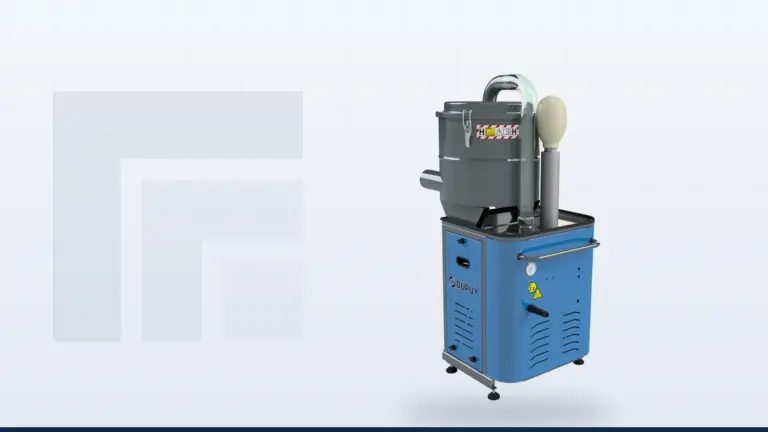
- Match airflow to the source: DUPUY separates the two jobs clearly: a dust collector moves a large volume of air to capture light particles, while an industrial vacuum lifts settled material through a hose.
- Fit indicators: a simple manometer showing pressure across the filter tells operators when airflow has dropped.
- Plan for fire: because many fires start in the extraction system, HSE advises considering “the location of the fan and air cleaner,” and building the system so ignition sources are removed.
DUPUY lists wood among the applications of its DEDUST dust collectors and describes on-board machine vacuums and localized suction for the wood and plastics sector. Which unit suits which machine depends on the dust, the airflow and the number of points running at once; see dust collector or industrial vacuum for the difference.
How should settled wood dust be cleaned up?
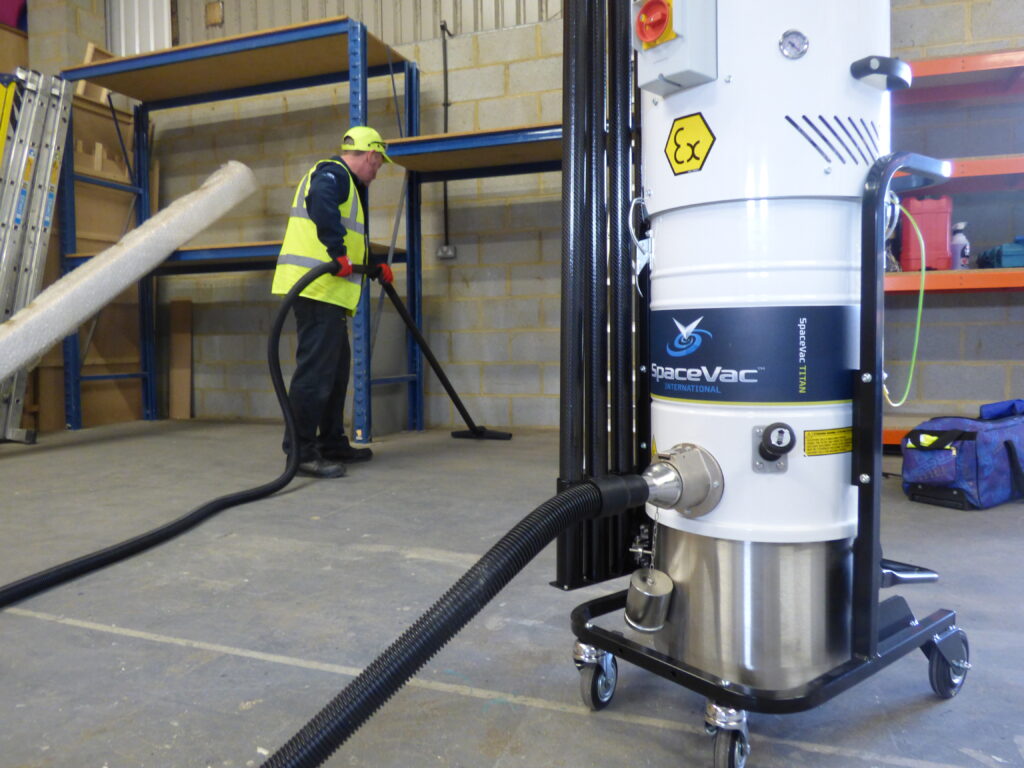
Settled dust should be vacuumed, not swept or blown. HSE is direct: “always clean up using a suitable industrial vacuum cleaner that at least meets the Class M classification,” and “never sweep up or use compressed air lines as this will disturb the dust and allow it to become inhaled.”
- Floors and benches daily. Vacuum at shift end with a Class M (or better) industrial vacuum and suitable floor and crevice tools.
- Machines on a schedule. Clean machine frames, guards, motor covers and tops of cabinets, where fine dust collects out of sight.
- Around the extraction system. Check hoods, flexible hoses and the collector area for leaks and deposits; HSE’s LEV guidance asks whether there are significant deposits in and around hoods.
- Overhead on a planned interval. Remove layers from beams, ducts and cable trays from the ground before they build up, instead of brushing them down onto machines.
- Record and adjust. Note where dust returns fastest; that tells you which source needs better capture.
Wood dust control sequence
- Capture at machine
- Vacuum floors daily
- Clean machines on schedule
- Remove overhead layers
For the dust-class question in detail, see vacuum dust classes L, M and H.
Which wood dust equipment fits which job?
Most furniture plants need a mix: fixed extraction or collectors at machines, mobile industrial vacuums for cleanup, and a way to reach overhead structure. The choice depends on volume, how many points run at once, and whether areas are zoned.
- Fixed capture at sawing, planing, routing and sanding points, with filters and indicators specified.
- A mobile industrial vacuum with at least Class M filtration for floors, benches and machines.
- Antistatic or conductive hoses and grounded accessories where dust is combustible; see antistatic hose and grounding.
- An ATEX-certified vacuum model only where zones have been documented, matched to the zone.
- A central vacuum network if many cleaning points are used every shift.
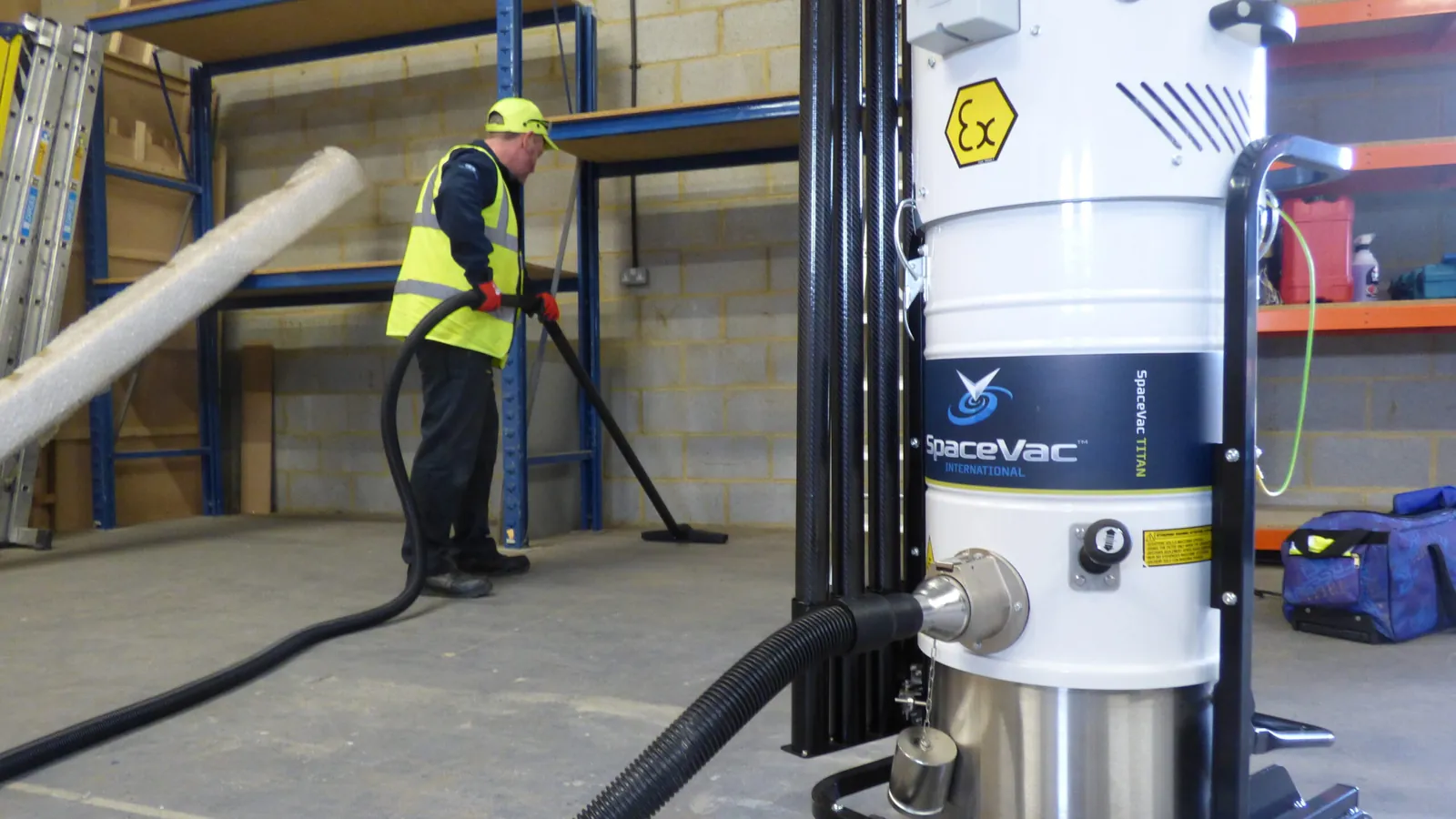
- A ground-based high-reach system for beams, ducts and roof structure.
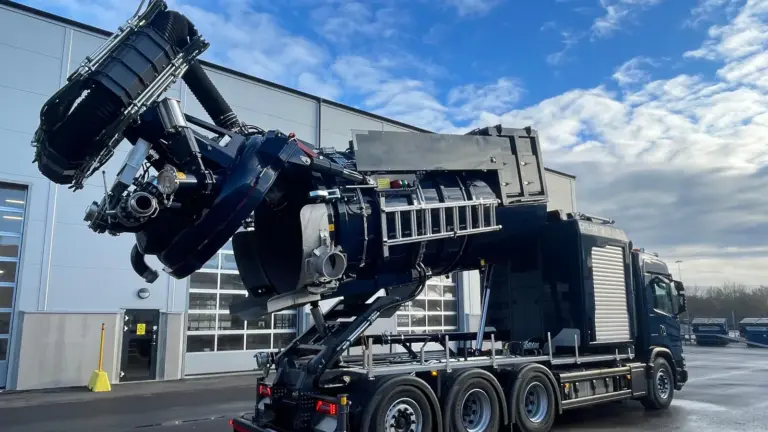
AFE supplies DUPUY industrial vacuums, dust collectors and central vacuum systems, and SpaceVac high-reach pole systems, through its industrial vacuum systems range. For overhead layers, AFE also offers Internal high clean dust removal as a service.

The film shows the DUPUY W3 mobile vacuum, whose description names carpentry among its uses; watch the hose and tool changes, because cleanup speed in a joinery shop depends on having the right tool for floors, benches and machine frames.
What should you give a supplier before choosing equipment?
A supplier can only propose the right mix if it knows your machines, your dust and your layout. Prepare this before you ask for a quote:
- A machine list with type, location and hours of use per shift.
- Which machines run at the same time, and how many cleaning points may be used together.
- Wood types (hardwood, softwood, panels) and whether sanding is manual, orbital or wide-belt.
- Any existing extraction: collector type, filter condition, indicator readings and known leaks.
- Any dust hazard analysis or zone drawings; see combustible dust hazard analysis.
- Photos of overhead deposits and the heights involved.
- Power supply and space for collectors or a central unit.
If you want to try equipment before buying, AFE offers equipment rental for trials and shutdowns, and its consulting team can review layout and ATEX questions.
How do you know the plan is working?
You know wood dust control is working when less dust escapes and less returns between cleans. Track simple indicators rather than guessing.
- Indicator readings: pressure across collector filters stays in the normal band; a rising trend means filters need attention.
- Return rate: how quickly dust reappears on benches, machine tops and beams after cleaning.
- Visible clouds: dust still drifting from a machine during work means its capture needs review.
- Exposure checks: where required, air monitoring compared with the limit that applies to your site.
- Maintenance log: HSE says extraction must be kept “properly maintained and working correctly”; a log shows whether it is.
When a machine is added or moved, check its extraction again. A system that worked for the old layout may not cope with the new one.
Al Faisaliah Enterprises · Aqaba
Match extraction and cleanup to your machines
Send your machine list, simultaneous use and photos of dust deposits. AFE proposes the mix of collectors, industrial vacuums and high-reach equipment that fits your shop.
Frequently asked questions
Is a shop vacuum enough for wood dust in a joinery workshop?
HSE advises cleaning up with a suitable industrial vacuum cleaner that at least meets the Class M classification. A standard shop or commercial vacuum may not hold fine dust in its filter and can blow it back into the room. Check the dust class of the complete machine, not only the filter label, and replace filters only with parts of the same class.
Do we need a dust collector and a vacuum, or just one?
Usually both. A dust collector or local extraction moves a large volume of air to capture dust at the machine while it is being made. A vacuum lifts dust that has already settled on floors, benches and machines. A plant that relies on one only will either breathe the dust or keep sweeping it.
Does wood dust need ATEX equipment?
Wood dust is combustible, but whether an area is a classified zone depends on your own dust hazard assessment and zone drawings. Where zones exist, each vacuum and accessory must be certified for that zone. Outside classified zones, conductive hoses and grounding still matter. Ask for the certificate of the exact model, not a brand-level statement.
How often should overhead wood dust be removed?
There is no single interval. Inspect beams, ducts and cable trays after cleaning and note how fast layers return; set the interval from that and tighten it where dust builds quickly. Removing dust from the ground with a high-reach vacuum avoids brushing it down onto machines and reduces the need for work at height.
Sources and references
- Wood dust — UK Health and Safety Executive
- Fire and explosion (woodworking) — UK Health and Safety Executive
- Asthma: Woodworkers — UK Health and Safety Executive
- Wood dust (IARC Monographs Volume 62, summary and evaluation) — IARC / WHO IPCS INCHEM
- Directive (EU) 2017/2398 amending Directive 2004/37/EC (carcinogens or mutagens at work) — European Union
- Combustible Dust National Emphasis Program, CPL 03-00-008 — US OSHA
This article is general technical guidance. Equipment suitability, ATEX conformity and hygiene performance must be confirmed for each site and application.
Written for plant, maintenance, HSE and quality teams in Jordan, Saudi Arabia and Iraq.