The short answer
To propose an ATEX vacuum, a supplier needs laboratory data on your dust (explosibility and ignition sensitivity), your documented zone classification for every area where the vacuum will stand, collect or be emptied, and how it will be used. In return, ask for the exact model's ATEX marking, conformity documents and the list of accessories they cover.
Key takeaways
- Flour, sugar and many other food powders are combustible; EU rules treat settled dust layers as a potential source of explosive atmosphere.
- The site classifies its zones; the supplier matches equipment category to them. Category 3 equipment is permitted only in Zone 22.
- ATEX suitability belongs to a specific model with its marking and certificate, not to a brand or product family.
- Send dust test results, zone drawings, collection points, quantities and duty pattern before asking for a quotation.
- Treat hoses, wands, tools, filters and grounding as part of the certified system, and keep them in the maintenance plan.
Flour, sugar and many other organic food powders are combustible dusts. In mills, bakeries, confectionery and blending plants, the vacuum used to clean them up can become part of the hazard if it is not matched to the dust and the area, because inside the machine the collected dust is carried in the airstream by design.
This checklist is for HSE managers choosing an ATEX vacuum for food processing. It sets out the dust data, zone information and usage details a supplier needs, and the documents to demand in return, so that the quotation you receive names a specific certified model rather than a brand or product family.
Why does vacuum selection matter for combustible food dust?
Vacuum selection matters because a dust cloud inside the collector, a static charge on a hose or a hot motor can each become an ignition source if the equipment is not designed and certified for the area. Food dusts are not a theoretical case:
- The US Occupational Safety and Health Administration (OSHA) lists organic dusts “such as sugar, flour, paper, soap, and dried blood” in its combustible dust National Emphasis Program.
- The US Chemical Safety Board (CSB) identified 281 combustible dust incidents in the United States between 1980 and 2005 that killed 119 workers and injured 718, with food products among the industries affected.
- At Imperial Sugar in Georgia, US, in 2008, 14 people died and 38 were injured. The CSB found the explosion “was fueled by massive accumulations of combustible sugar dust throughout the packaging building.”
European rules treat settled dust as part of the problem. Directive 1999/92/EC states that “layers, deposits and heaps of combustible dust must be considered as any other source which can form an explosive atmosphere.” Good housekeeping with the right vacuum reduces those layers; the wrong vacuum adds an ignition source to the clean-up.
What dust information does an ATEX vacuum supplier need?
A supplier needs evidence of how your dust behaves, not just its name. Safety data sheets are a weak basis on their own: in a CSB review of 140 US safety data sheets for combustible powders, 41% gave no warning that the powder could explode.
| Information | Why the supplier needs it | Usual source |
|---|---|---|
| Material identity at every collection point | Blends, fines and by-products can behave differently from the pure ingredient | Process map, HACCP flow diagram |
| Explosibility and explosion severity (for example Kst and Pmax) | Shows whether the dust is explosible and how violent an explosion could be | Laboratory dust test |
| Ignition sensitivity (minimum ignition energy, minimum ignition temperatures of cloud and layer) | Drives static control and acceptable surface temperatures | Laboratory dust test |
| Particle size and moisture | Fine, dry fractions are generally more reactive and load filters differently | Laboratory test or process data |
| Electrical conductivity of the dust | Conductive dusts call for specific designs; DUPUY offers models for “explosive and conductive dusts” | Laboratory test, material data |
| Quantities and cleaning pattern | Routine housekeeping, spill response and silo cleaning need different capacity and emptying | Shift records, cleaning schedule |
| Other materials collected | Liquids, sharp debris or hot particles change the design | Operations team |
| Hygiene constraints | Food-contact areas, allergen segregation and washdown affect materials and cleanability | Quality team |
If you have no dust test results, say so. The right response is to test, not to guess from a similar product.
What zone information should you give the supplier?
Give the supplier your documented zone classification for every place the vacuum will stand, collect from or be emptied in. Under Directive 1999/92/EC the employer classifies the zones (Article 7) and keeps an explosion protection document “drawn up prior to the commencement of work” (Article 8); the supplier then matches equipment to those zones.
| Zone | Definition, Directive 1999/92/EC Annex I | Equipment category permitted (Annex II, Part B) |
|---|---|---|
| Zone 20 | A combustible dust cloud “is present continuously, or for long periods or frequently” | Category 1 |
| Zone 21 | A dust cloud “is likely to occur in normal operation occasionally” | Category 1 or 2 |
| Zone 22 | A dust cloud “is not likely to occur in normal operation but, if it does occur, will persist for a short period only” | Category 1, 2 or 3 |
The practical consequence is simple: category 3 equipment may be used only in Zone 22. Send the zone drawings, the relevant extract of the explosion protection document and photos of each cleaning point, and say whether the vacuum must move between zones.
For Saudi buyers, the GCC Standardization Organization adopted IEC 62784 as GSO IEC 62784:2021, approved on 1 July 2021. DUPUY describes the European version as “the specific standard for mobile equipment used to extract combustible dust,” so ask how each candidate model was assessed against it. The EU directives cited here are internationally recognized references; in Jordan and Iraq, confirm which national requirements apply to your site.
From dust data to the right ATEX vacuum
Which certificates and documents should you ask for?
Ask for documents tied to one exact model, because ATEX suitability belongs to a model and its marking, not to a brand. DUPUY’s own range shows why: its ATEX page lists certified models such as the W2 EX, MHD and M series alongside ACD models that it states are not ATEX and are meant for non-classified areas.
- The exact model and variant name, matching the quotation and the nameplate.
- The ATEX marking, including the equipment category for dust, and the manufacturer’s stated zone for the inside and the outside of the machine. DUPUY words this per model, for example “designed for use in zone 20 indoor/22 outdoor” for the W2 EX 1/3D; confirm on the certificate what each part of that wording covers.
- The EU declaration of conformity and, where applicable, the EU-type examination certificate.
- The standards applied. DUPUY’s ATEX page cites Directive 2014/34/EU, Directive 1999/92/EC and EN IEC 62784:2018.
- Which accessories are covered. DUPUY states that its ATEX models use “antistatic filters,” motors designed to prevent overheating and “accessories made of conductive materials” for ground discharge; check that the hoses, wands and tools you order are the covered ones.
- Grounding, emptying and filter-change instructions for use in a classified area.
- A spare parts list that keeps the machine compliant, so a standard filter or hose is not fitted by mistake.
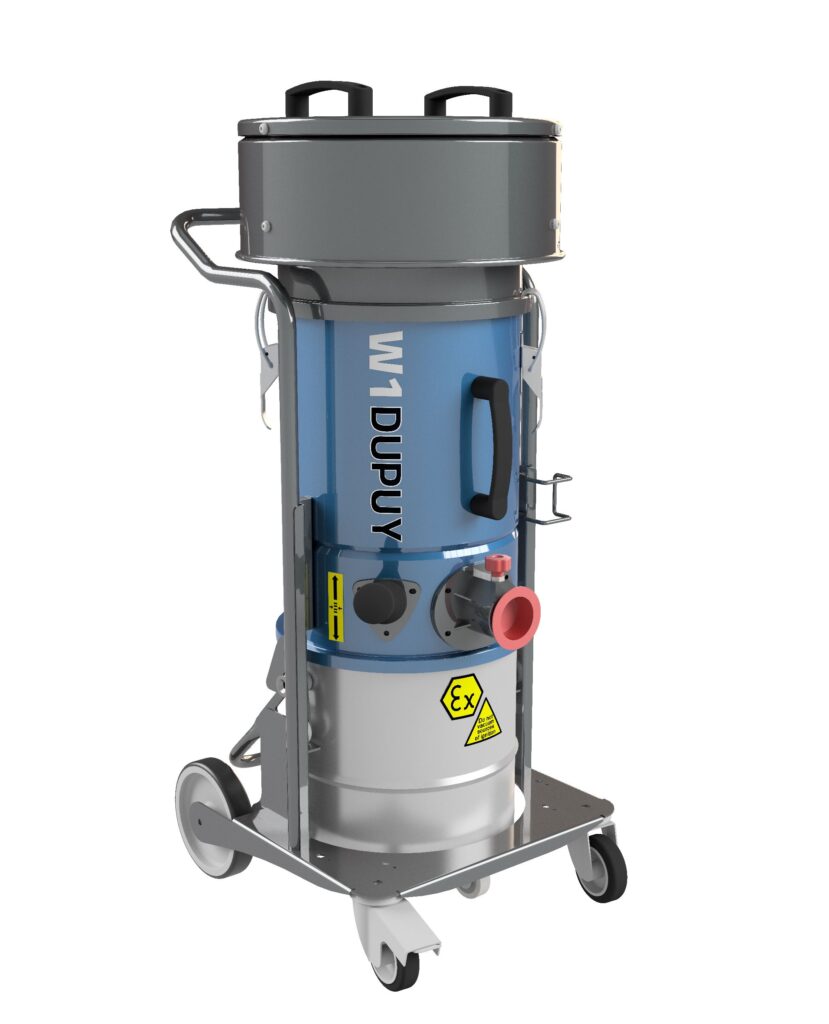

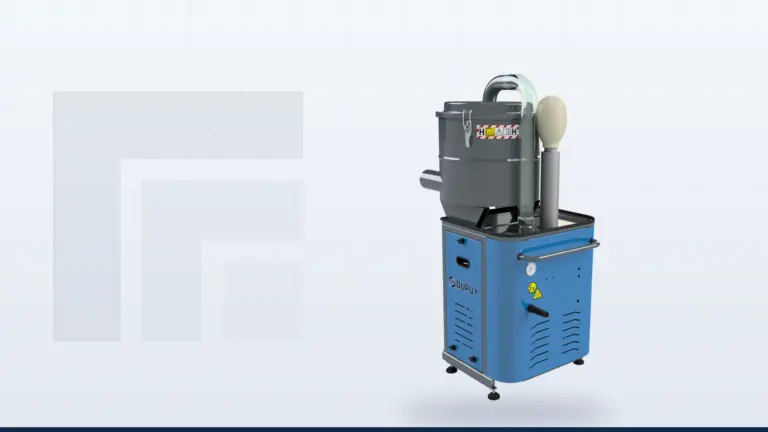
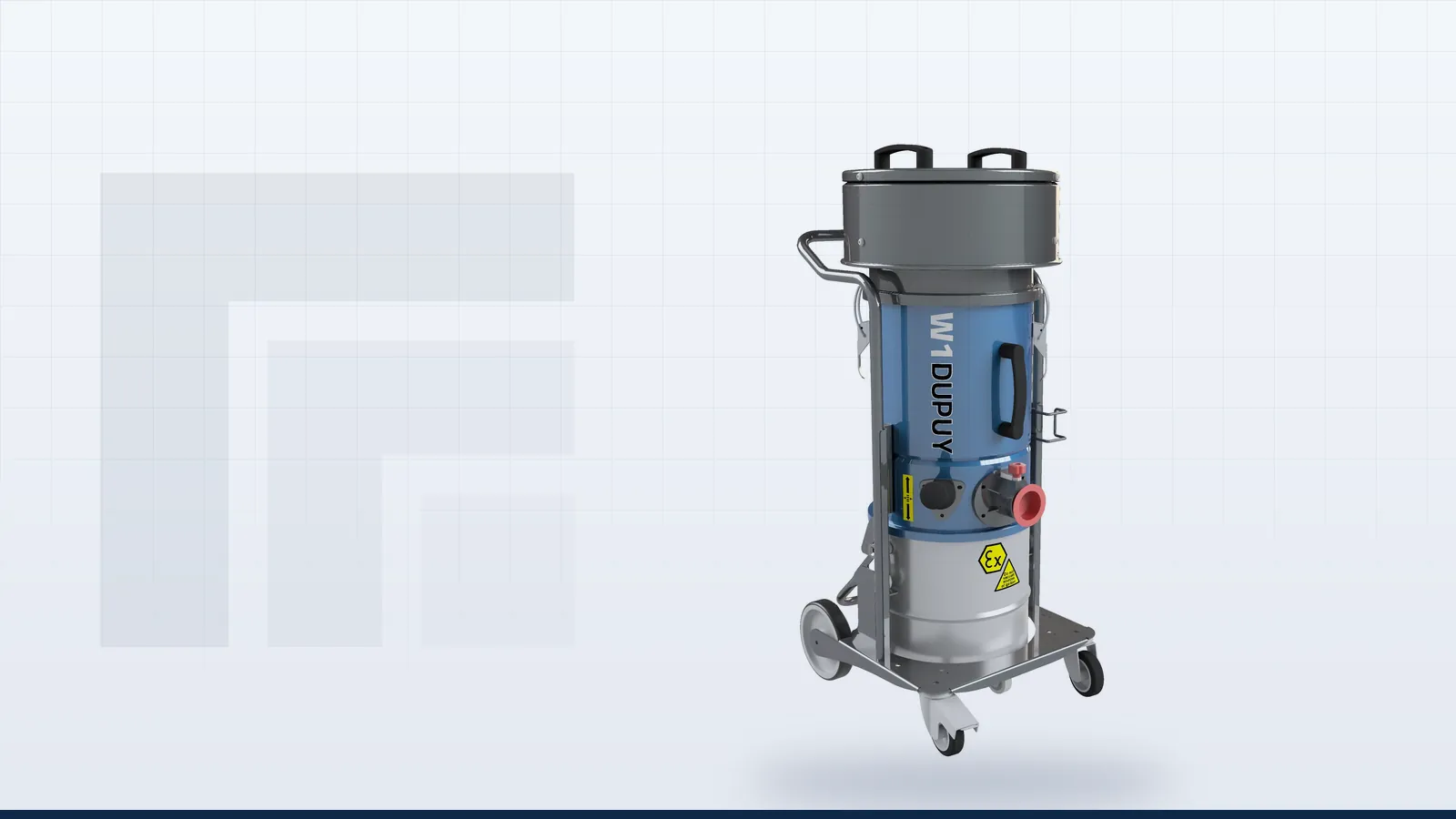
The film presents an “Atex 3D” version of a compact vacuum. In ATEX marking, 3D normally denotes category 3 equipment for dust, which Directive 1999/92/EC permits only in Zone 22, so check the certificate before planning its use anywhere else.
How will the vacuum be used day to day?
Describe the duty in detail, because the same dust and zone can still call for different machines. A mobile unit for spill response, a silo-cleaning set-up and a fixed multi-point network are separate selections.
- Portable or central: how many cleaning points, how far apart, and how many operators at once.
- Emptying: where and how collected dust is discharged; emptying a container of combustible dust can create the very cloud you are trying to avoid.
- Silo and hopper cleaning: DUPUY lists ATEX versions for silo cleaning; describe access and depth.
- Materials and hygiene: DUPUY describes “stainless steel solutions and FDA-certified accessory kits” for food plants; ask which FDA food-contact regulation the materials meet before relying on that wording.
- Compressed air: OSHA’s US program accepts it for some dusts only with safeguards and at “less than 30 psi.” Plan vacuum capacity so operators are not tempted to blow dust down.
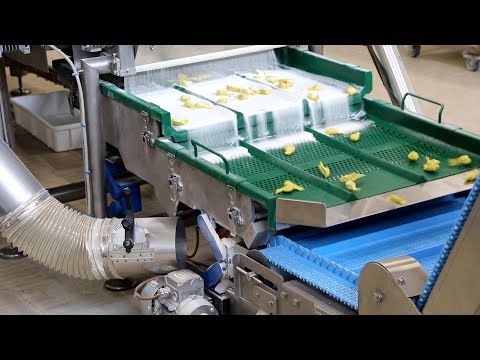
Filmed in a pasta factory, it shows a centralized ATEX 3D dust collection system. Look at how the fixed piping and collection unit relate to the production line; that layout is what a supplier needs from you to size a central system, as covered in what a central vacuum system specification should include.
What are the common mistakes in ATEX vacuum purchases?
Most mistakes come from treating ATEX as a product label rather than a match between a certified model, its accessories and a documented zone.
- Buying by family name, or assuming every model in a range carries the same certification.
- Choosing for the zone where the machine stands and forgetting the zone where the nozzle collects or the container is emptied.
- Replacing conductive hoses, antistatic filters or tools with standard parts during maintenance.
- Selecting without dust test data because the safety data sheet did not mention an explosion hazard.
- Keeping floors clean while layers build up on beams and pipework overhead; see removing overhead dust above food production areas.
- Treating certification as a reason to relax housekeeping intervals.
How does AFE help with ATEX vacuum selection?
AFE supplies DUPUY industrial vacuums, including ATEX-certified models, and matches a specific model to the dust data and zones you provide. Its consulting and engineering team offers process analysis, system design and ATEX compliance checks, and MRO support covers filters, hoses and spare parts.
AFE does not classify your zones; that remains the site’s responsibility. What AFE provides is a shortlist with the exact model documents for your HSE team to review, supply through its Aqaba regional hub, and a clear record of which accessories belong to the certified system. For combustible dust at height, see assessing combustible dust on overhead structures, or browse more food and beverage guides.
Al Faisaliah Enterprises · Aqaba
Get an ATEX vacuum shortlist matched to your zones
Send AFE your dust test results, zone drawings and a list of cleaning points. You get a shortlist of specific DUPUY models with the certificates and accessory lists for your HSE review.
Frequently asked questions
Can we use a standard industrial vacuum if our area is not classified?
If your documented assessment shows no hazardous zone, a non-ATEX machine may be acceptable, but combustible dust still needs care. OSHA's US program sets conditions for portable vacuums collecting combustible dust in unclassified areas: suitable materials, conductive or static-dissipative hoses, bonded and grounded conductive parts, no dust-laden air through the fan, and motors kept out of the dust-laden airstream unless listed for Class II, Division 1 locations. It is a useful reference outside the US too.
Is a Zone 22 vacuum acceptable for cleaning in a Zone 21 area?
No. Directive 1999/92/EC permits only category 1 or 2 equipment in Zone 21; category 3 equipment is limited to Zone 22. Check the zone where the nozzle and hose work and where the container is emptied, as well as where the machine stands, and confirm each against the model's certificate and nameplate marking before use.
Who is responsible for zone classification, the supplier or the plant?
The plant. Under Directive 1999/92/EC the employer classifies places where explosive atmospheres may occur and keeps an explosion protection document up to date. The supplier's role is to offer equipment whose documented category matches those zones. Specialist consultants or test laboratories can support the assessment, and sites in Jordan, Saudi Arabia and Iraq should also check national requirements.
Does IEC 62784 apply to vacuums bought in Saudi Arabia?
The GCC Standardization Organization lists GSO IEC 62784:2021 as the current edition, approved on 1 July 2021 and based on IEC 62784:2017. DUPUY describes the standard as the specific one for mobile equipment used to extract combustible dust, and cites the EN IEC 62784:2018 version on its ATEX page. Ask how your specific model was assessed against it, and confirm applicability with your regulator or certification body.
How often should an ATEX vacuum and its accessories be checked?
Follow the manufacturer's manual and your site's inspection regime rather than a generic interval. Typical checks cover continuity of conductive hoses and grounding connections, filter condition and type, seals and container integrity. Record each check, and make sure replacement filters, hoses and tools are the parts listed for the certified model, not general-purpose equivalents.
Sources and references
- Directive 1999/92/EC (ATEX workplace directive) — European Union (EUR-Lex)
- Food, chemical and pharmaceutical industry solutions — DUPUY
- ATEX certified industrial vacuum cleaners — DUPUY
- GSO IEC 62784:2021 — GCC Standardization Organization
- Combustible Dust Hazard Study, news release (9 Nov 2006) — US Chemical Safety Board
- Imperial Sugar Company Dust Explosion and Fire — US Chemical Safety Board
- Combustible Dust National Emphasis Program, CPL 03-00-008 — US Occupational Safety and Health Administration
This article is general technical guidance. Equipment suitability, ATEX conformity and hygiene performance must be confirmed for each site and application.
Written for plant, maintenance, HSE and quality teams in Jordan, Saudi Arabia and Iraq.