The short answer
A fixed central vacuum system suits cement plants where cleaning points are known, frequent and clustered, such as packing halls and transfer towers. Mobile vacuum loaders and portable units suit heavy, irregular or widely spread spillage and shutdown peaks. Most plants with several cleaning areas need both, sized from measured cleaning loads, pipe routes and the number of concurrent users.
Key takeaways
- Decide per cleaning point, not per plant: frequent, clustered points suit a fixed network; heavy or remote work suits mobile units.
- Concurrent users, not the number of inlets, set the size of a fixed central vacuum system.
- Record material type, condition, quantity, frequency and distance for every point before asking for a design.
- Keep classified coal and alternative-fuel areas off any network or unit not certified for that zone.
- Plan discharge and vehicle access early; poor planning of either leads crews back to sweeping.
A cement plant has cleaning areas spread across a large site and over several levels: raw mill and kiln feed, clinker cooler and clinker transport, cement mills, silo tops, packing and loading. Choosing between a cement plant central vacuum system, a fleet of mobile vacuum units or a combination is one of the larger housekeeping decisions a technical buyer makes, because it fixes how cleaning is done for years.
The right answer depends less on preference than on data: how much material collects where, how often, how far it must travel, and how many people clean at the same time. The scale is significant across the region; the USGS estimates Saudi cement production at 54 million tonnes in 2025, and Iraq produced about 28 million tonnes in 2020. This comparison explains how each layout works, where each fits and what to measure before asking for a design.
Which layout suits a cement plant with several cleaning areas?
Use a fixed network where cleaning is frequent and predictable, mobile units where it is heavy, irregular or remote, and expect a combination in most multi-area plants. A packing hall cleaned every shift at the same inlet points is a typical case for fixed piping. Spillage under a long conveyor, a clinker spill after a process upset, or a shutdown clean-out usually favors mobile equipment that brings high suction power to the job.
The real question is not fixed versus mobile in the abstract, but which cleaning points belong on which system. That is why the first deliverable should be a cleaning-point register, not a quotation.
How does a fixed cement plant central vacuum system work?
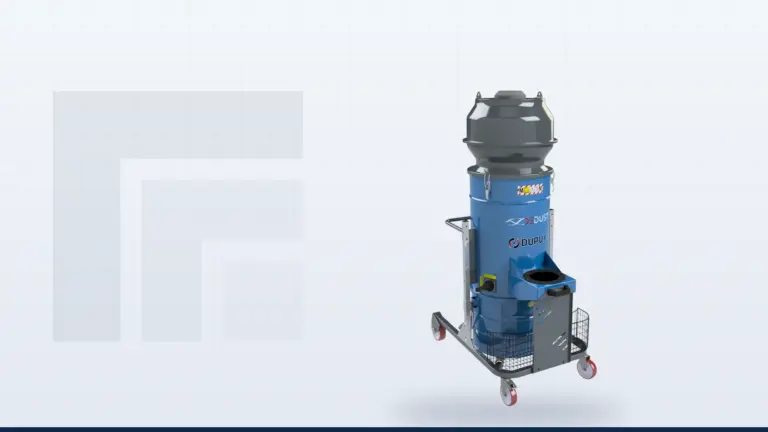
A fixed system places a stationary vacuum unit and filter separator in one location and connects them through permanent pipework to inlet points around the plant. Operators connect a hose at the nearest inlet, and the collected material travels through the pipe to the separator, where it is discharged to a container, a silo or back to the process.
DISAB’s centralised range includes filter separators (BEASS, BEAD, BEAF, BEAL and BEAT), vacuum units such as the PES-6, which DISAB describes as “an electric vacuum unit (25-33 kW)”, and pre-separators. DISAB states that these systems “are available with ATEX-approved options for sensitive areas”, describes them as “Capable of handling hot materials up to 600°C”, and lists cement among the industries served. These are manufacturer statements, so confirm them for the exact configuration you are offered.
- Strengths: suction is available at every inlet without moving a machine; no vehicle traffic inside buildings; material is discharged in one controlled place.
- Limits: capacity is fixed by the design, so adding inlets or users later needs re-checking; pipe length, bends and vertical lift affect performance; abrasive or sticky material needs attention to wear and blockage points.

This is a DISAB customer story from a combined heat and power plant in Sweden, not a cement site; use it to see what an engineered stationary system involves compared with a vacuum truck.
When is a mobile vacuum system the better choice?
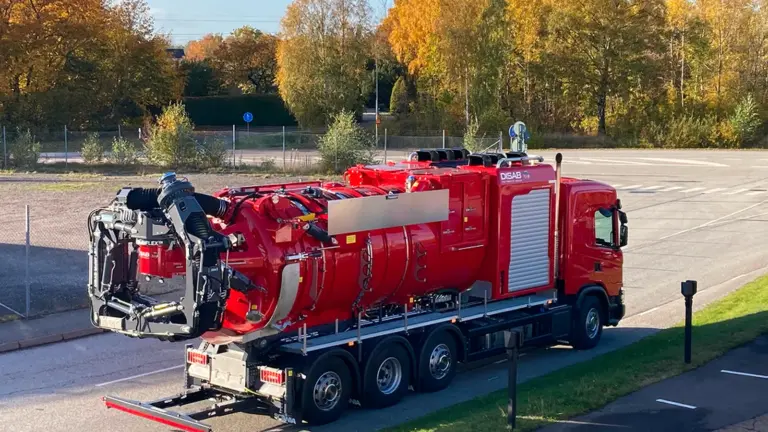
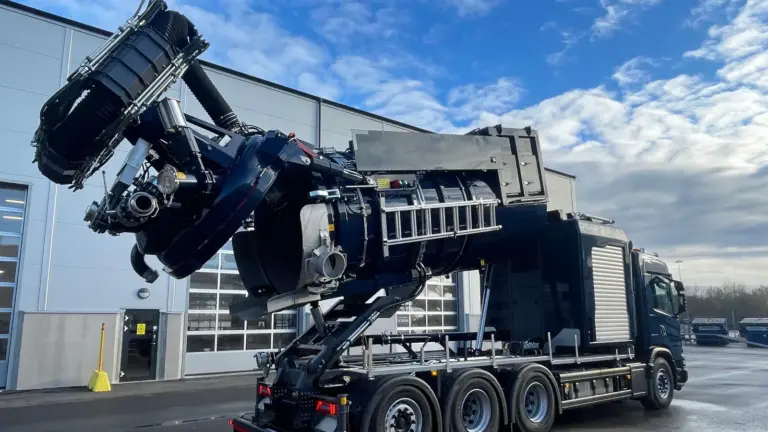
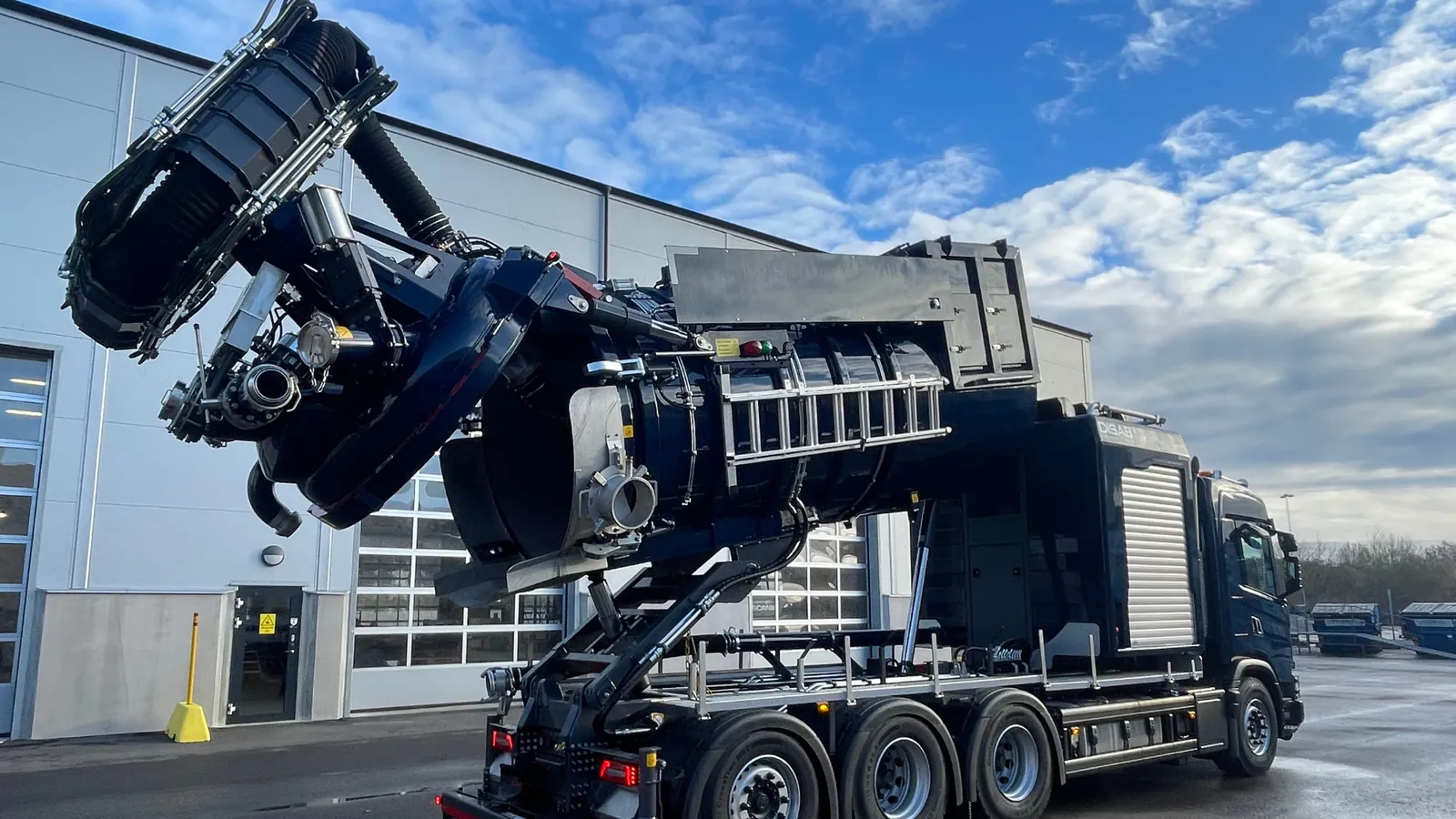
Mobile equipment is the better choice when volumes are large or irregular, cleaning locations change, or the work peaks during shutdowns. DISAB’s vacuum trucks (the Centurion, Futurion and Vacturion families) bring a vacuum source, collection tank and hose to the spill; DISAB describes the LN30, for example, as “designed for suction and blowing of wet and dry materials, both horizontally and vertically.”
Portable units sit between the two options: they are placed near the work and moved when the work moves. DISAB’s portable range includes BagVAC, SkipVAC, CompVAC and the RoRoVac SEL, which DISAB calls an “electric vacuum unit on a hooklift frame, designed to withstand dry, wet and sticky materials”. For cement and concrete, DISAB says its units capture “fine cement dust and larger debris” and can “Reclaim spilled cement and concrete dust for reuse or disposal”. DISAB’s product pages give no suction distance or lift figures, so ask for performance data for your material, hose length and height.
- Strengths: high suction power where it is needed; one unit serves many areas; well suited to spillage recovery and shutdown peaks.
- Limits: needs vehicle access or a lifting route and a trained operator; hose length and height limit reach from the parking point; the unit must be emptied at an agreed location.
DISAB’s product film introduces its vacloader; as you watch, consider where such a vehicle could park within hose length of your own spillage points.
Fixed or mobile vacuum: how do the options compare?
The comparison below shows how each option behaves against the criteria that usually decide a cement plant layout. Read it per cleaning area, not for the plant as a whole.
| Criterion | Fixed central network | Mobile vacuum units | Hybrid |
|---|---|---|---|
| Cleaning frequency | Daily or per shift at the same points | Irregular, campaign or shutdown work | Network for routine, mobile for peaks |
| Location of points | Clustered, or on several floors of one building | Spread across the site, outdoors, under long conveyors | Network in dense buildings, mobile elsewhere |
| Quantity per event | Small to moderate, regular | Large spills and accumulations | Assign by typical load |
| Concurrent users | Limited by design and must be specified | One crew per unit | Specify network users; add units for peaks |
| Distance and height | Limited by pipe design; verify long runs and lifts | Limited by hose length from the parking point | Choose per point |
| Hot, wet or sticky material | Must be designed in from the start | Choose a unit rated for it | Send difficult materials to the suitable system |
| Classified (ATEX) areas | Only with a system designed and certified for the zone | Only with a unit certified for the zone | Keep classified points separate unless certified |
| Investment profile | Capital project with design and installation | Equipment purchase, or rental where available | Can be phased |
What data do you need before designing the system?
You need a register of cleaning points with three numbers for each: how much material, how often and how far. The supplier also needs to know how many hoses will run at once, because simultaneous users, not the number of inlets, drive the size of a fixed system.
- Location, floor level and elevation of each cleaning point, with photos
- Material at each point (raw meal, clinker, cement, coal or other) and its temperature, moisture and stickiness
- Typical quantity per cleaning event and how often it occurs, from logs or an observation period
- Possible pipe routes, with length, bends and vertical lift to a proposed vacuum unit location
- Number of operators expected to clean at the same time, per area and per shift
- Hose length needed at each inlet to reach the furthest corner of its area
- Where collected material must go: back to the process, a silo, a container or a waste route
- Vehicle access routes, parking points and lifting points for mobile units
- Area classification for coal, alternative-fuel or other combustible-dust areas
- Power supply and space for the vacuum unit and filter separator
How do you plan a hybrid layout step by step?
Build the layout from the register outward: measure first, then decide which system serves each point. The sequence below keeps the decision tied to data.
Choosing a cement plant vacuum layout
- Register cleaning points
- Measure loads
- Map routes and users
- Assign each point
- Trial and verify
- Register cleaning points. List every area that is cleaned today and every area that should be, with photos and location.
- Measure loads. Record quantity and frequency over a representative period, including after process upsets.
- Map routes and users. Sketch candidate pipe routes and vehicle access, and agree how many people will clean at once.
- Assign each point. Put frequent, clustered points on the network; give heavy, remote or occasional work to mobile units.
- Trial and verify. Where possible, trial mobile equipment on the heaviest tasks before fixing the network design, then check performance after commissioning.
Which mistakes make cement plant vacuum systems underperform?
- Designing for inlets instead of users. A network sized for two hoses will disappoint when four crews clean at once.
- Running every material through one network. Hot clinker, sticky material and combustible coal dust create conflicting design requirements.
- Ignoring wear and blockage points. Clinker and raw meal are abrasive, so bends and long horizontal runs need attention in the design and the maintenance plan.
- Forgetting the discharge. A system that collects well but has nowhere sensible to empty will be bypassed.
- Buying mobile units without access planning. If the truck cannot park within hose length of the spill, the spill gets swept instead.
How AFE supports cement plant vacuum projects
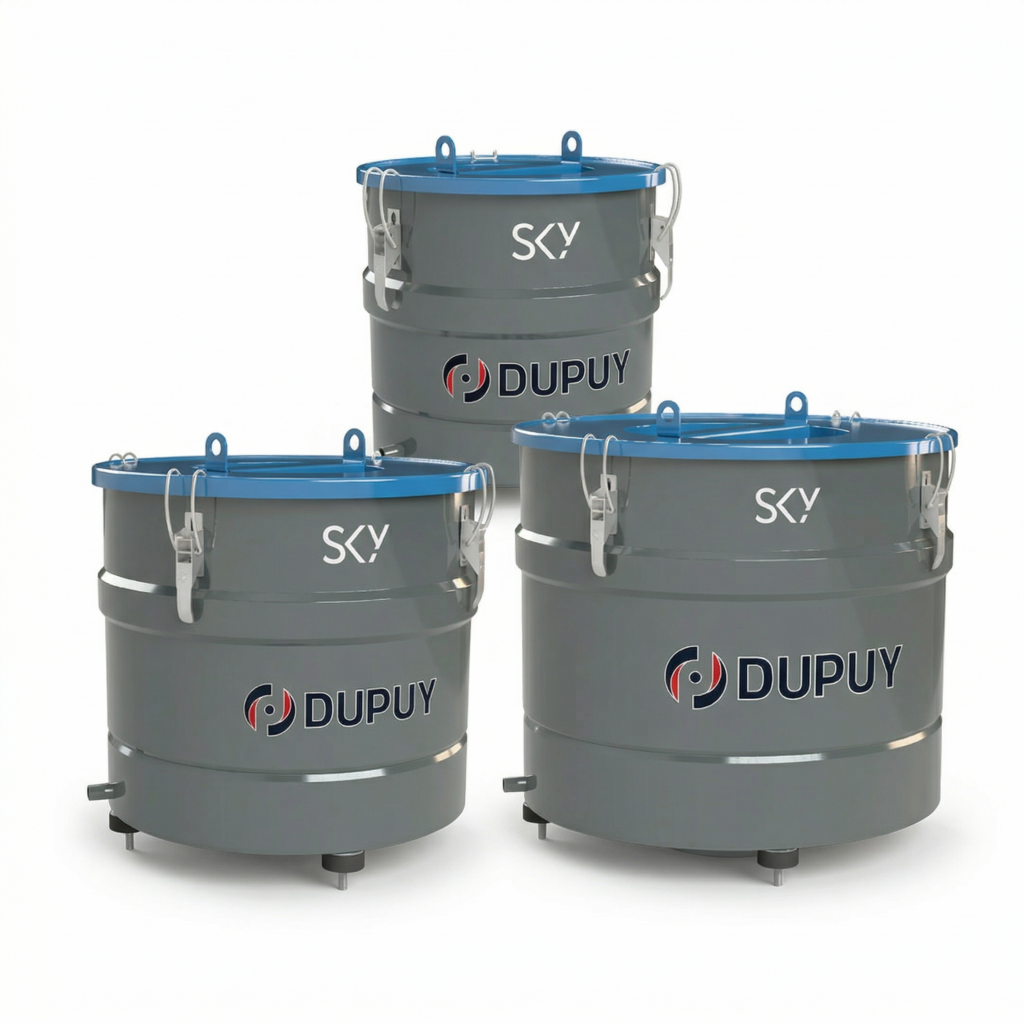
AFE supplies DISAB heavy-duty vacuum loaders and vacuum trucks, DISAB fixed and mobile vacuum systems, and DUPUY central vacuum systems for lighter multi-point housekeeping, together with selection advice. Its engineering and consulting team can help turn a cleaning-point register into a layout, and equipment rental can cover shutdowns or trials where a suitable unit is available.
For dust control at the packing line itself, see how source extraction and housekeeping work together; for recovered material, see when recovered cement spillage can return to the process; and for network specification, see what a central vacuum system specification should include. More guides are in AFE’s cement insights.
Al Faisaliah Enterprises · Aqaba
Get a layout recommendation for your plant
Share your cleaning-point register, candidate pipe routes and the number of concurrent users. AFE will advise which points suit a fixed DISAB network and which suit mobile units.
Frequently asked questions
Is a central vacuum system the same as a dust collector?
No. A dust collector serves extraction hoods and captures airborne dust while the process runs. A central vacuum system collects settled dust and spillage through hoses connected to fixed inlets, and conveys it through pipework to a separator. Cement plants usually need both, designed separately: one keeps dust in the process, the other removes what escapes.
How many people can use a central vacuum system at once?
As many as it was designed for, and no more. The number of simultaneous users is a design input that sets airflow, pipe sizes and vacuum unit power. If more crews clean at the same time than the design assumed, suction drops at every inlet. Agree the figure per area and per shift, and recheck the design before adding inlets or users later.
Should we buy or rent mobile vacuum equipment for a cement plant?
It depends on how often the equipment is needed. Routine daily cleaning usually justifies owning equipment, while shutdown peaks, one-off clean-outs or trials before a larger purchase can suit rental where a suitable unit is available. Record how many days per year the work actually occurs before deciding, and include operator training in either case.
Can one vacuum system handle hot clinker and wet material?
Only if it was designed for them. DISAB states that its centralised systems are capable of handling hot materials up to 600°C, and describes its RoRoVac SEL as designed to withstand dry, wet and sticky materials, but these are manufacturer statements for specific equipment. Tell the supplier the temperature and moisture at each point and confirm the configuration in writing.
What should a vacuum layout proposal for a cement plant include?
Expect a cleaning-point register, the design basis for each point (material, quantity, frequency, distance), the assumed number of concurrent users, pipe routes with bends and lifts, vacuum unit and separator sizing, discharge arrangements, ATEX boundaries and the role of mobile units. If a proposal cannot show these assumptions, it is hard to compare it with alternatives.
Sources and references
- Centralised vacuum systems — DISAB
- Our vacuum trucks — DISAB
- Portable vacuum units — DISAB
- Cement and concrete industry — DISAB
- Directive 1999/92/EC on minimum requirements for workers potentially at risk from explosive atmospheres — EUR-Lex
- Mineral Commodity Summaries 2026: Cement — US Geological Survey
- 2020-2021 Minerals Yearbook: Iraq — US Geological Survey
This article is general technical guidance. Equipment suitability, ATEX conformity and hygiene performance must be confirmed for each site and application.
Written for plant, maintenance, HSE and quality teams in Jordan, Saudi Arabia and Iraq.