The short answer
Recovered cement spillage can return to the process when it is a single, identified material, has stayed dry, is free of foreign matter, was collected through a dedicated clean route, and passes the plant's own quality tests for the chosen re-entry point. Wetted, mixed or contaminated spillage should be segregated and handled under the site's waste rules.
Key takeaways
- Quality control, not the equipment supplier, decides whether recovered spillage re-enters the process and where.
- Dry, single-grade, uncontaminated spillage collected promptly is the best candidate for return.
- Cement reacts with water, so wetted or lumpy spillage is normally excluded from product streams.
- A dedicated collection route and a clean container protect recovered powder from contamination.
- Log quantities, test results and decisions to build a real recovery record before investing.
In a cement plant, spillage gathers around packing machines, bag conveyors, truck and rail loading spouts, bucket elevator pits and belt transfers. Much of it is finished or nearly finished material, so sending it to a skip feels like throwing product away. The production manager’s question is a fair one: when can that spillage go back into the process?
Cement plant material recovery can work, but only when the recovered powder meets the expectations of the stream it rejoins. This decision guide explains which spillage is a realistic candidate, where it can re-enter, what the laboratory will want to see, and how vacuum collection should be set up so the material stays recoverable.
When can recovered spillage return to a cement plant process?
Recovered spillage can return when five conditions hold: the material is identified, it has stayed dry, it is free of foreign matter, it came through a dedicated collection route, and quality control has accepted it for a defined re-entry point.
- Identified: one known product or grade from a known spill point.
- Dry: not rained on, washed down or stored damp.
- Clean: no bag paper, plastic, metal, floor dirt, oil or fuel residues.
- Dedicated route: collected with equipment that has not just handled waste.
- Accepted: tested and approved by QC for a named re-entry point and quantity.
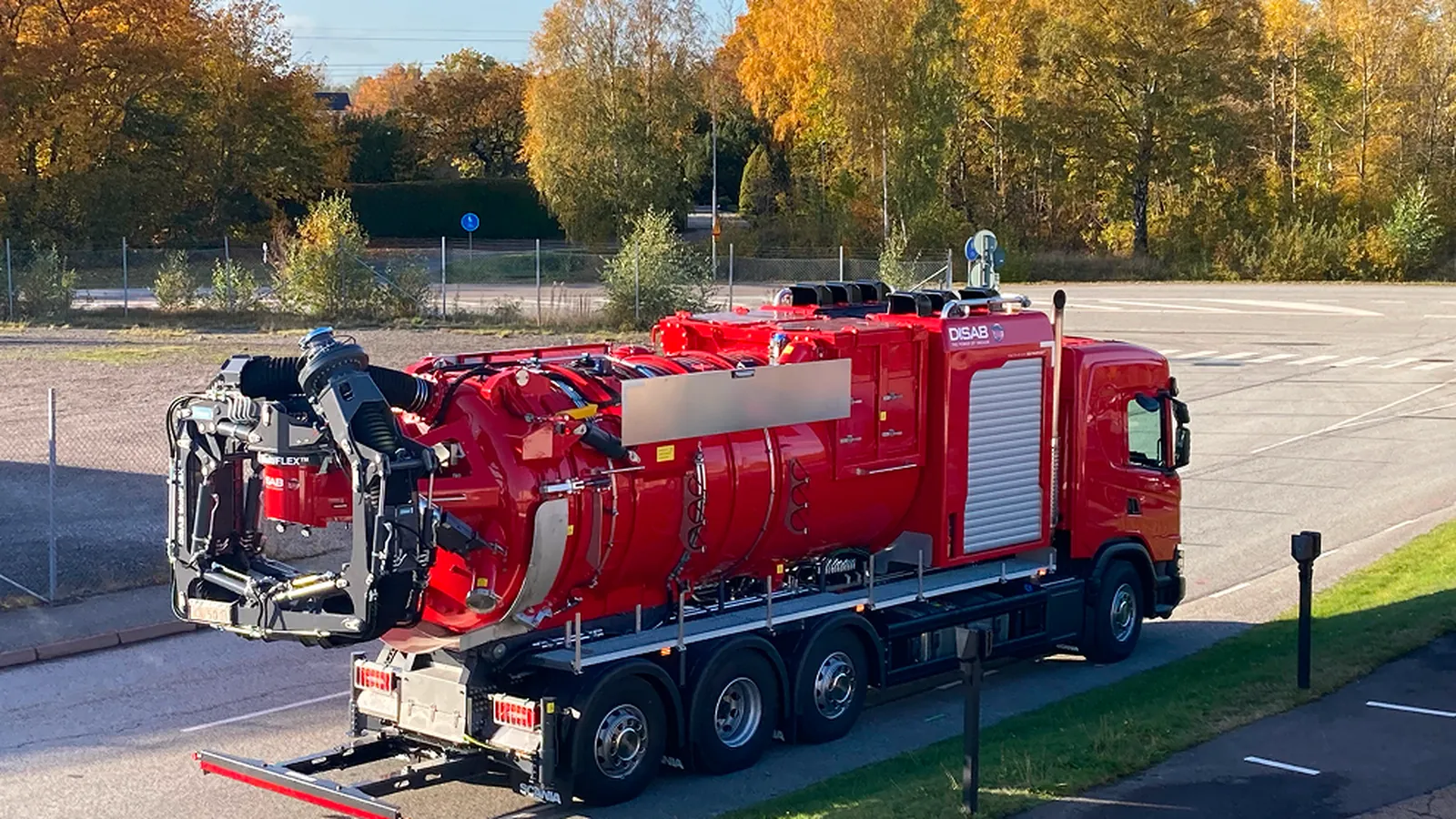
On its cement and concrete industry page, DISAB states that its units capture fine cement dust and larger debris and can reclaim spilled cement and concrete dust for reuse or disposal. It publishes no recovery rates, which is why the decision has to rest on your plant’s own data rather than a brochure figure.
Which spillage is a realistic recovery candidate?
The realistic candidates are dry, single-grade spillages collected promptly; everything else needs screening, an upstream route or rejection.
| Spillage condition | Likely route | Evidence QC will want |
|---|---|---|
| Dry, single grade, collected promptly from a dedicated area such as under a packing machine | Candidate to return to the same product stream, subject to QC approval | Source, grade, age and test results against the product specification |
| Dry, single grade, with bag fragments or packaging debris | Screen first, then return or route upstream | Screening method and a check of the screened material |
| Dry but mixed grades, or mixed with raw meal or clinker dust | Upstream re-entry only if process engineering and QC accept it; otherwise reject | Likely mix proportions and chemistry |
| Wetted, lumpy or partly set | Not returnable as cement; handle under site rules | Visual check and moisture |
| Contaminated with oil, fuel, coal or alternative-fuel residues, or floor debris | Exclude from product streams and segregate | Identity of the contaminant and the site’s classification |
In plants that make several cement types, the grade question matters most at shared loading and packing areas, where spillage from different products can mix on the same floor.
Choosing the re-entry point
Returning material to the same product hopper is the strictest option, because it goes straight to customers. An upstream feed point lets the process blend recovered material into a larger flow, but process engineering has to agree that it suits the chemistry at that stage. Whichever point is chosen, it should be physically defined, reachable by the collection equipment and written into the acceptance criteria.
Why does moisture rule out so much spillage?
Moisture rules out spillage because cement reacts with water: once wetted, it begins to hydrate, forms lumps and no longer behaves like the product its specification describes.
That has three practical consequences. Do not wash down areas you hope to recover from. Collect recoverable spillage promptly and keep it in closed containers. And treat wet spillage as a separate stream from the start. Keeping material dry also helps the people handling it: OSHA guidance on Portland cement notes that wet cement is caustic and can cause burns, while dry cement is less hazardous to the skin.
How should spillage be collected so it stays recoverable?
Collect it through a route that touches nothing else: a dedicated hose and nozzle, a clean separator or tank, and discharge into a clean, closed container or straight back to a defined hopper.
- Reserve a unit, or at least a cleaned tank and hose, for recoverable points; never share a load with broken bags, sweepings or sludge.
- Discharge into labeled big bags or closed containers, or directly to an agreed return point.
- Collect before vehicle traffic, weather and humidity degrade the material.
- Use vacuum collection instead of dry sweeping, which throws fine dust back into the air; DUPUY notes on its cement page that prolonged exposure to cement dust can lead to serious health problems.
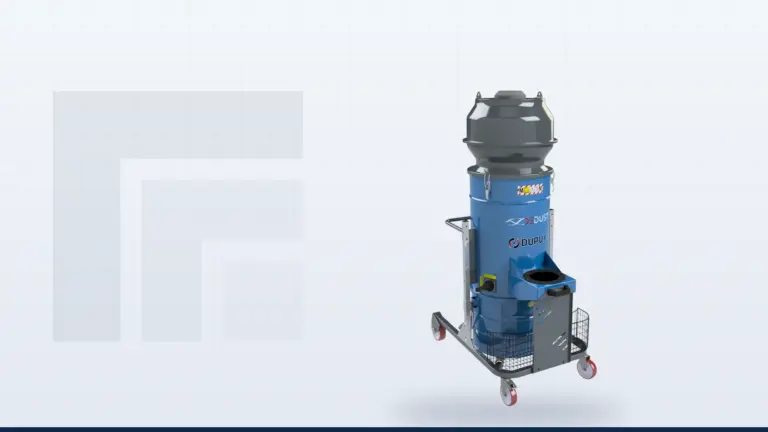
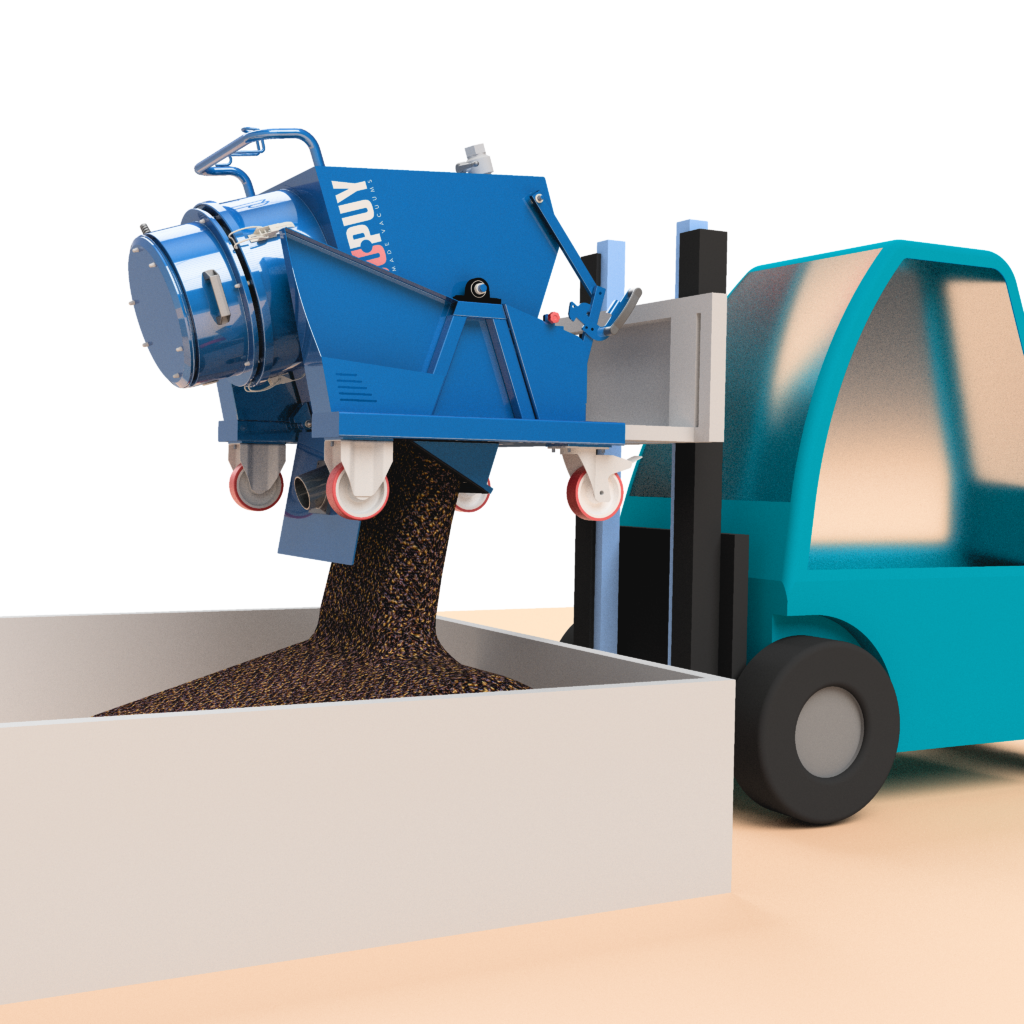
- Where spillage recurs at the same points every shift, consider fixed pipework. DUPUY describes central systems that move material through fixed pipes to a discharge point, with rotocells (rotary valves) for continuous discharge, removable containers or big bags.

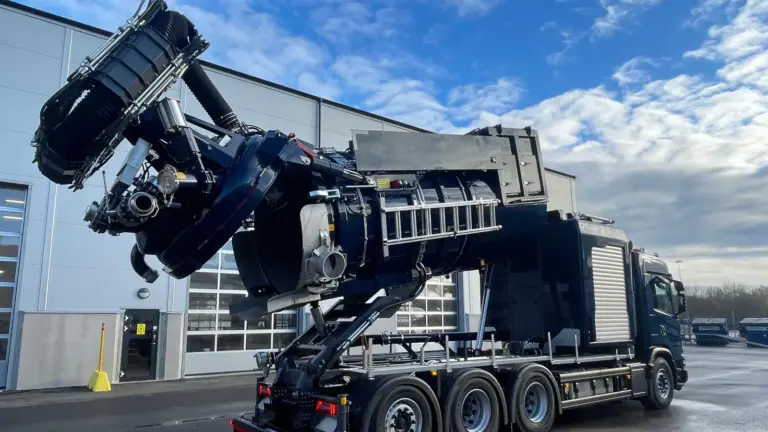
This short clip, filmed at a cement plant, shows a DISAB Centurion LN14 vacuum loader working with a DISAB SweepVAC; use it to picture the scale of truck-based collection around a plant.
What evidence does quality control need?
QC needs to see that recovered material is what it claims to be and behaves like the stream it rejoins, using the methods the plant laboratory already applies to that stream.
- List the sources. Record every spill point and the grade handled there.
- Sample the container. Take representative samples from the filled recovery container, not from the floor.
- Test against the existing specification. Use the tests the laboratory already runs for that stream, for example fineness, chemistry or setting behavior.
- Agree acceptance criteria. Write down what passes, what must be screened, what is rejected, and any limit on how much recovered material may be blended into the fresh flow.
- Name the re-entry point. The same product hopper, an upstream feed, or none.
- Record every batch. Log source, quantity, test result and route so decisions can be audited.
Can spillage go back?
How do you build a recovery case with real data?
Build it from measurements: a few weeks of logged quantities and laboratory results show whether recovery is worth engineering, and which equipment layout fits.
- Quantity per spill point per shift, weighed rather than estimated.
- The share accepted, screened and rejected by QC.
- Labor hours spent on current cleanup.
- Stoppages caused by spillage, such as fouled conveyors or blocked spouts.
Then compare the value of the accepted material with the full cost of the collection route: equipment, operator time, energy, emptying and the extra QC testing it creates.
Scale makes the exercise worthwhile in this region. USGS reports that Saudi Arabia produced 49.2 million tonnes of cement in 2023 from 22 plants with a combined capacity of 85 million tonnes a year, and that Iraq produced about 28 million tonnes in 2020. Even so, the case has to be made plant by plant.

This older DISAB film shows vacuum trucks and systems on spillage and dust in the cement industry; use it to picture the equipment types, not as a performance benchmark.
Which mistakes turn recoverable spillage into waste?
Most recoverable spillage is lost through handling habits rather than equipment limits.
- Washing down spill areas that were meant for recovery.
- Sharing one tank between recoverable powder and general debris.
- Leaving spillage under traffic and weather until a scheduled clean.
- Returning material without QC sign-off or a batch record.
- Routing coal or alternative-fuel area dust with cement; DUPUY lists ATEX-certified solutions for that zone on its cement page, and the material needs its own route.
- Buying equipment on recovery-rate promises; DISAB publishes none, and your own log is the better guide.
AFE supplies DISAB heavy-duty vacuum loaders and, for fixed points, DUPUY central vacuum systems and dust collectors. It also offers process analysis and system design to map spill points and collection routes, rental for shutdowns and trials subject to availability, and supply through its Aqaba regional gateway. Packing plants should pair recovery with source control, covered in dust extraction and housekeeping in cement packing plants, and layouts are compared in fixed or mobile vacuum systems for cement plants. More articles are on the cement insights hub.
Al Faisaliah Enterprises · Aqaba
Set up a recovery-ready collection route
Tell AFE your spill points, grades, quantities and preferred re-entry points. You get equipment options that keep recovered material dry, separate and ready for QC testing.
Frequently asked questions
Can cement swept up from the floor ever go back into product?
Floor-level spillage is the hardest case, because it picks up dirt, packaging fragments and moisture. If an area is kept clean and dry, the spillage is collected promptly through a dedicated route and QC tests pass, it may be accepted, often at an upstream point rather than straight into product. Otherwise it belongs in a separate stream.
Who should approve returning recovered cement to the process?
The plant's quality control and process engineering teams, using the acceptance criteria they set for each re-entry point. The equipment supplier provides the means to collect material cleanly and separately, and data on the equipment, but it cannot approve material for the process. Record each approval with the batch it covers.
Should dust from the vacuum's filter be treated like the bulk spillage?
Treat it as a separate stream unless QC approves otherwise. Filters capture the finest fraction of what was collected, so filter dust may not match the bulk spillage in fineness or composition. Empty it separately, label it, and have it tested before deciding whether it can follow the bulk material or must be handled as waste.
Is a fixed vacuum system better than a vacuum truck for packing plant spillage?
It depends on the pattern. Spillage that recurs at the same packing machines or loading spouts every shift often suits fixed pipework with a dedicated discharge. Occasional large spills or points spread across the plant often suit a mobile vacuum loader. Many plants need both, which is why the spillage log should come first.
What should we send AFE to get an equipment recommendation?
A list of spill points with the grade handled at each, logged quantities per shift, photos, distances from possible unit positions or pipe routes, the preferred re-entry or discharge point for each stream, and any hazardous-area classification, for example in coal or alternative-fuel zones. With that, AFE can propose suitable DISAB or DUPUY configurations.
Sources and references
- Cement and concrete industry — DISAB
- Cement industry solutions — DUPUY
- Centralized vacuum systems — DUPUY
- Preventing Skin Problems from Working with Portland Cement (OSHA 3351) — US Occupational Safety and Health Administration
- 2023 Minerals Yearbook: Saudi Arabia — U.S. Geological Survey
- 2020–2021 Minerals Yearbook: Iraq — U.S. Geological Survey
This article is general technical guidance. Equipment suitability, ATEX conformity and hygiene performance must be confirmed for each site and application.
Written for plant, maintenance, HSE and quality teams in Jordan, Saudi Arabia and Iraq.