The short answer
EAF dust is treated as hazardous because it concentrates heavy metals: US rules list it as K061 for hexavalent chromium, lead and cadmium, and the EU lists gas-cleaning dust as hazardous when it contains hazardous substances. Clean spills with an H-class or HEPA-filtered vacuum, never compressed air, and send sealed, labelled dust to a licensed receiver.
Key takeaways
- US rules list EAF dust as hazardous waste K061 because of hexavalent chromium, lead and cadmium.
- Spills concentrate at hopper discharge, bagging and loading points, and during filter maintenance.
- Vacuum first with high-efficiency filtration; sweep only where vacuuming was tried and failed; never compressed air.
- Specify an H-class machine, not just a HEPA element, and confirm hot-material limits.
- Seal, label and hand the dust to a licensed receiver or recycler; keep it apart from general waste.
Every electric arc furnace sends a stream of fine dust to its fume extraction system, where bag filters collect it in hoppers before it is discharged to bags, silos or trucks. Most of the time that dust stays inside closed equipment. The problems start at the edges: a leaking rotary valve, a split big bag, a hopper opened for maintenance or a filter change. Good EAF dust handling is about what happens at those moments, because the dust is classed as hazardous and cleaning it the wrong way spreads it through the melt shop.
This guide is for maintenance, environment and HSE managers in steel plants. It explains why EAF dust is treated as hazardous, where spills occur around the dust system, how they should be cleaned, which vacuum equipment fits and how the collected dust should leave the site.
Why is electric arc furnace dust treated as hazardous?
EAF dust is treated as hazardous because it concentrates heavy metals such as lead, cadmium and chromium compounds from the scrap and the process. Regulators in the United States and the European Union both list it, in different ways.
- United States: the Resource Conservation and Recovery Act lists “Emission control dust/sludge from the primary production of steel in electric furnaces” as hazardous waste K061, with hazard code T (toxic). The basis for the listing is “Hexavalent chromium, lead, cadmium.”
- European Union: the EU List of Waste places solid wastes from gas treatment in the iron and steel industry under code 10 02 07* when they contain hazardous substances, with 10 02 08 as the non-hazardous mirror entry. The asterisk marks hazardous waste, so the classification of a given dust depends on its tested content.
The dust also has value. The US Geological Survey notes that secondary materials for US refined zinc include “crude zinc oxide recovered from electric arc furnace dust”. That is why plants keep the dust dry and uncontaminated and send it to licensed recyclers where possible. Neither US nor EU rules bind plants in Jordan, Saudi Arabia or Iraq, but they are widely used references; the local classification and the licensed receiver must be confirmed with the national authority.
Where do spills happen around an EAF dust system?
Spills happen mostly where dust leaves the filter or the equipment is opened. Mapping these points is the first step in EAF dust handling, because each one needs a planned clean-up method.
- Hopper discharge: rotary valves, slide gates and screw conveyors that wear or block.
- Bagging and loading: big-bag filling heads, silo loading spouts and truck connections.
- Maintenance openings: filter bag changes, hopper inspections and duct clean-outs.
- Leaks and failures: split bags, worn flanges and damaged conveying lines.
- Tracked dust: material carried on boots and wheels away from the dust building.
How should EAF dust spills be cleaned?
Clean EAF dust spills by vacuuming with high-efficiency filtration, never by compressed air, and use sweeping only where vacuuming has been tried and found not to work. US occupational standards for the metals in the dust set this order clearly.
OSHA’s cadmium standard requires spills to be cleaned up “as soon as possible”, requires HEPA-filtered vacuuming or equally effective filtration, and allows shovelling, sweeping and brushing only where vacuuming and other low-dust methods have been tried and found not to be effective. It forbids compressed air unless a ventilation system captures the resulting cloud. The lead and chromium (VI) standards follow the same pattern, and all three require vacuums to be used and emptied in a way that minimises re-entry of the metal into the workplace.
| Method | Status for EAF dust (US references) | Practical note |
|---|---|---|
| HEPA-filtered or H-class vacuum | Preferred method | Empty in a way that does not release dust; bag and seal the contents |
| Damp wiping of small residues | Possible low-dust method for surfaces after vacuuming | Avoid slurry that enters drains or wets the dry waste stream |
| Dry or wet sweeping, shovelling, brushing | Only where vacuuming was tried and found not effective | Raises dust; needs respiratory protection and justification |
| Compressed air | Not permitted for lead; for cadmium and chromium (VI) only with a ventilation system that captures the cloud | Spreads dust over the melt shop; avoid |
Which vacuum equipment fits EAF dust handling?
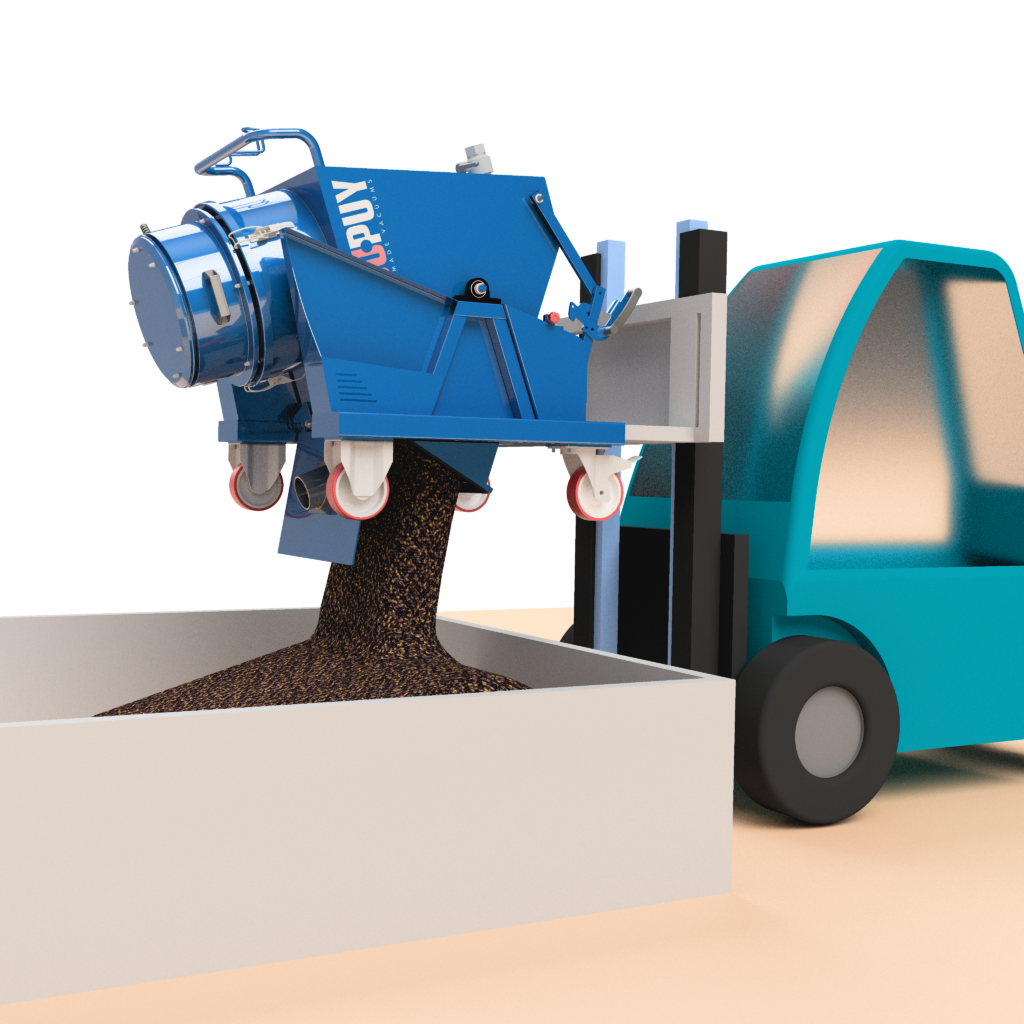
Use an H-class vacuum for routine spills and maintenance clean-up, and a heavy-duty vacuum loader with sealed discharge for large releases. The filter class matters more than the suction figure.
Under the dust classes summarised by Germany’s IFA from EN 60335-2-69, class H is intended for carcinogenic substances and for dusts with exposure limits below 0.1 mg/m³, and its filters must allow less than 0.005% penetration. The OSHA limits above are all well below 0.1 mg/m³ (100 µg/m³), which is why H class is the usual starting point. HEPA is not the same as H class: a HEPA filter element in a machine that is not tested as a whole may still leak around seals and housings. Ask for the class of the complete machine. H, M and L vacuum dust classes explains the difference.
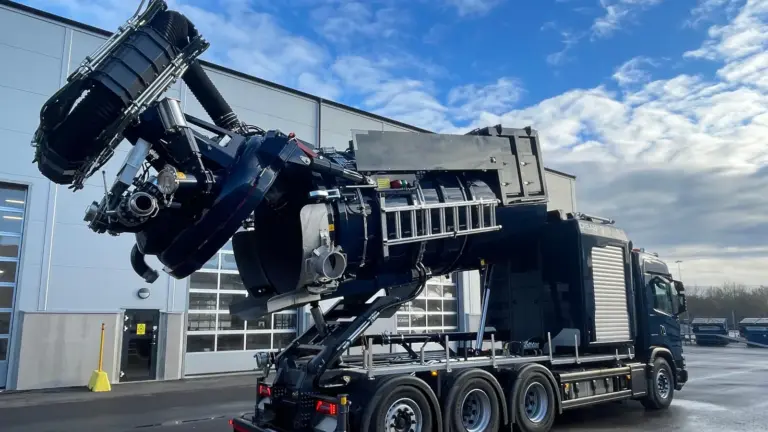
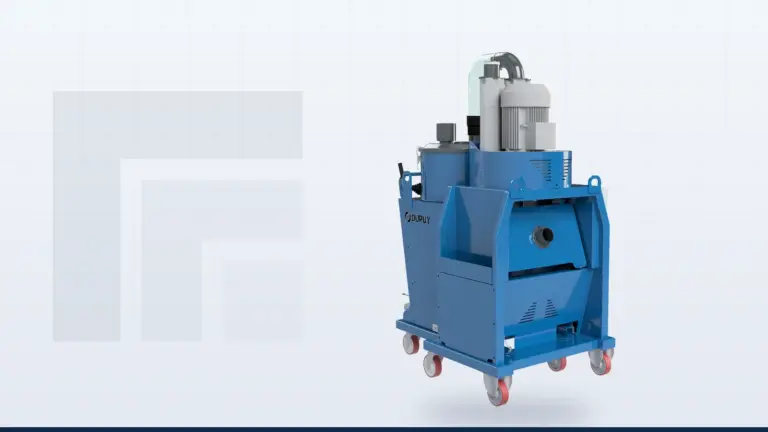
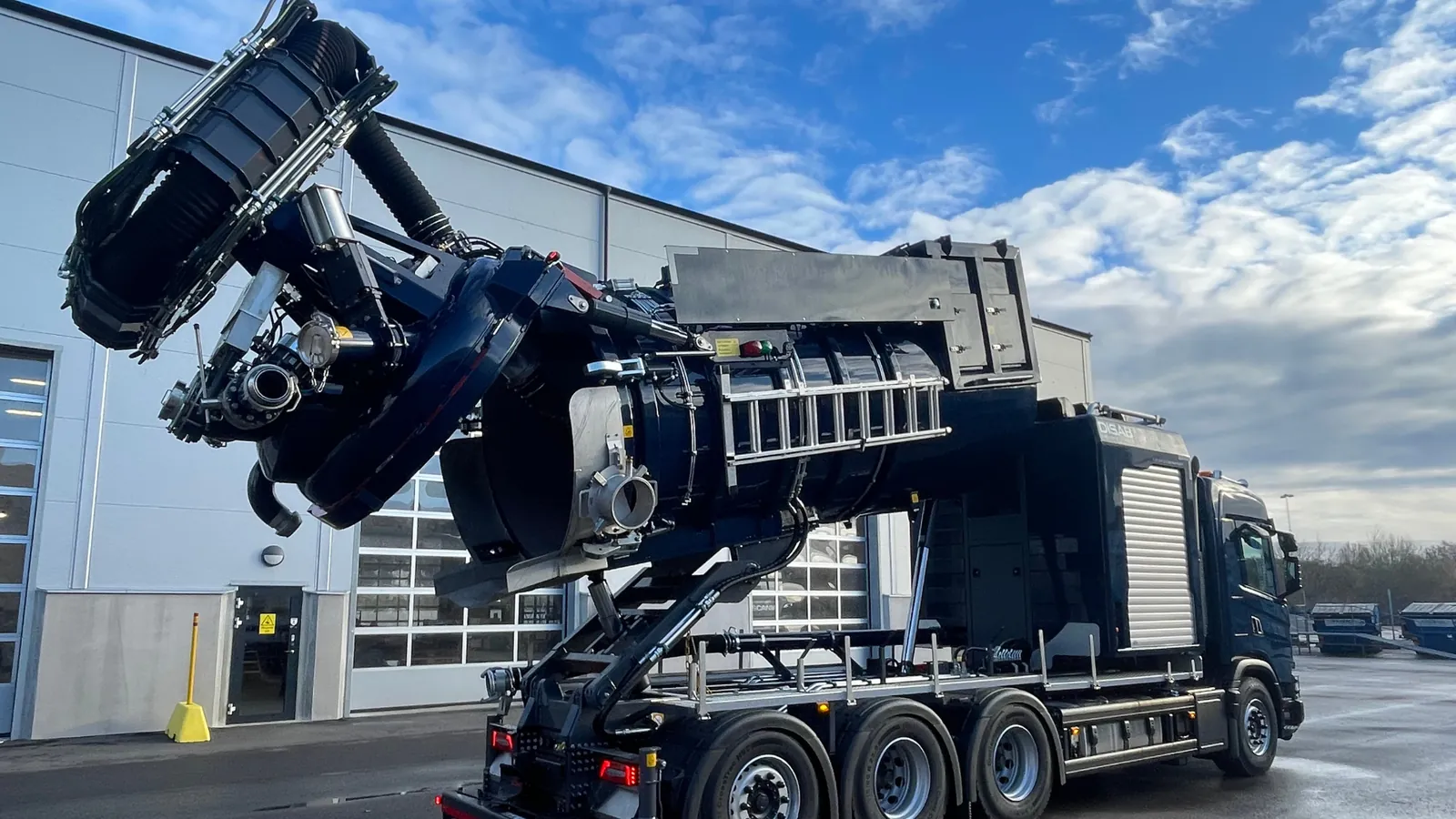
DUPUY states that its three-phase industrial vacuums are available with Class M or HEPA filters and names steel mills among its industries; it does not name a class H machine on those pages, so the exact model and certificate must be confirmed. For large spills, DISAB’s foundries and steelworks page lists “High-capacity systems for sand and slag” and mobile and stationary systems, and DISAB states that its centralised systems can handle hot materials up to 600°C. Freshly discharged dust can be hot, so ask about temperature limits before any machine is used.

Watch how vacuum units and hoses are positioned in a steel plant; it is older, low-resolution DISAB footage of the technology, not an AFE site.
What is a sound spill response sequence?
A spill response works when it is written, equipped and rehearsed before the spill. The sequence below covers most releases around the dust system.
- Isolate the area. Stop traffic through the spill and keep unprotected people out.
- Stop the source. Close the valve or gate, or stop the conveyor, under the plant’s isolation procedure.
- Protect the team. Put on the respiratory protection and clothing set by the HSE assessment.
- Vacuum, do not sweep. Collect the dust with the H-class unit or vacuum loader, starting from the edges.
- Seal and label. Empty into sealed, impermeable bags or closed containers and label them for the licensed receiver.
- Record and fix. Log the volume and cause, and repair the failed part.
EAF dust spill response
- Isolate the area
- Stop the source
- Vacuum, do not sweep
- Seal and label
- Record and fix
How should collected EAF dust leave the site?
Collected dust leaves the site only through a licensed waste receiver or recycler, in sealed, labelled containers. OSHA’s cadmium standard, for example, requires contaminated waste, bags and protective clothing for disposal to be collected in sealed impermeable bags or closed containers and labelled.
Keep spill material separate from general sweepings and from wet waste, so the stream stays acceptable to the receiver. Vacuum filters and bags removed during maintenance belong to the same hazardous stream. AFE supplies the equipment; transport, treatment and disposal remain with the plant and its licensed contractors. Where vacuum collection fits before disposal or reuse covers the waste side in more detail, and foundry dust cleaning covers sand and fine dust in casting areas.
What should you send a supplier?
Send data about the dust, the equipment and the routine, so the supplier can propose a configuration and list the certificates you should check.
- A recent analysis of the dust, including lead, cadmium and chromium content, and the safety data sheet if one exists.
- A plan of the dust system with hoppers, valves, conveyors and loading points.
- Typical spill sizes and how often they occur.
- Temperature of the dust at the discharge points.
- The discharge you need: big bags, drums or closed containers.
- Hose distances and lift heights from the likely parking positions.
- Whether a rental unit is wanted for a shutdown or trial.
AFE supplies DUPUY industrial vacuums and dust collectors and DISAB vacuum trucks and loaders, with filters and spare parts, rental and process analysis and consulting. More steel guides are on the steel insights hub.
Al Faisaliah Enterprises · Aqaba
Get the right vacuum for your EAF dust system
Send AFE your dust analysis, spill points and discharge arrangement. You get a proposed H-class vacuum or vacuum loader set-up, with the certificates and temperature limits to confirm.
Frequently asked questions
Is EAF dust always classified as hazardous waste?
In the United States it is a listed hazardous waste, K061. Under the EU List of Waste, gas-cleaning dust from iron and steel making is a mirror entry: 10 02 07* when it contains hazardous substances, 10 02 08 when it does not. In Jordan, Saudi Arabia and Iraq the classification follows national rules, so confirm it with the competent authority using a recent dust analysis.
Can we use our general plant vacuum for an EAF dust spill?
Only if it is suitable for dust with very low exposure limits. Many general vacuums have coarse or class L filters that let fine metal-bearing dust pass. Use an H-class machine, or a vacuum loader with appropriate filtration, and empty it into sealed containers so the dust does not re-enter the workplace.
Can collected EAF dust be recycled?
Often, yes. The US Geological Survey notes that crude zinc oxide recovered from EAF dust is a secondary material for refined zinc. Whether your dust goes to recovery or disposal depends on its analysis, local rules and the licensed receivers available. Keeping it dry and separate from other waste helps keep the recovery option open.
Does AFE collect or dispose of EAF dust?
No. AFE supplies equipment such as DUPUY industrial vacuums and DISAB vacuum loaders, with rental, filters and spare parts, and consulting. Transport, treatment and disposal of the dust remain with the steel plant and its licensed contractors. AFE can advise on the collection equipment, filters and sealed discharge that make the hand-over to those contractors cleaner.
What protective equipment do cleaners need?
That is set by your HSE team's exposure assessment, not by the vacuum supplier. Because the OSHA limits for lead, cadmium and chromium (VI) are measured in micrograms per cubic metre, clean-up is normally treated as an exposure task with respiratory protection, protective clothing and a decontamination routine agreed in advance.
Sources and references
- 40 CFR 261.32, Hazardous wastes from specific sources · Legal Information Institute (U.S. Code of Federal Regulations)
- Appendix VII to Part 261, Basis for Listing Hazardous Waste · Legal Information Institute (U.S. Code of Federal Regulations)
- Commission Decision 2000/532/EC, List of Waste (consolidated) · EUR-Lex
- Mineral Commodity Summaries 2026: Zinc · U.S. Geological Survey
- 29 CFR 1910.1027, Cadmium · U.S. Occupational Safety and Health Administration
- 29 CFR 1910.1025, Lead · U.S. Occupational Safety and Health Administration
- Prüfung von Staubfiltern (dust class testing, EN 60335-2-69 Annex AA) · IFA / DGUV
This article is general technical guidance. Equipment suitability, ATEX conformity and hygiene performance must be confirmed for each site and application.
Written for plant, maintenance, HSE and quality teams in Jordan, Saudi Arabia and Iraq.