The short answer
Rolling mills recover mill scale most efficiently by vacuuming it from stands, flumes, trenches and floors during planned stops, with water and drives isolated, and by keeping coarse low-oil scale separate from oily fines. Heavy-duty vacuum loaders or fixed systems lift the wet, dense material into closed containers, so it can be sampled and recycled.
Key takeaways
- Mill scale is heavy, wet and often oily; it needs equipment built for dense material, not light-dust vacuums.
- Oil content decides where scale can go; EU BAT conclusions cite under 0.5 % for recycled residues.
- Recover coarse scale and oily fines in separate runs and containers, and sample each stream.
- Treat pits, flumes and settling basins as possible confined spaces and isolate water, pumps and drives first.
- Size DISAB vacuum loaders or fixed systems on a site survey and trial, since no published suction figures exist.
Hot rolling produces mill scale every hour the mill runs. The oxide flakes off the steel at the descalers and roll stands, drops under the runout table, is washed into flumes and trenches, and settles in scale pits, while a share of it ends up on floors, walkways and cable trenches. It is heavy, wet, often oily and abrasive, and in most mills it is also worth recovering.
Mill scale recovery is therefore two jobs at once: keeping pits, flumes and floors clear so the mill keeps running, and keeping the recovered scale clean enough to be recycled rather than discarded. This guide explains where scale collects, why oil content decides where it can go, which heavy-duty vacuum equipment handles it, and how to plan the work safely around mill stops.
What makes mill scale recovery different from other spillage?
Mill scale is different because it is dense, usually wet, sometimes oily and often lies in pits and trenches rather than on open floors. Equipment and methods built for light dust struggle with it, and grab buckets or manual digging bring their own risks.
It is also a resource. The EU best available techniques (BAT) conclusions for iron and steel production state that “BAT is to recycle residues that may contain oil, such as dust, sludge and mill scale” at sinter plants, and they describe on-site recycling of mill scale from continuous casting back to steelmaking. These are EU references, not rules for mills in Jordan, Saudi Arabia or Iraq, but they reflect common practice: scale goes back into iron and steel making when its quality allows.
DISAB describes the steel environment in similar terms. On its foundries and steelworks page it notes that “busy production lines in foundries and steelworks can only be shut down for minimal maintenance and cleaning” and lists “heavy swarf and metal debris accumulation” and “limited downtime for cleaning” among the common challenges.
Where does mill scale collect in a rolling mill?
Scale collects along the water path from the stands to the pits and wherever water or handling carries it outside that path. Each location needs its own access plan.
| Location | What collects | Main difficulty | Usual recovery approach |
|---|---|---|---|
| Under roll stands and runout tables | Coarse and fine scale, wet with cooling water | Restricted access between moving equipment; heat near the stands | Vacuum during planned stops with the line isolated |
| Flumes and trenches | Scale settled where water velocity drops | Long, narrow channels under covers and gratings | Long hose runs from a vacuum loader or fixed hose points |
| Primary scale pit | Bulk of the coarse scale, under water | Depth, water and confined-space risks | Usually the pit’s own crane or grab; vacuum for corners and residues |
| Settling basins and secondary pits | Fine scale and oily sludge | Highest oil content; sticky material | Wet-capable vacuum loader; keep separate from clean scale |
| Floors, walkways and cable trenches | Scale carried by water, equipment and footwear | Slip risk and buried cables or drains | Routine vacuum recovery instead of sweeping into drains |
The U.S. OSHA walking-working surfaces rule requires floors to be kept “in a clean and, to the extent feasible, in a dry condition”, with drainage maintained where wet processes are used. Wet scale on a walkway is a slip hazard as much as a housekeeping issue.
Why does oil content decide where recovered scale can go?
Oil content decides it because oily scale causes emissions and operating problems when it is recycled, so the receiving process sets a limit. In the EU BAT conclusions, the oil content of recycled process residues should be below 0.5 % and that of the sinter feed below 0.1 %, and the text notes that “the oil content of mill scales can vary significantly, depending on their origin”.
The practical lesson for the rolling mill is segregation. The same BAT text lists “segregating and then selecting only those dusts and mill scale with a low oil content” as a technique. Coarse scale from the primary pit is usually cleaner than fine scale and sludge from secondary settling, where oil collects. If both are vacuumed into the same tank, the whole load takes the quality of the worst fraction.
- Ask the buyer or receiving plant for its acceptance criteria: oil, moisture, size and contamination.
- Recover coarse, low-oil scale and oily fine sludge in separate runs, into separate containers.
- Keep sweepings, refractory, rubbish and hoses out of the scale stream.
- Sample each stream so you know what you are offering before you sell or ship it.
- Fix oil leaks at the stands and hydraulics; that improves the scale more than any cleaning method.
Which equipment handles heavy, wet mill scale?
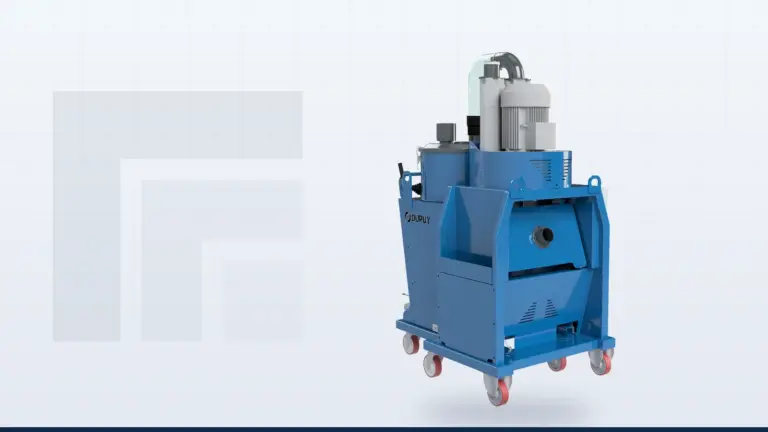
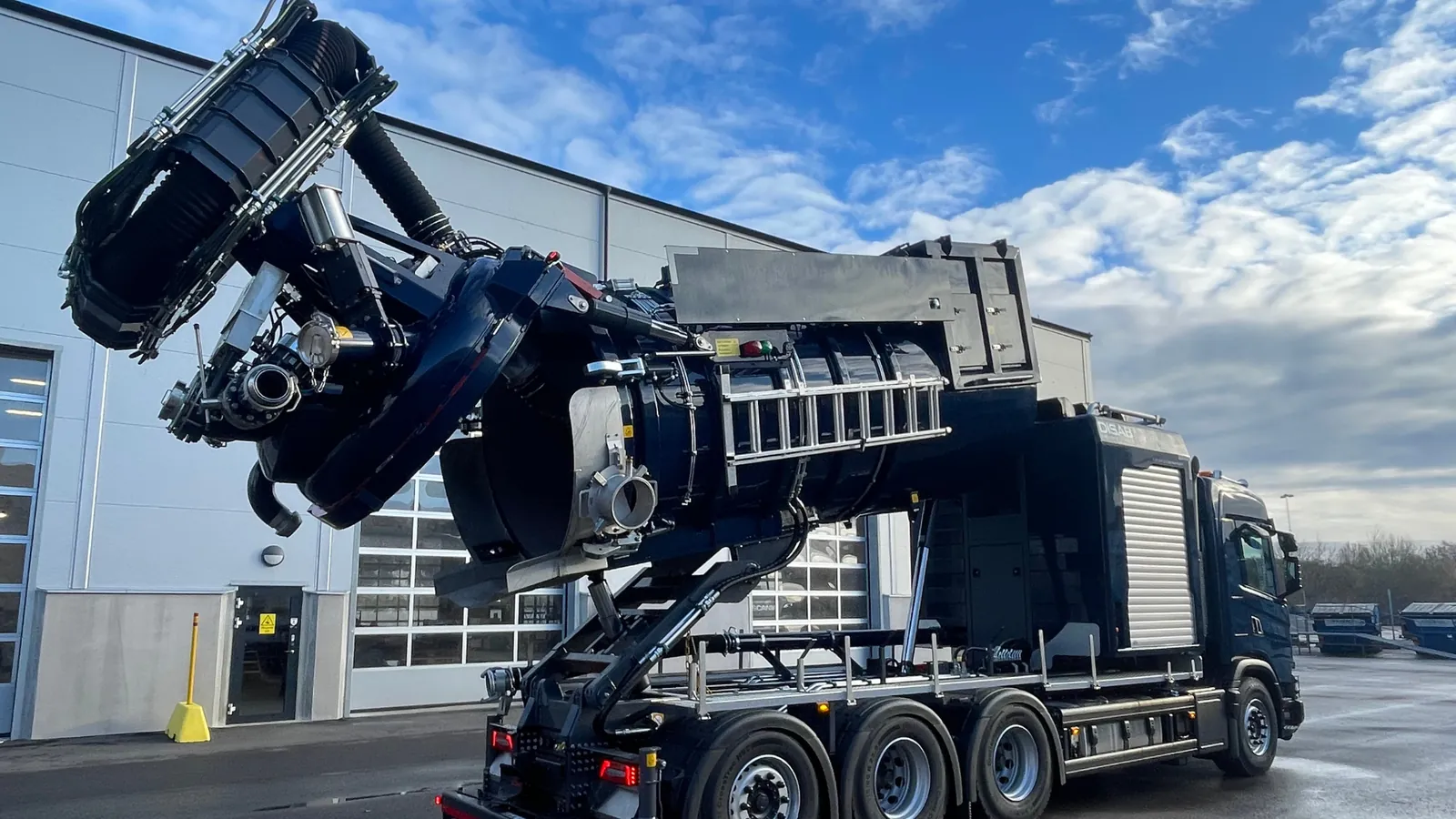
Heavy-duty vacuum loaders and centralised vacuum systems designed for dense, wet material are the usual tools, because they lift scale through long hoses into a closed tank without digging. DISAB builds both.
DISAB’s vacuum trucks include the Centurion, Futurion and Vacturion ranges; it describes the LN30, for example, as “designed for suction and blowing of wet and dry materials, both horizontally and vertically”. Its portable RoRoVac SEL is “designed to withstand dry, wet and sticky materials”. For mills that clean the same trenches and pits every week, DISAB’s centralised systems combine filter separators, pre-separators and vacuum units, and DISAB states they are “capable of handling hot materials up to 600°C”. On its steelworks page DISAB lists “high-capacity systems for sand and slag” and “mobile and stationary systems for full coverage”. DISAB publishes no suction distance, lift or recovery rate figures, so size the equipment on a site survey and, ideally, a trial.

This older film shows vacuum loaders recovering heavy material in a steel plant; watch how the hose is routed to the pick-up point while the truck stays on the access road.
How should scale pits and flumes be cleaned safely?
They should be cleaned from outside the pit or trench wherever possible, with water, pumps and conveyors isolated, and with entry treated as confined-space work. Vacuum hoses let operators work from the edge instead of standing in wet scale.
Heat is a second constraint. Scale near the descalers and first stands can still be hot during short stops, so agree with the mill which areas are cool enough to approach and confirm the temperature rating of any equipment that will touch hot material.
What does a mill-stop cleaning sequence look like?
A good sequence links scale recovery to the planned roll change or maintenance stop, starts with the hardest-to-reach areas and keeps streams separate to the end.
- Plan with the mill. List stands, flumes, pits and floors to be cleaned in the stop and agree the order with production and maintenance.
- Isolate. Lock out drives, pumps and scale conveyors that affect each area and confirm water is off where people will work.
- Recover coarse scale. Vacuum under the stands and in the flumes into the container for clean scale.
- Recover oily fines. Switch containers before cleaning settling areas and oily trenches.
- Clear floors and walkways. Vacuum remaining scale rather than washing it into drains, and leave walkways dry.
- Record and sample. Log tonnes or loads per stream and sample for oil and moisture before dispatch.
Mill scale recovery during a stop
- Plan with the mill
- Isolate the area
- Recover coarse scale
- Recover oily fines
- Record and sample
Oily residues around machine tools in the roll shop are a related task with different equipment; see oil and chip vacuums for steel workshops. For heavy residues in casting areas, see foundry dust cleaning, and for the boundary between recovery and waste handling, see where vacuum systems fit before disposal or reuse.
What should you send AFE for an equipment recommendation?
Send AFE a description of each recovery point and the material at each, so the proposal fits your mill rather than a catalogue. A short pack is enough to start.
- A layout sketch showing stands, flumes, pits and access roads, with hose distances and height differences.
- Material condition at each point: coarse or fine, water content, visible oil, temperature during stops.
- Typical quantities per stop or per week, and how they are removed today.
- Where recovered scale goes: internal recycling, a buyer, or a stockpile, and their acceptance criteria.
- Power, access for a truck, and whether you would trial or rent a unit first.
AFE supplies DISAB vacuum loaders and heavy-duty systems, supports trials and rentals, and provides filters, hoses and wear parts through its MRO and consumables service. Where a fixed network to flumes and pits is worth considering, AFE’s engineering and consulting team can review the layout. More steel guides are collected in the steel insights hub. Transport and disposal of residues stay with your licensed contractor.
Al Faisaliah Enterprises · Aqaba
Match the vacuum to your scale
Share your mill layout, where scale collects, how wet and oily it is and how far the hose must reach. AFE will propose a DISAB loader or fixed system and a trial plan.
Frequently asked questions
Can a vacuum loader empty the main scale pit?
Many primary scale pits are designed to be emptied by their own crane and grab, and that usually stays the main method for bulk coarse scale. A vacuum loader is most useful for flumes, trenches, corners, secondary pits and floors that a grab cannot reach. Whether a vacuum unit can lift your pit material depends on depth, water and particle size, which is why a survey and trial come first.
Does vacuuming remove the oil from mill scale?
No. Vacuuming recovers scale; it does not de-oil it. What it can do is keep low-oil coarse scale separate from oily fines, so at least part of the material meets the buyer's limits. De-oiling, if needed, is a separate treatment step handled by the receiving plant or a specialist.
Can the recovered scale be sold?
Often it can, because mill scale is an iron-oxide residue that steelmaking and other processes reuse. The buyer sets acceptance criteria for oil, moisture, size and contamination. Ask for them before you plan recovery, sample each stream, and keep rubbish out of the scale. AFE supplies equipment and advice; it does not buy, transport or dispose of scale.
Is a fixed central system worth it for a rolling mill?
It can be when the same flumes, trenches and stands are cleaned every week and a vacuum truck spends much of its time travelling or waiting. Fixed pipes to hose points reduce set-up time. A mobile loader is more flexible for occasional or widely spread tasks. AFE can compare both after reviewing your layout and cleaning frequency.
Sources and references
- Commission Implementing Decision 2012/135/EU, BAT conclusions for iron and steel production · European Union (EUR-Lex)
- Foundries & Steelworks · DISAB
- Our vacuum trucks · DISAB
- Centralised vacuum systems · DISAB
- 29 CFR 1910.22, Walking-working surfaces: general requirements · U.S. Occupational Safety and Health Administration
- 29 CFR 1910.146, Permit-required confined spaces · U.S. Occupational Safety and Health Administration
This article is general technical guidance. Equipment suitability, ATEX conformity and hygiene performance must be confirmed for each site and application.
Written for plant, maintenance, HSE and quality teams in Jordan, Saudi Arabia and Iraq.