
The short answer
Jordanian plants get the best results by matching the method to the site: vacuum recovery for phosphate and potash spillage, source extraction plus vacuum housekeeping in cement plants, and ground-based high-level cleaning for settled dust on structures. An Aqaba-based supplier such as AFE can combine equipment supply, rental and on-site services across these tasks.
Key takeaways
- Jordan's dust load comes mainly from phosphate, potash, cement and bulk handling around Aqaba; each needs a different equipment mix.
- Separate recoverable product from waste before choosing spillage vacuum equipment.
- In cement plants, combine capture at the source with vacuum housekeeping; ATEX suitability is per model and per documented zone.
- Buy equipment for daily tasks; use rental or a service for shutdowns, trials and high-level work.
- Agree filters, hoses and wear parts to hold on site before the equipment arrives.
Most of Jordan’s heavy dust load comes from a small number of industries: phosphate mining, potash recovery at the Dead Sea, cement production, and the fertilizer, bulk-handling and port operations around Aqaba. Each produces a different material, in different places and at a different scale, so the right mix of capture, housekeeping and recovery equipment differs from site to site.
A plant manager looking for an industrial vacuum supplier in Jordan is rarely shopping for a single machine. The real question is which combination of equipment, rental and on-site service keeps dust under control without stopping production. This guide maps Jordan’s main industrial site types to the approaches that fit them, explains what to measure first, and sets out what an Aqaba-based supplier can take on.
What makes dust control in Jordan’s heavy industry different?
Jordan’s dust problems are shaped by a few very large mineral operations rather than by many small ones. USGS estimates that Jordan mined 11.5 million tonnes of phosphate rock in 2024 and 12.0 million tonnes in 2025, and recovered about 1.8 million tonnes of potash (K2O content) in 2025 from the Dead Sea.
In 2021, USGS ranked Jordan the world’s fifth-largest phosphate rock producer and seventh-largest potash producer. JPMC states that it runs three mines with a production capacity of 12 million tonnes a year and an industrial complex in Aqaba that produces chemical fertilizers. Arab Potash Company describes itself as the sole potash producer in the Arab World. USGS also lists six cement producers in Jordan.
Two local conditions sit on top of this. Wind-blown desert dust adds a background load inside open-sided buildings and stores, and many sites run continuously, so cleaning has to fit around production rather than the other way round.
| Site type in Jordan | Typical dust or residue problem | Approaches that usually fit | Relevant AFE offer |
|---|---|---|---|
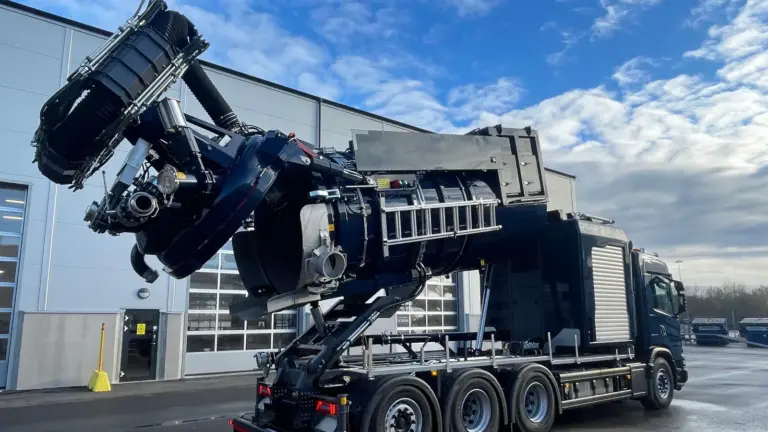
| Phosphate mines and beneficiation | Spillage under conveyors and transfer points; fine dust on steelwork | Vacuum recovery of spillage; high-level dust removal from structures | DISAB vacuum trucks and portable units; Internal high clean dust removal |
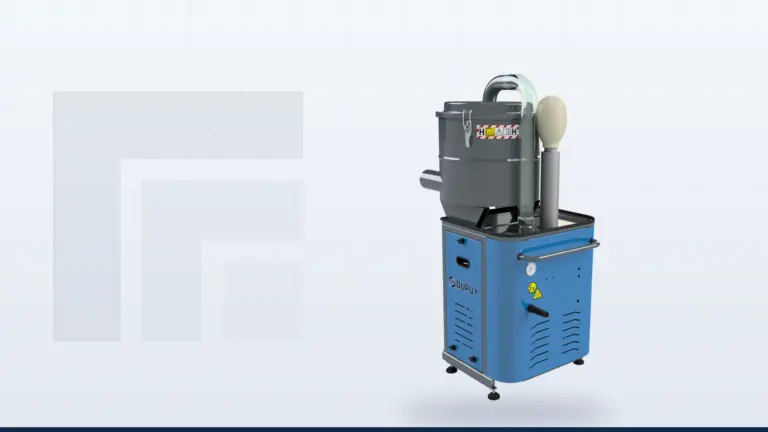
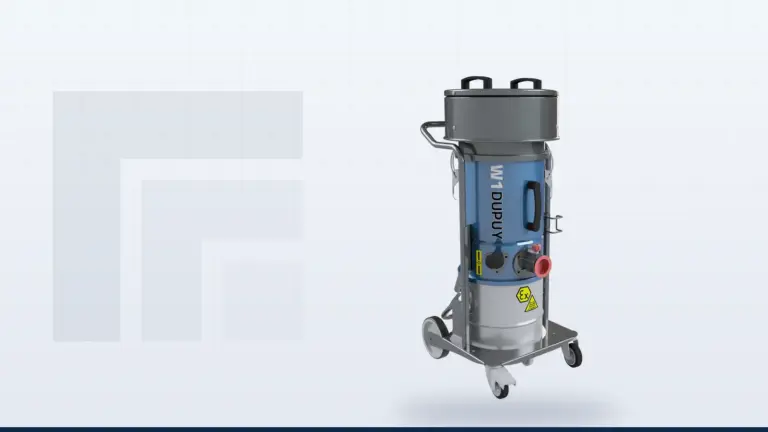
| Potash processing and storage | Salt-bearing dust; damp or sticky deposits | Vacuums and separators matched to the material; checked materials of construction | DUPUY industrial vacuums; DISAB units for bulk material |
| Cement plants | Packing and loading dust; process spillage; coal and alternative-fuel areas | Source extraction plus vacuum housekeeping; central vacuum networks; ATEX-rated models only where zoned | DUPUY dust collectors, central vacuum and ATEX models; DISAB loaders |
| Fertilizer and bulk handling around Aqaba | Product dust in sheds and conveyor galleries; residues on plant | Vacuum recovery; sweeping of paved areas; dry steam degreasing during maintenance | DISAB, MP-HT sweepers, TECNOVAP steam generators |
| Warehouses and logistics yards | Settled dust and sand on racking, roofs and floors | Sweepers for floors and yards; ground-based high-level cleaning | MP-HT sweepers; SpaceVac-based service |
How should phosphate and potash operations approach spillage and settled dust?
Start by separating the material you want back from the material you need to remove, because that split decides the equipment. Clean phosphate or potash spillage collected at a transfer point may be returned to the process if the process owner accepts it; contaminated debris has to leave the area as a separate stream.
For conveyor spillage, the hose route from a safe parking position to the furthest spill point, the bulk density and the volume per shift drive the choice between truck-mounted, portable and fixed vacuum equipment. That method is set out in how to select spillage vacuum equipment for transfer points, and where vacuum collection fits in mining waste management covers what happens after collection.
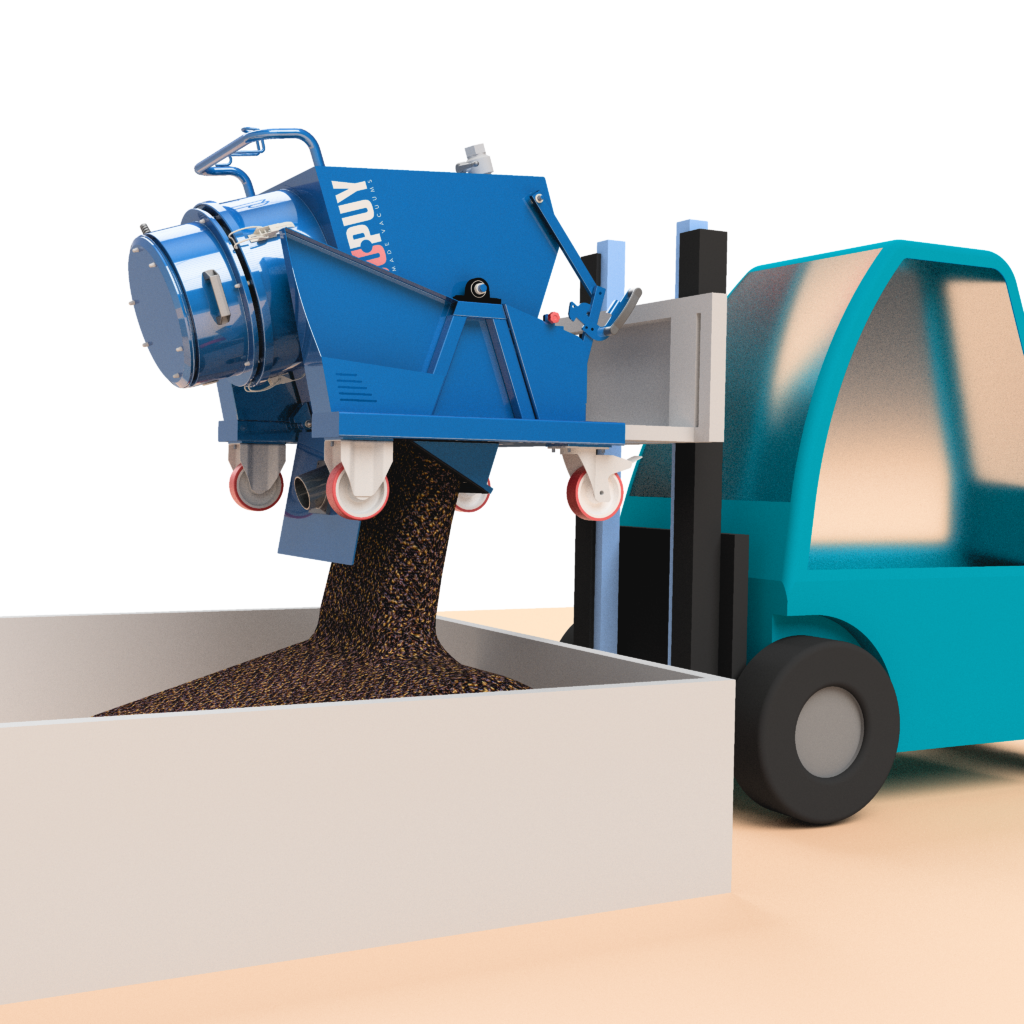
Potash and fertilizer dust bring two extra checks. Ask whether the material picks up moisture and cakes, because damp deposits build up in hoses, separators and filters. And ask the supplier to confirm materials of construction and filter media for salt-bearing dust, rather than assuming a standard machine suits it. Settled dust on beams, cable trays and pipe racks is a separate job; what a high-level dust removal survey in a mining facility should cover explains how to scope it.
What do cement plants in Jordan need from an industrial vacuum supplier?
Cement plants need capture at the source and vacuum housekeeping working together, not one in place of the other. A dust collector at a packing machine reduces what escapes; a vacuum system removes what still settles, and recovery equipment deals with spillage around mills, elevators and conveyors.
DUPUY’s cement-industry page lists vacuum solutions for conveyor belts and elevator pits, the mill area, bagging and loading, centralized dedusting, and “ATEX-certified solutions” for the alternative-fuel and coal zone. DUPUY also states that prolonged exposure to cement dust can lead to serious health problems. Useful starting points are pairing dust capture with housekeeping in a cement packing plant and when recovered cement spillage can return to the process.
The cleaning method matters as much as the machine. UK HSE notes that dry sweeping can produce high peak exposures of around 1–2 mg/m³ and recommends M or H class extraction for finer material; as a US reference, OSHA’s Table Z-1 sets limits for Portland cement of 15 mg/m³ total dust and 5 mg/m³ respirable fraction. Neither rule binds sites in Jordan, but both are widely used benchmarks.
How do the Aqaba zone and port shape supply and support?
Aqaba is Jordan’s gateway to the sea, so a supplier based there sits on the main route for imported equipment. The Aqaba Development Corporation states that the Aqaba Special Economic Zone covers 375 square kilometres and the whole of Jordan’s 27-kilometre Red Sea coastline, and that ADC owns the Port of Aqaba.
In February 2026, AD Ports Group announced a 30-year concession for Aqaba Multipurpose Port, which it describes as Jordan’s only general cargo and multipurpose seaport, with an annual handling capacity of 11 million tonnes. The company says the port handles about 80% of Jordan’s exports and 65% of its imports and is a key transit point for trade with Saudi Arabia and Iraq.
AFE describes Aqaba as its hub between European manufacturers and markets in Jordan, Saudi Arabia and Iraq, building on its experience in importing, technical support and serving heavy industries (see the Aqaba regional gateway). The zone is also an industrial site in its own right: the fertilizer complex, bulk stores and paved port yards create their own floor and overhead dust. AFE describes its MP-HT sweepers for ports, logistics hubs and industrial sites, and DISAB lists ports among the industries for its centralized vacuum systems.
When is a service or rental better than buying equipment?
Buy equipment for cleaning that happens every shift; use a service or rental for work that is occasional, specialist or tied to a shutdown. AFE states that it sells, rents and executes, often in combination, so the decision can be made task by task.
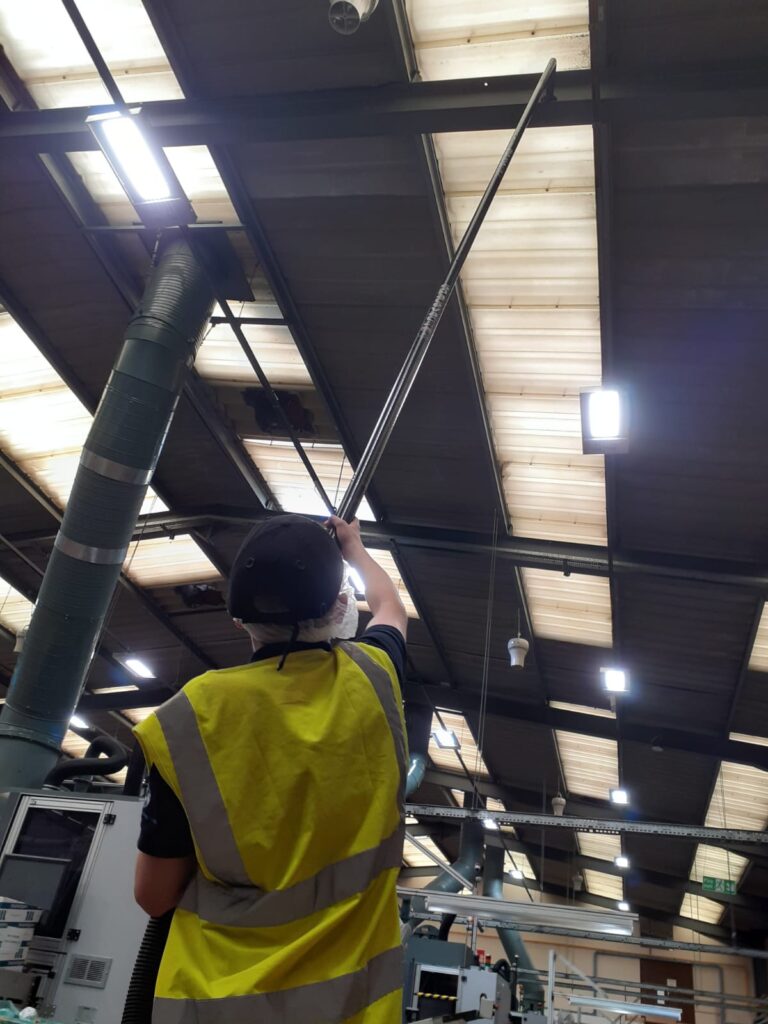
- Overhead structures: AFE’s Internal high clean dust removal service (high-level dust removal) uses industrial vacuums and high-reach pole systems to capture dust on steelwork, cable trays, duct exteriors and piping from the ground. See the high clean service.
- Grease and residues on machinery: AFE’s industrial steam cleaning and degreasing service uses professional-grade steam systems to remove grease, oils and residues from machinery, process equipment and overhead structures.
- Shutdown peaks and trials: AFE states that it offers short- and long-term equipment rental across Jordan, Saudi Arabia and Iraq, with maintenance included. Availability of a given unit has to be confirmed for your dates.
- Daily housekeeping: owned DUPUY industrial vacuums, dust collectors or a central vacuum network, selected for the material and duty cycle (see industrial vacuum systems).
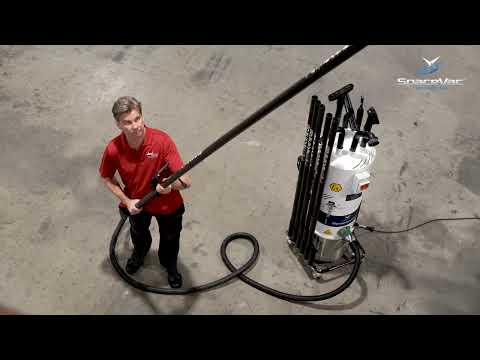
Watch how dust and debris are removed from high structures while the operator stays on the ground; it shows the technique, not a Jordanian site.
How should a Jordanian site plan dust control step by step?
Plan from the dust source outward, and decide the commercial model last. The sequence below works for a mine, a cement plant or a bulk store.
- Map dust sources. Walk the site and list where dust is generated, where it settles and where spillage collects, with photos.
- Characterize the materials. For each area, record particle size, moisture, abrasiveness, temperature and the safety data sheet, including any silica content or combustibility.
- Confirm zones and access. Check the site’s hazardous-area documents, working heights, vehicle access, power supply and isolation rules.
- Choose buy, rent or service. Match frequent tasks to owned equipment and occasional or high-level work to rental or a service visit.
- Plan spares and support. Agree the filters, hoses and wear parts to hold on site; AFE lists genuine OEM spare parts, consumables and core components under MRO and consumables.
Planning dust control at a Jordanian site
Notice how the same suction principle covers wet and dry spillage, plant housekeeping and recovery of valuable material, the three jobs phosphate and potash sites combine.
What should you ask an industrial vacuum supplier before you commit?
Ask questions that force a supplier to work from your data rather than a catalogue. Good answers are specific about what still needs a site visit or a trial.
- Which model, and why, for each material and area, and what was assumed about hose routes and lift?
- For any classified zone: the exact model marking, the certificate, and whether hoses and tools are conductive.
- Which filter class and filter media suit the dust, and how the filters are cleaned and replaced?
- Which spare parts and consumables should be held on site for the first year?
- Whether rental or a trial is possible before purchase, and what the rental terms cover.
- Who supports commissioning, operator familiarization and after-sales service?
Plants in neighbouring markets face different conditions: see the Saudi Arabia guide to industrial vacuums and the GCC ATEX vacuum standard and the Iraq buyer guide to equipment supply through Aqaba. For sector guides, browse the Jordan, Saudi Arabia and Iraq insights hub.
Al Faisaliah Enterprises · Aqaba
Plan dust control for your Jordanian site
Send AFE your site type, the main dust areas, photos and material data. You get a proposal that separates what to buy, what to rent and what to hand over as an on-site service.
Frequently asked questions
Does AFE only work in Aqaba, or across Jordan?
AFE is based in Aqaba and states that it coordinates industrial cleaning solutions across Jordan, Saudi Arabia and Iraq, combining equipment sales, rental and on-site services. Whether a specific service visit, rental unit or delivery fits your location and dates is confirmed for each request, so include the site address, access conditions and preferred timing when you ask.
Can phosphate dust be handled with a standard industrial vacuum?
Sometimes, but it should be checked rather than assumed. Particle size, moisture, abrasiveness and the volume collected per shift decide whether a mobile industrial vacuum, a heavy-duty vacuum loader or fixed pipework fits. Send the safety data sheet, photos of the deposits and a rough volume log so the supplier can propose a configuration and say what still needs a trial.
Is a dust collector enough for a cement packing plant?
Usually not on its own. A dust collector reduces what escapes at the packing machine, but dust still settles on floors, platforms and structures, and bags still split. Most plants pair source extraction with vacuum housekeeping and a way to recover spilled product. Sizing both needs data on the packing line, the dust and the cleaning routine.
Which international rules do Jordanian plants use as references for dust?
Many sites use UK HSE guidance on sweeping and vacuum dust classes, US OSHA limits for cement dust and silica, and EU ATEX directives for hazardous areas as benchmarks. These are international references, not Jordanian law. Check your national requirements and your own company or customer standards before setting site rules.
Can we rent equipment for a planned shutdown in Jordan?
AFE states that it offers short- and long-term equipment rental across Jordan, Saudi Arabia and Iraq for shutdowns, trials and temporary needs, with maintenance included. Share the shutdown dates, the tasks, the materials and the site access early, because the availability of a particular unit has to be confirmed for each request.
Sources and references
- Mineral Commodity Summaries 2026: Phosphate rock — U.S. Geological Survey
- Mineral Commodity Summaries 2026: Potash — U.S. Geological Survey
- 2020–2021 Minerals Yearbook: Jordan — U.S. Geological Survey
- Aqaba Special Economic Zone — Aqaba Development Corporation
- AD Ports Group signs 30-year agreement with Aqaba Development Corporation — AD Ports Group
- Cement industry — DUPUY
- Sweeping and cleaning: construction dust — UK Health and Safety Executive
This article is general technical guidance. Equipment suitability, ATEX conformity and hygiene performance must be confirmed for each site and application.
Written for plant, maintenance, HSE and quality teams in Jordan, Saudi Arabia and Iraq.