The short answer
A mine can collect material below conveyor transfer points with an industrial vacuum loader that lifts dry, wet or lumpy spillage through a hose into a sealed tank, instead of shoveling it near the belt. The right unit depends on the material, the hose route from vehicle to spill point and the volume collected per shift.
Key takeaways
- Vacuum recovery treats the symptom; fix chutes, skirting and belt cleaners in parallel to reduce how much spills.
- Selection starts with the material: size range, bulk density, moisture, abrasiveness, temperature and any silica or combustible content.
- Measure the real hose route, including lift and bends, because DISAB publishes no generic suction-distance figures.
- Log spillage volume per shift and fix the discharge point before choosing truck-mounted, portable or fixed equipment.
- Isolate the conveyor under the site's own procedure before anyone works beneath a transfer point.
Every conveyor transfer point on a mine loses some material. Fines sift past the skirting, carryback drops off the return belt and lumps bounce out of the chute, until a ridge of spillage builds up under the structure. Clearing it by shovel is slow, dusty work close to moving equipment, and it is often postponed until the pile fouls idlers or blocks a walkway.
Mining spillage vacuum recovery replaces that manual cleanup with suction: material is lifted through a hose into a sealed tank or container and taken to a defined discharge point. This guide explains how to select vacuum equipment for transfer points, what to measure before you ask a supplier, and which mistakes make systems underperform.
Why does material build up below conveyor transfer points?
Spillage concentrates at transfer points because that is where material changes direction, speed and drop height. Any gap between chute, skirting and belt, any belt mistracking and any carryback the belt cleaners miss ends up on the floor or on the steelwork below.
Two practical points follow. Vacuum recovery treats the symptom, so it works best alongside source fixes such as chute alignment, sealing and belt cleaning. And spillage is rarely uniform: one transfer point can produce dry dust, damp fines and coarse lumps, and the equipment has to cope with the worst of these, not the average.
What options does a mine have for collecting conveyor spillage?
Mines generally choose between manual cleanup, mobile plant, wash-down and vacuum collection, and each suits different spill conditions.
| Method | Works best when | Main limitations |
|---|---|---|
| Shovel and broom | Spills are small, occasional and safely accessible | Slow; keeps people close to the conveyor; dry sweeping raises dust |
| Loader or skid steer | Large piles lie on open, level ground | Cannot reach under low steelwork or between columns; risk of striking the structure |
| Water wash-down | The site can manage slurry and drainage | Turns dry material into slurry; unsuitable where material must stay dry or be recovered |
| Truck-mounted vacuum loader | Several spill points lie within hose reach of a road or hardstand | Needs vehicle access and a safe parking position |
| Portable or container-based vacuum unit | Spill points are away from roads, inside buildings or in galleries | Smaller capacity; containers must be lifted or swapped to empty |
| Fixed vacuum system with pipework | The same points need clearing every shift | Needs project-specific design and installation |
The cleanup method also affects dust exposure. UK HSE notes that dry sweeping can produce high levels of dust, and as a US reference, OSHA’s respirable crystalline silica standard does not allow dry sweeping or brushing that could contribute to exposure unless wet sweeping, HEPA-filtered vacuuming or other low-exposure methods are not feasible. Neither rule binds sites in Jordan, Saudi Arabia or Iraq, but both are widely used benchmarks.
Which material properties drive mining spillage vacuum recovery selection?
Material properties decide the vacuum principle, the separator and filter arrangement and the tank, so characterize the spillage before discussing models. Record these for each transfer point:
- Size range: from the finest dust to the largest lump that must pass through the nozzle and hose.
- Bulk density: it sets how much a tank or container can carry within its rated payload.
- Moisture and stickiness: damp fines can build up in hoses and separators.
- Abrasiveness: it drives wear on hoses, bends and nozzles, and therefore spare-part planning.
- Temperature: relevant where spillage comes from dryers or other hot processes.
- Hazard data: silica content, toxicity and whether the site’s assessment classes the dust as combustible.
- Destination: whether the material should return to the process or leave the area as waste.
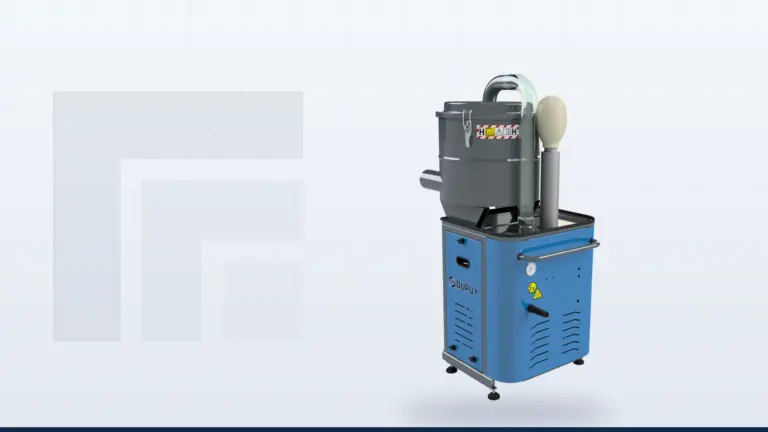
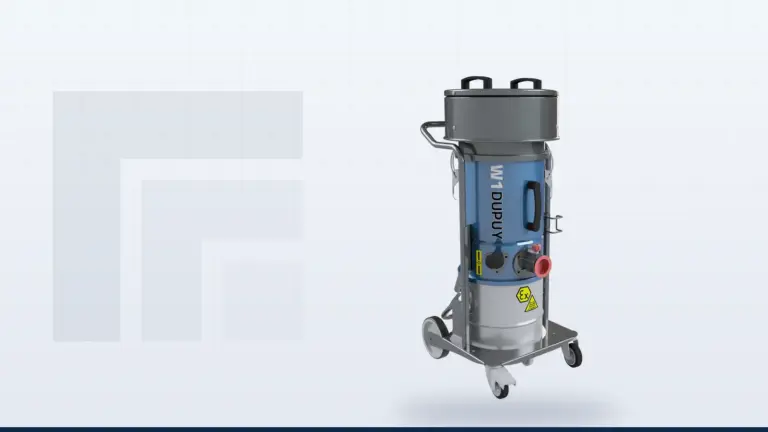
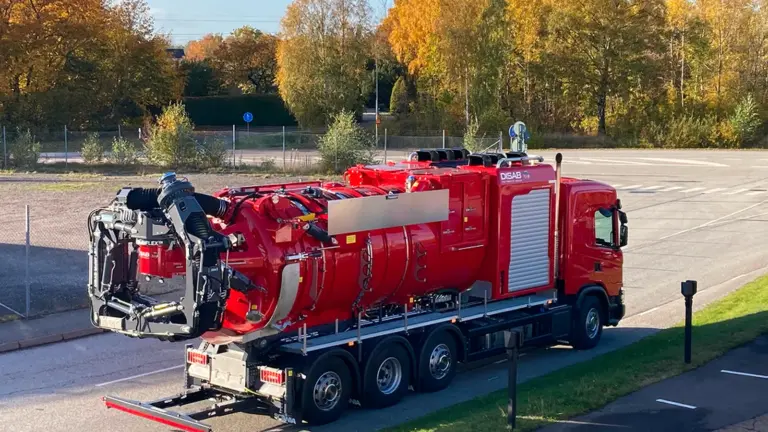
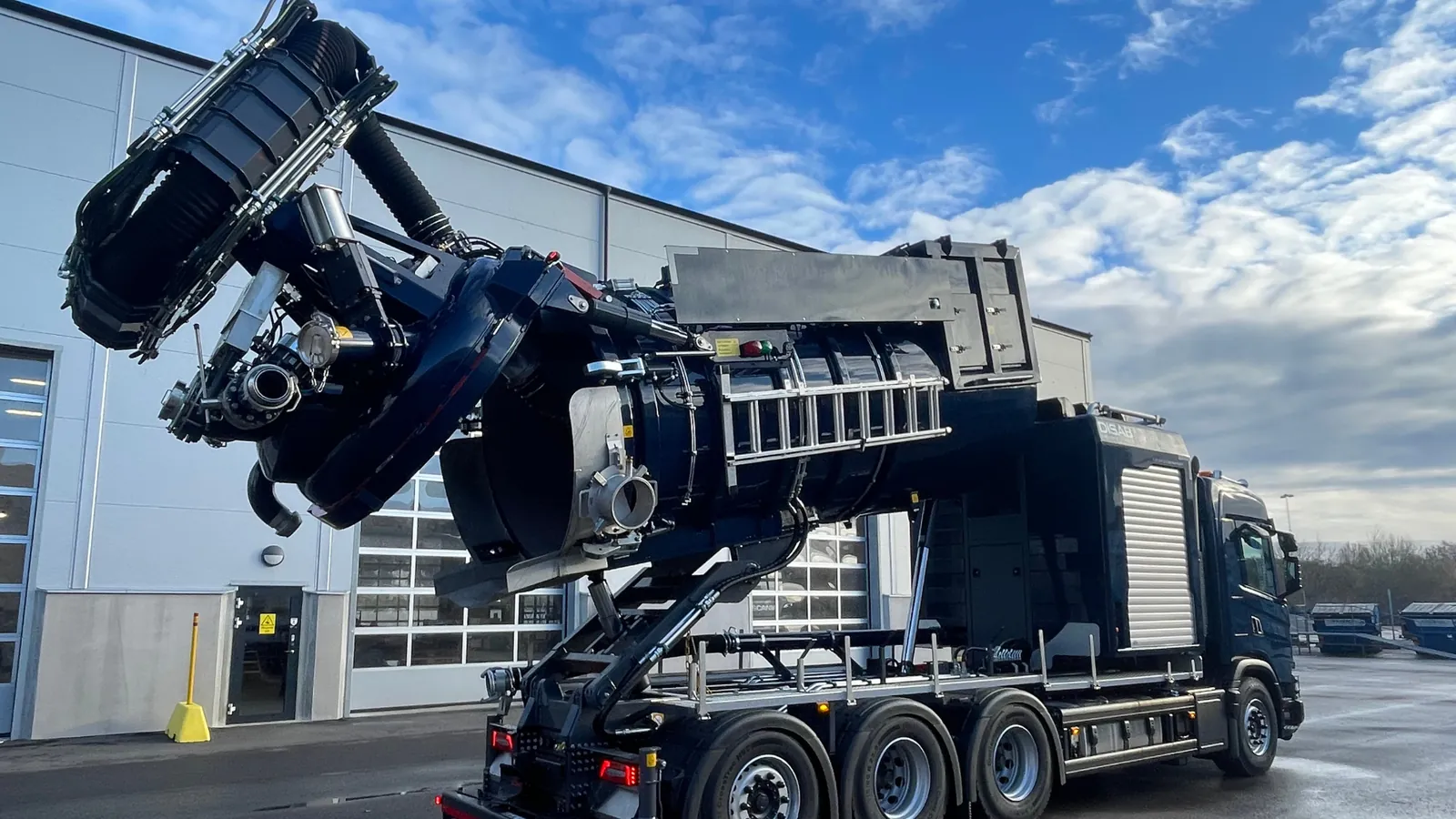
DISAB, whose vacuum trucks, portable units and centralized systems AFE supplies, describes its LN30 truck as designed for suction and blowing of wet and dry materials, horizontally and vertically, and lists ADR (dangerous-goods) versions of some trucks. It does not publish generic suction-distance or lift figures, so application data, not a brochure table, should drive the choice. DISAB’s vacuum truck range spans the Centurion, Futurion and Vacturion families.
How do hose distance and site layout change the answer?
The hose route from the vacuum unit to the furthest spill point often decides whether a truck-mounted loader, a portable unit or fixed pipework is practical. Losses grow as the route gets longer, climbs higher and adds bends, and heavy or damp material feels the effect first.
Measure the route rather than estimating it:
- Horizontal distance from the proposed unit position to each spill point.
- Vertical lift, for example from ground level up to a gallery or down into a pit.
- Number of bends and wall or floor penetrations, and every place where the hose would cross a walkway.
- Vehicle access: road width, turning space, overhead clearance and ground conditions at a parking spot outside the conveyor’s danger zone.
- Power supply and exhaust constraints in enclosed areas, which can favor electric units.
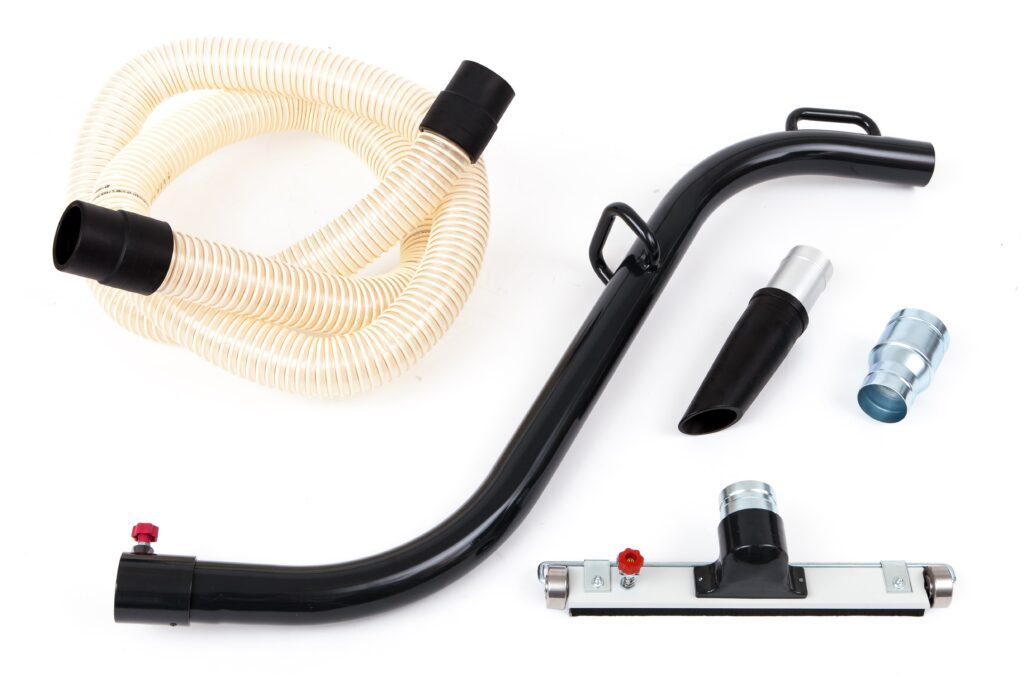
Where the same points need attention every shift, fixed pipework with connection points close to each transfer point can remove the hose-distance problem altogether. DISAB’s centralized systems combine filter separators, vacuum units and pre-separators, and DISAB states that they are available with ATEX-approved options and can handle hot materials up to 600°C. Whether a fixed layout pays off is a project question; see how fixed and mobile vacuum layouts compare.
How should you estimate loading volume and discharge?
Estimate how much material each transfer point produces and where it must go, because tank size, emptying method and trip frequency all follow from those two answers.
- Log current spillage. For two to four weeks, record what is cleared at each transfer point per shift, for example in loader buckets or wheelbarrow loads.
- Convert volume to mass. Use the material’s bulk density to turn the log into tonnes, which is what payloads and container ratings are based on.
- Split the streams. Note which points produce clean material that could go back on the belt and which produce contaminated debris.
- Fix the discharge point. Decide whether collected material returns to a belt or stockpile, goes into a skip or big bag, or is tipped at a defined area. DISAB’s portable range includes bag, skip and hooklift formats, such as the RoRoVac SEL, which DISAB says is built to withstand dry, wet and sticky materials.
- Work out the cycle. Compare tank or container capacity with the logged volume to estimate emptying trips per shift, including travel time to the discharge point.
The split between recoverable and waste material matters more than it first appears; where vacuum collection fits in mining waste management explains what happens to each stream after collection.
Truck-mounted, portable or fixed: which layout fits the site?
The best layout follows from where the spill points are, how often they need clearing and how material leaves the area.
| Site condition | Likely fit | Check before deciding |
|---|---|---|
| Many spill points spread along a haul road or plant road | Truck-mounted vacuum loader | Parking positions, hose reach, payload per trip |
| Spill points inside buildings, galleries or tunnels | Portable, container-based or trailer-mounted unit | Lifting equipment for emptying, power supply, exhaust |
| The same points cleared every shift | Fixed system with pipework and connection points | Pipe routing, wear at bends, separator and discharge design |
| Shutdown peaks, or a trial before purchase | Rented or temporary unit | Availability, delivery time to site, operator familiarization |
Selecting a spillage vacuum system
Watch how DISAB applies the same suction principle to wet and dry spillage, plant housekeeping and recovery of valuable material; the film shows the technology, not a mining site.
What should a selection request include?
A useful request gives the supplier enough data to propose a configuration and to say clearly what still needs a site visit or a trial.
- Photos of each transfer point and its spillage, with a scale reference.
- Material name, size range, moisture and safety data sheet.
- Measured hose routes: horizontal distance, vertical lift and bends.
- Logged volume per shift and the intended discharge point for each stream.
- Vehicle access, power availability, working hours and shutdown windows.
- Site rules: isolation procedure, PPE and any hazardous-area classification.
AFE supplies DISAB equipment for sites in Jordan, Saudi Arabia and Iraq through its Aqaba regional gateway. Selection support comes through process analysis and system design, hoses, filters and wear parts through MRO and consumables, and short- or long-term hire for shutdowns and trials through equipment rental, subject to unit availability. The volumes involved justify careful selection: USGS estimates that Jordan mined 12.0 million tonnes of phosphate rock in 2025 and Saudi Arabia about 10 million tonnes.
Which mistakes make spillage recovery equipment underperform?
Most disappointments trace back to selection data that was missing or optimistic.
- Sizing for the average spill instead of the damp, lumpy worst case.
- Assuming brochure performance applies to a long route with lift and bends.
- Mixing recoverable material with general debris in one tank; deciding whether recovered spillage can return to the process shows why that matters.
- Choosing a tank before deciding how and where it will be emptied.
- Treating vacuum recovery as a substitute for fixing chutes, skirting and belt cleaners.
- Planning cleanup under a running belt instead of within isolation windows.
For more on the sector, see the mining insights hub, or browse heavy-duty vacuum loaders and trucks.
Al Faisaliah Enterprises · Aqaba
Get a vacuum shortlist for your transfer points
Send AFE photos of each spill point, the material data, measured hose routes and a spillage log. You get suitable DISAB configurations and a clear list of what still needs confirming on site.
Frequently asked questions
Can a vacuum loader handle wet or sticky spillage as well as dry fines?
Many can, but it depends on the configuration. DISAB describes several units for wet and dry materials, and says its RoRoVac SEL is built to withstand dry, wet and sticky materials. Damp fines can still build up in hoses and separators, so send a description or sample of the worst-case spillage and ask the supplier to confirm hose size, separator and filter arrangement for it.
How far can a vacuum loader be parked from the spill point?
There is no single figure. Suction performance at the nozzle depends on the material, hose diameter, horizontal distance, vertical lift and number of bends, and DISAB does not publish generic suction-distance figures. Measure the real route from a safe parking position to the furthest spill point and ask for an application-based confirmation, ideally backed by a trial on your material.
Is fixed vacuum pipework at transfer points worth the investment?
It can be when the same points need clearing every shift, access for vehicles is poor, or hoses would have to cross walkways repeatedly. Fixed systems need project-specific design for pipe routing, wear at bends, separation and discharge. Compare that cost with the time and risk of moving a mobile unit around the plant, using your own spillage log as the basis.
Can recovered spillage simply go back onto the conveyor?
Clean, single-material spillage often can, if the process owner accepts it and the discharge point is safe and controlled. The condition is that it was collected separately from debris, floor dirt and wash water. Contaminated spillage should be handled as a separate stream under the site's waste rules rather than returned to the belt.
Can we hire a vacuum unit for a shutdown before deciding to buy?
AFE offers short- and long-term equipment rental for shutdowns and trials. Whether a suitable heavy-duty vacuum configuration is available for your dates has to be confirmed case by case. A trial is also a good way to collect real data on spillage volumes, hose routes and emptying cycles before a purchase decision.
Sources and references
- Our vacuum trucks — DISAB
- Portable vacuum units — DISAB
- Centralised vacuum systems — DISAB
- 29 CFR 1910.1053 Respirable crystalline silica (general industry) — US Occupational Safety and Health Administration
- Sweeping and cleaning: construction dust — UK Health and Safety Executive
- Mineral Commodity Summaries 2026: Phosphate rock — U.S. Geological Survey
This article is general technical guidance. Equipment suitability, ATEX conformity and hygiene performance must be confirmed for each site and application.
Written for plant, maintenance, HSE and quality teams in Jordan, Saudi Arabia and Iraq.