The short answer
Screen house dust cleaning is safest and fastest when screens are stopped, locked out, blocked against motion and verified still before anyone cleans near them. Then clean overhead steel first, recover floor spillage with a vacuum loader or heavy-duty vacuum, and collect fines with industrial vacuums instead of sweeping or blowing.
Key takeaways
- Screens agitate dry material, so fines escape at feed boxes, decks, discharge lips and worn seals.
- Lock out every machine involved and wait for run-down; screens keep moving after power is off.
- Clean from overhead steel downward, then recover floor spillage, then walkways and platforms.
- Vacuum loaders suit bulk spillage and long hoses; mobile vacuums suit fines; fixed networks suit large plants.
- Repair worn chutes, skirting and panels to cut the volume that needs cleaning.
The screen house is often the dustiest building on a mineral processing site. Vibrating screens shake dry material hard enough to separate it by size, and every shake releases fines. Feed boxes, discharge chutes and transfer points add spillage, and the dust that escapes settles on floors, walkways, motor bases and overhead steel until the building looks grey from the inside.
Screen house dust cleaning is therefore a routine task, not an occasional one, and it is one of the riskier routine tasks on a plant because it happens next to large vibrating machines. This guide explains why screen houses get so dusty, how to isolate screens before anyone cleans near them and how to choose vacuum equipment that makes the job safer and faster.
Why are screen houses so dusty?
Screen houses are dusty because screening is designed to agitate dry, broken material, and agitation releases the finest fraction into the air. Dust escapes where material enters the screen, along the decks, at the discharge lips and wherever chutes and seals are worn. In hot, dry conditions, such as those common across Jordan, Saudi Arabia and Iraq, feed material is often dry and fines become airborne more easily.
Spillage follows the same paths. Overloaded or worn chutes, damaged skirting, blinded or torn screen panels and misaligned transfer points all put material on the floor. Once it is there, vibration and foot traffic grind it finer and lift it again.
For many minerals the dust is also a health issue. Where the material contains crystalline silica, US OSHA’s general-industry silica standard, a useful reference rather than a mining rule, restricts dry sweeping or brushing that could contribute to exposure unless wet methods, HEPA-filtered vacuuming or other low-exposure methods are not feasible. The UK HSE notes that dry sweeping “can produce high levels of dust.” The article on why vacuuming silica dust beats sweeping goes into the exposure side.
Where does dust and spillage collect in a screen house?
Dust and spillage collect at a few predictable points, and each needs its own method and isolation. Use this table as a survey sheet for your own building.
| Location | What you usually find | Cleaning method | Isolation needed |
|---|---|---|---|
| Screen decks and panels (during maintenance) | Pegged or blinded fines, build-up at edges | Vacuum with hand tools after mechanical cleaning | Screen locked out and blocked against motion |
| Feed boxes and discharge chutes | Packed material, overflow, spillage below | Vacuum loader hose or industrial vacuum | Screen and feeding conveyor locked out |
| Floors around screen bases | Spillage, coarse and fine | Vacuum loader or high-capacity vacuum | Exclusion from guarded and moving parts |
| Walkways, stairs and platforms | Fine dust that becomes a slip and exposure hazard | Industrial vacuum, not dry sweeping | Usually none, if away from moving parts |
| Overhead steel, cable trays, motor bases | Settled fine dust | Vacuum with high-reach poles or planned high-level work | Exclusion zone below; screens stopped if access is near them |
How do you isolate vibrating screens before cleaning?
You isolate a vibrating screen by stopping it, locking out every energy source, blocking it against motion and confirming it has fully stopped before anyone reaches in. US mine safety rule 30 CFR 56.14105 requires repairs and maintenance to be done “only after the power is off, and the machinery or equipment blocked against hazardous motion.” Treat cleaning inside guards, chutes or feed boxes the same way.
- Plan the stop. Agree the window with production and list every machine involved: the screen, the feeder, the conveyors in and out.
- Lock out all energy. Apply locks and tags at the isolators of each machine. Start and stop buttons are not isolation.
- Wait for run-down. A screen and its drive keep moving after power is off. A Virginia state mining alert describes a worker whose hand was pinched in a screen drive belt because he reached behind the guard “after the unit had been turned off but before it came to a complete stop.”
- Block and verify. Block the machine against hazardous motion as your procedure requires, try to start it, and confirm nothing moves.
- Clean, then restore. Remove tools and hoses, refit guards, account for every person, then remove locks in the agreed order.
What cleaning method suits each part of a screen house?
The right method depends on the quantity, the material and where it sits. Shovels and brooms are slow and raise dust; compressed air spreads dust over the area you just cleaned. Water washing can work on some sites but brings drainage, slurry and wet-floor problems, which the guide on vacuum loaders versus water washing compares in detail.
Vacuum collection captures the material instead of moving it. For screen houses, the practical split is usually:
- Bulk spillage under chutes and screens: a vacuum loader or heavy-duty vacuum unit, with the hose brought into the building.
- Fines on walkways, platforms and machine bases: a mobile industrial vacuum suited to the dust.
- Daily cleaning on large or multi-level plants: a fixed central vacuum network with hose points on each level.
- Overhead steel and trays: high-reach pole systems used from the floor, or planned high-level cleaning during a stop.
Screen house cleaning sequence
- Isolate and verify
- Clean overhead first
- Recover floor spillage
- Restore and record
Work from the top down so fines from overhead steel are not dropped onto floors that are already clean. Record what was recovered and where, because repeated spillage at one chute points to a fault worth fixing.
How do you choose vacuum equipment for screen house dust cleaning?
Choose vacuum equipment for screen house dust cleaning by quantity per shift, hose distance and the size and moisture of the material. Large quantities and long hose runs point to a vacuum loader or a fixed system; smaller quantities of fines point to mobile industrial vacuums.
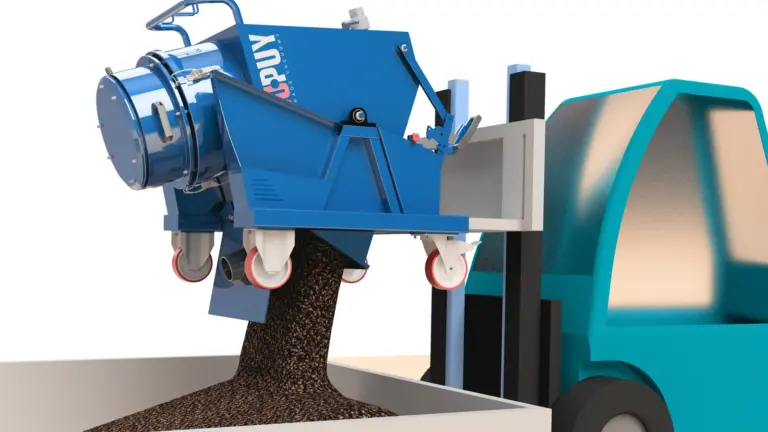
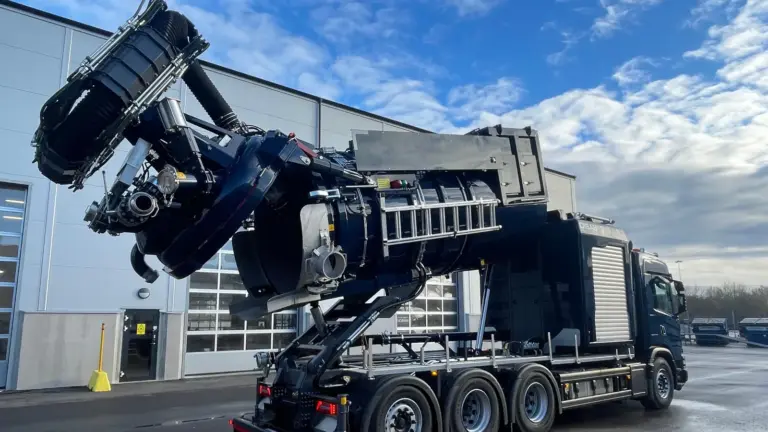
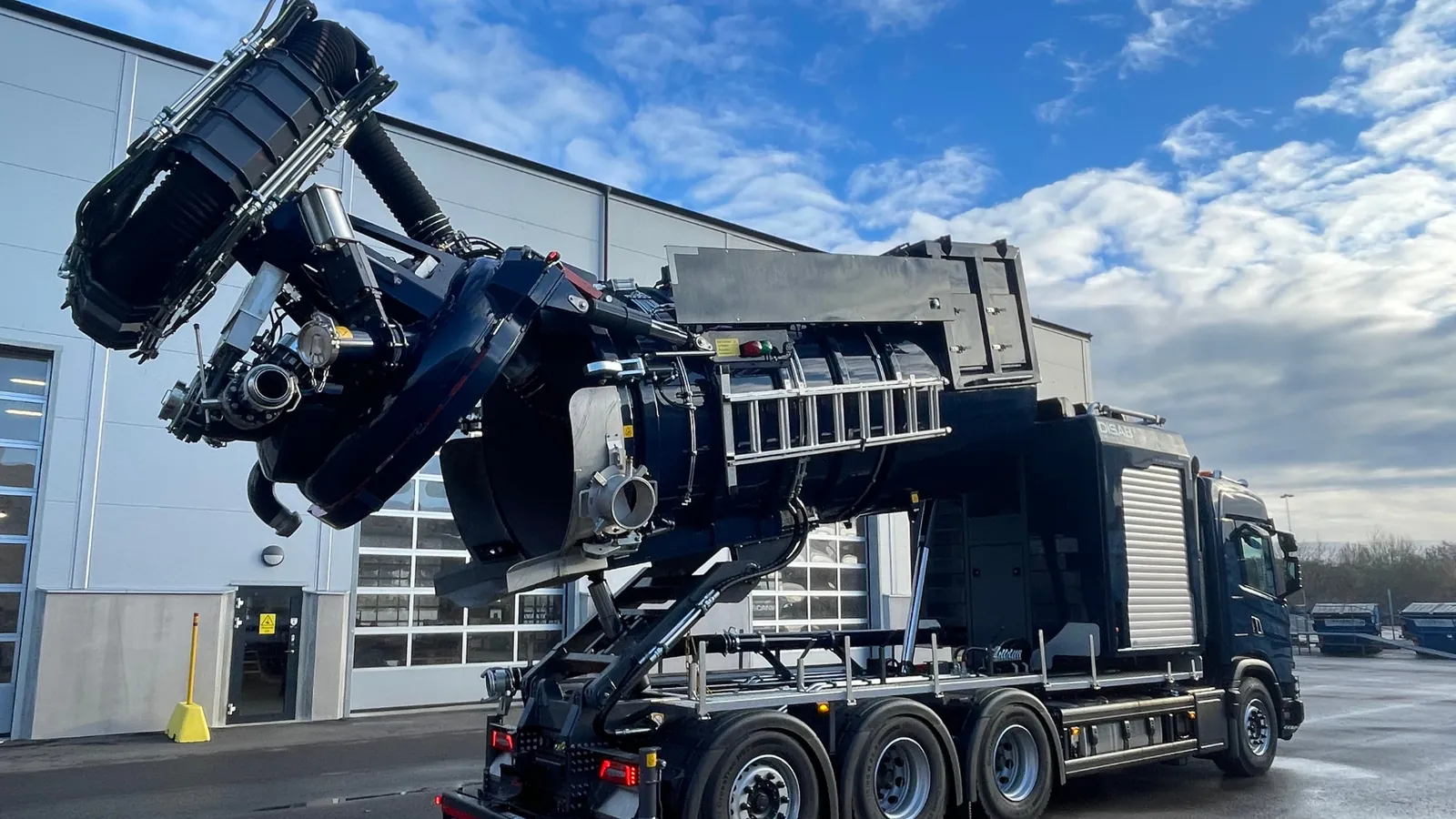
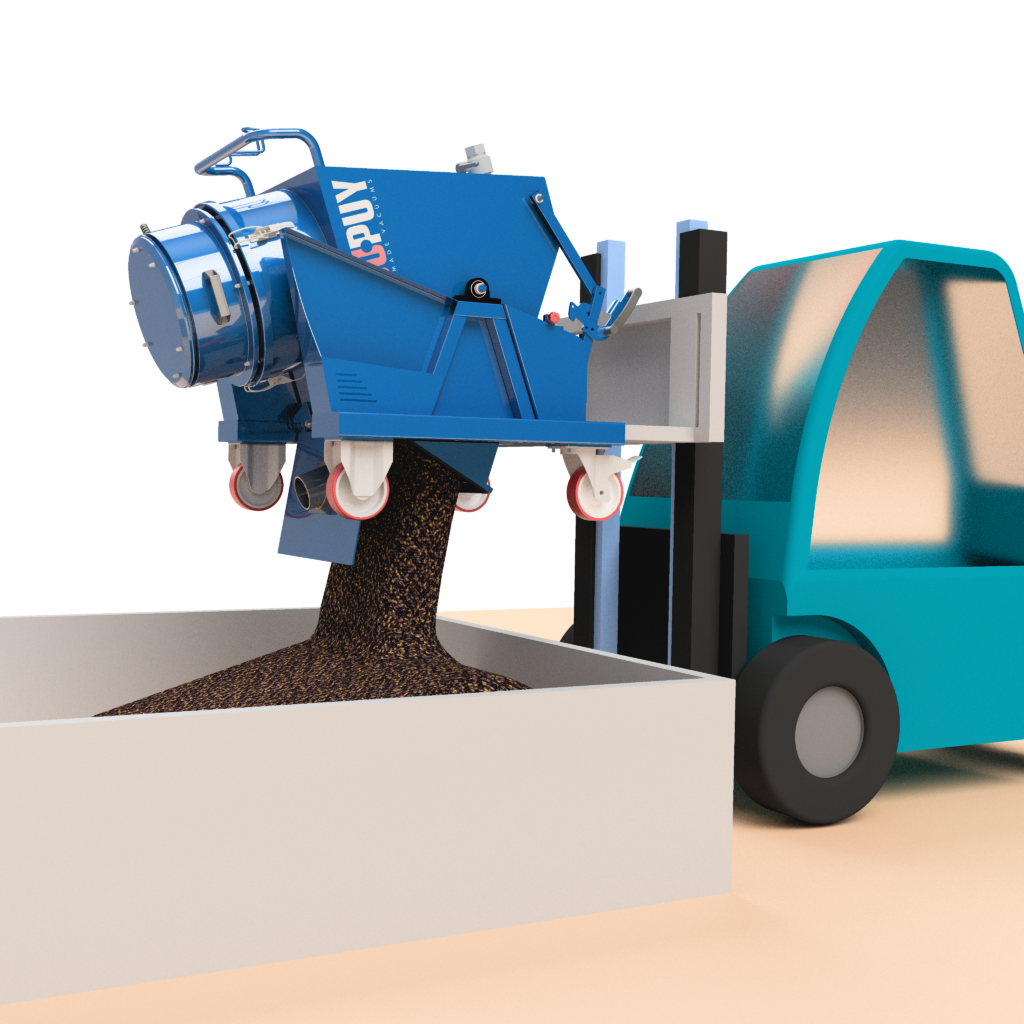
DISAB builds vacuum trucks, mobile and portable vacuum units and centralised vacuum systems, and states that aggregate customers use its equipment to “recover and reuse dust and larger debris.” DUPUY supplies industrial vacuums, including three-phase and silo models, for smaller volumes and fines. Neither manufacturer publishes suction distance or lift figures on the pages reviewed, so ask for performance data for your own material and hose route.
- Material description: mineral, particle size range, moisture and any silica content
- Estimated spillage and dust quantity per shift and per stop
- Hose route from the truck or unit position to the furthest point, including height
- Number of levels and whether a fixed network with hose points is practical
- Filter requirement for the dust, and how the unit is emptied and where
- Whether recovered material can return to the process or must be removed
- Power, access roads and space for a vacuum loader near the building
How can screen house cleaning be done quickly?
Screen house cleaning is fastest when the stop is planned before it starts and the equipment is already in place. Decide in advance where the vacuum loader parks, run hoses before the lockout, and stage tools and containers on each level. Combine cleaning with planned maintenance stops so screens are isolated once for both jobs.

Watch how hose handling and the discharge point are arranged; those two decisions usually set the pace of a spillage clean-up more than suction power does.
Prevention saves the most time. Repair worn chutes and skirting, replace damaged panels and seal leaking enclosures, and the volume to clean falls. The guide on conveyor spillage cleanup covers the same prevention-first logic for belts.
AFE supplies DISAB vacuum trucks and heavy-duty units and DUPUY industrial vacuums, offers rental for shutdowns and trials, and can support central vacuum system design for multi-level plants. Overhead steel can also be covered by its Internal high clean dust removal service. More mining guides are in the mining insights hub.
Al Faisaliah Enterprises · Aqaba
Size vacuum equipment for your screen house
Send your material data, building layout, hose distances and spillage estimates. AFE can propose DISAB vacuum loader and DUPUY industrial vacuum options for each task.
Frequently asked questions
Can we clean around a vibrating screen while it is running?
Only in areas well away from moving parts and with guards fully in place, such as walkways at a safe distance. Anything inside guards, chutes, feed boxes or on the screen itself needs the screen and connected equipment stopped, locked out, blocked against motion and verified as stationary first.
Is a vacuum loader or an industrial vacuum better for a screen house?
It depends on quantity and distance. Bulk spillage under chutes and long hose runs suit a vacuum loader or heavy-duty unit. Fines on platforms and machine bases suit mobile industrial vacuums. Large multi-level plants often justify a fixed central network with hose points on each level.
Can recovered spillage go back into the process?
Often it can, if it is clean and not mixed with foreign material, but that is a process decision for your plant. DISAB states its customers recover and reuse dust and larger debris. Agree with production where recovered material may be returned before choosing the discharge arrangement.
Why not just wash the screen house down with water?
Water washing can be practical on some sites, but it creates slurry, needs drainage and leaves wet floors and wet electrical areas. In water-scarce plants it also has a supply cost. Vacuum collection keeps the material dry and contained, which also makes return to the process easier.
What information should we send for equipment selection?
Send the material type and size range, moisture, any silica content, estimated spillage per shift, the building layout with levels and hose distances, available power and access for a truck. With that, AFE can propose specific DISAB or DUPUY options rather than a general recommendation.
Sources and references
- 30 CFR 56.14105 Procedures during repairs or maintenance · US Code of Federal Regulations (MSHA)
- 30 CFR 56.14107 Moving machine parts · US Code of Federal Regulations (MSHA)
- Safety alert: miner seriously injured performing maintenance on a screen · Virginia Energy, Mineral Mining Program
- 29 CFR 1910.1053 Respirable crystalline silica · US Occupational Safety and Health Administration
- Sweeping and cleaning (construction dust) · UK Health and Safety Executive
- Industries · DISAB
This article is general technical guidance. Equipment suitability, ATEX conformity and hygiene performance must be confirmed for each site and application.
Written for plant, maintenance, HSE and quality teams in Jordan, Saudi Arabia and Iraq.