The short answer
Dry steam fits a hospital kitchen cleaning plan as a periodic deep-cleaning and degreasing method for heat-tolerant hard surfaces, such as worktops, trolleys, racks, tiles, drains and equipment exteriors, under a written, site-approved procedure. It does not replace the daily cleaning and sanitizing steps in the food safety plan, and it must not be used on electrics or incompatible materials.
Key takeaways
- Use dry steam for periodic deep cleaning and degreasing of compatible hard surfaces, not as a substitute for daily cleaning and sanitizing.
- Check each item against its manufacturer's manual first; exclude electrics, controls and heat-sensitive parts.
- Write the method into the kitchen's cleaning schedule and get food safety and infection prevention sign-off before the first visit.
- Schedule steam work between meal services, one zone at a time, with food removed and condensate recovered.
- Treat any sanitizing claim for steam as a separate question that needs its own evidence.
A hospital central kitchen runs long days, feeds patients who may be vulnerable, and is usually audited against a food safety plan built on HACCP principles. Grease builds up on equipment exteriors, trolleys, racks, wall tiles and floor drains faster than daily cleaning removes it, and a natural question for facilities managers is whether hospital kitchen dry steam cleaning could take on part of that load with less water and fewer chemicals.
It can, in the right places and under the right procedure. This guide explains what dry steam does on kitchen surfaces, which equipment is a good fit, what must be excluded, how the method is approved and written down, and how to schedule the work around meal service.
What does dry steam do on kitchen surfaces?
Dry steam is a cleaning method: heat and a small amount of moisture soften grease and food soil so that a brush, cloth or vacuum can remove it. In the Codex Alimentarius food hygiene principles, cleaning is “the removal of soil, food residues, dirt, grease, or other objectionable matter.” That is the job steam does; by itself it is not disinfection.
Codex also lists heat among the physical cleaning methods and notes that methods avoiding water may be needed where water increases the likelihood of microbiological contamination, which is relevant around dry stores and bakery sections. TECNOVAP describes its output as dry saturated steam and publishes generator-side figures, such as 174 °C for its EVO model. That figure describes the boiler, not the worktop: the temperature at the surface is lower and depends on distance, travel speed and the material.
TECNOVAP also states that steam brings “considerable water and detergent savings” in food applications. How much a particular kitchen saves is something to measure during a trial, not to assume.
Where does hospital kitchen dry steam cleaning fit in the plan?
Dry steam fits best in the periodic deep-clean layer of the cleaning plan: weekly, monthly or pre-audit tasks on heat-tolerant hard surfaces that daily cleaning does not fully reach. The table below is a first screening; the equipment manufacturer’s manual has the final word on each item.
| Area or equipment | Fit for dry steam | Check before use |
|---|---|---|
| Stainless steel worktops, sinks and preparation tables | Good candidate | Sealants at joints and wall junctions; follow with the plan’s sanitizing step |
| Food transport trolleys, racks and shelving | Good candidate | Castors and bearings; heated or powered trolleys need isolation or exclusion of electrical parts |
| Wall tiles, grout and floor drains | Good candidate | Condensate and slip control; removable drain covers |
| Oven, combi-oven and fryer exteriors, splashbacks | Conditional | Manufacturer’s guidance, full cool-down, control panels masked or excluded |
| Canopy exteriors and removable grease filters | Conditional | Only what the exhaust contractor’s plan allows; never the duct interior |
| Dishwash area and tray conveyors | Conditional | Manufacturer’s guidance on belts, seals and electrics |
| Control panels, touchscreens, probes and scales | Exclude | Clean by the method the manufacturer specifies |
| Open food, packaging, cloth and wood | Exclude | Remove or cover before work starts |
Aged, polymerized grease around fryers and grills behaves differently from fresh oil, so plan a trial before scheduling a whole kitchen. The article on why animal fats and vegetable oils need different cleaning trials explains the difference.
What must be excluded or approved first?
Exclude anything electrical, anything heat-sensitive and anything another contractor is responsible for. In practice the exclusion list draws on three sources: the equipment manuals, the kitchen’s food safety team and the contractors who maintain fire and exhaust systems.
- Electrical controls, sockets, touchscreens, temperature probes and sealed electronic housings.
- Plastics, gaskets, door seals and coatings that the manufacturer does not approve for steam.
- Fire-suppression nozzles, detectors and links in the canopy, which stay with the fire-system contractor.
- Kitchen exhaust ductwork, whose cleaning and inspection belong to the exhaust contractor, typically working to a standard such as NFPA 96.
- Any surface where steam or condensate could reach open food, clean utensils or packaging.
- Equipment whose warranty conditions specify the cleaning method.
How should the steam procedure be written and approved?
Write dry steam into the kitchen’s existing cleaning schedule as a defined task with its own method, and have it approved by the people who own food safety and infection prevention before the first visit. The EU food hygiene regulation, a widely used reference, requires equipment to be “effectively cleaned and, where necessary, disinfected” often enough to avoid contamination; your procedure should show exactly where steam sits in that cycle.
- List the equipment. Build an inventory by zone: item, material, manufacturer and whether its manual permits steam.
- Define the method per item. Accessory, sequence, what is masked and how loosened soil and condensate are removed.
- State what follows. Name the sanitizing or disinfection step that the food safety plan requires after steam cleaning, and the product or method used.
- Trial and record. Clean one equipment family, photograph it before and after, and note the time taken and anything that did not come off.
- Approve. Food safety and infection prevention review the trial record and sign the method into the schedule.
- Train and audit. Whoever operates the equipment, in-house staff or a contractor, is trained on the written method, and the task is checked like any other on the schedule.
Bringing dry steam into the plan
- Equipment inventory
- Compatibility check
- Trial and record
- Approve the method
- Schedule and audit
How do you schedule steam work around meal service?
Schedule steam work in the gaps between production periods, one zone at a time, so that part of the kitchen keeps producing and nothing clean is exposed to steam or condensate from the zone next door.
- Map the day. Note breakfast, lunch, dinner and any night production, plus deliveries and dishwash peaks.
- Choose zones that can close together, such as cold preparation, the hot line, a bakery section, dishwash or the trolley bay.
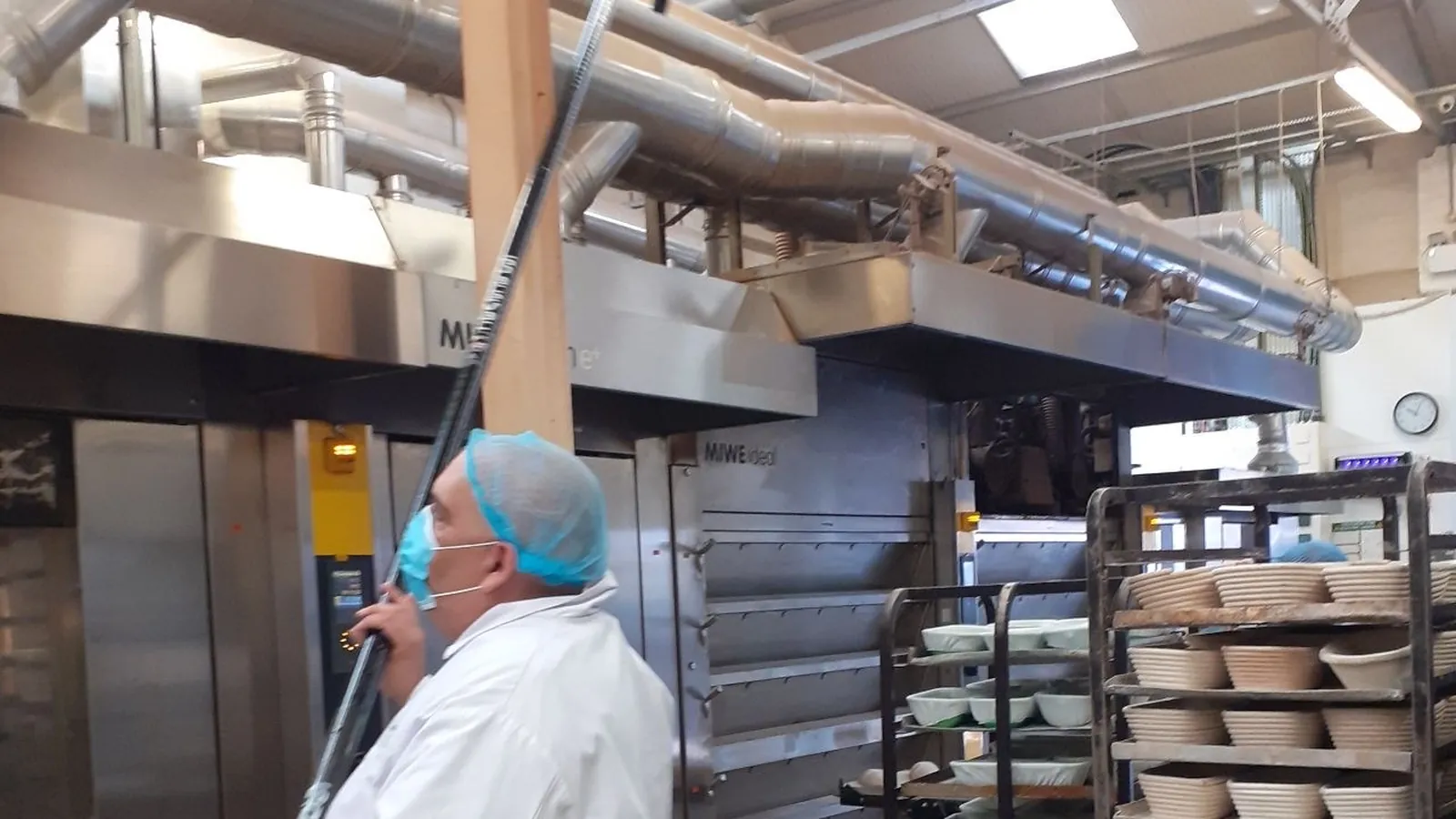
- Work top down. If high-level dust removal is in scope, do it before steam work below so that falling dust does not land on cleaned surfaces.
- Clear the zone. Remove or cover food, clean utensils and packaging.
- Recover as you go. Keep extraction running, collect condensate and soil during the work, and leave floors dry before the zone reopens.
- Hand back. Close each zone with a short checklist signed by the kitchen supervisor.
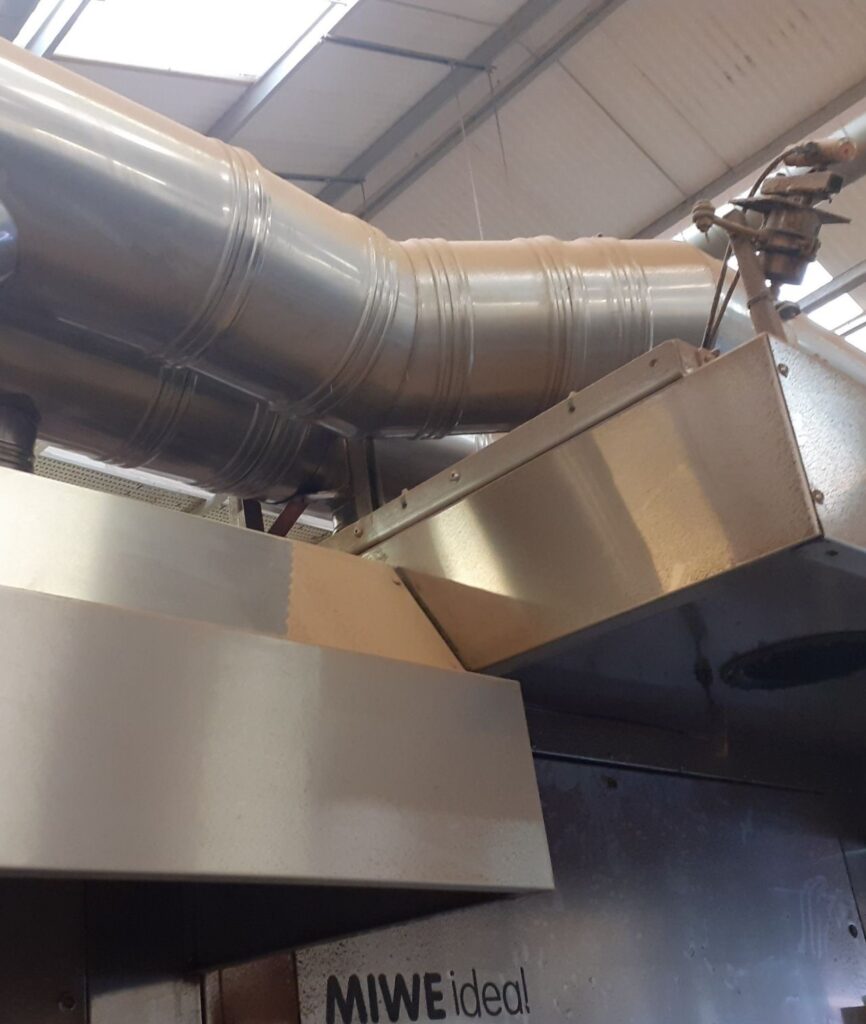
For the overhead part of the job, AFE’s Internal high clean dust removal service is the matching service.
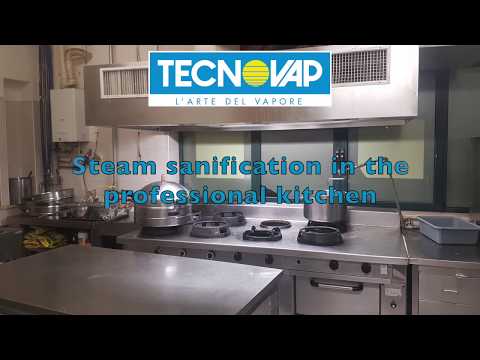
TECNOVAP’s film works through a professional kitchen with a steam and vacuum generator. Use it to picture the method on real kitchen equipment; the film’s description calls it complete steam sanitation, which a hospital should read as the manufacturer’s wording, not as evidence for its own surfaces.
Should the hospital buy equipment, rent it or contract the work?
Buy when steam will be used every week by trained in-house staff, contract when you need periodic deep cleans without building the skill in-house, and rent when you want to trial the method before deciding.
| Option | Suits | What the hospital provides |
|---|---|---|
| Buy the equipment | Frequent use by an in-house cleaning team | Trained operators, a written method, routine maintenance and consumables |
| Rent for a trial | Testing the method, or a one-off pre-audit deep clean | A trial area, the approval team and a record of results |
| Contract a service | Periodic deep cleans with limited in-house capacity | Access windows, isolation, food safety sign-off |
Questions to ask before buying a steam generator
- Electrical supply. Check the kitchen’s available supply against the model’s rating; TECNOVAP’s stainless steel range spans 2.45 kW to 40 kW of power output.
- Recovery of soil and condensate. Ask whether the unit has an integrated vacuum, as TECNOVAP states for its Steam Box Vac Industrial, or whether a separate wet and dry vacuum is needed.
- Detergent use. If some deposits need a detergent, ask whether the model offers detergent injection, as TECNOVAP’s EVO does, and which products your food safety team approves.
- Accessories. Confirm the lances, brushes and cloth tools needed for your equipment list, not a generic kit.
- Published figures. Treat temperatures and pressures as the manufacturer’s generator-side figures, and ask for the datasheet.
- Support. Agree training, spare parts and servicing before the unit arrives.
AFE supplies TECNOVAP dry steam generators, offers equipment rental for trials and delivers steam cleaning as an on-site service, so one supplier can support a trial, an in-house program or contracted visits. If you contract the work, what a kitchen should prepare before a specialist cleaning visit covers the practical preparation.
Can dry steam also sanitize kitchen surfaces?
Not automatically. Cleaning removes visible soil, while sanitizing and disinfection are defined by the reduction in microorganisms they achieve: the US FDA Food Code, for example, defines sanitization as a 5-log (99.999%) reduction of representative disease microorganisms on cleaned food-contact surfaces.
TECNOVAP states that dry saturated steam is “the ideal solution for sanitizing many types of metal surfaces in the food industry.” A hospital kitchen should still treat any sanitizing claim as a separate question that needs application-specific evidence for the model, accessory, method and surface before steam replaces a sanitizing step. The guide to the evidence behind steam sanitization claims sets out what that evidence looks like. More support-area guides are collected in the healthcare insights.
Al Faisaliah Enterprises · Aqaba
Find where dry steam fits in your central kitchen
Share your equipment list, kitchen layout and current cleaning schedule. AFE can propose a trial scope and a draft method for your food safety team to review.
Frequently asked questions
Can dry steam be used while the kitchen is producing meals?
Not in the same zone. Steam work should happen in a zone that has been closed and cleared of food, clean utensils and packaging. Other zones can usually keep producing if they are physically separated and condensate is recovered as the work proceeds. The practical answer is a zone plan built around the meal-service timetable, agreed with the kitchen manager before the first visit.
Will steam damage stainless steel kitchen equipment?
Stainless steel worktops, sinks and trolleys are generally among the better candidates for dry steam, but the risk usually sits in what is attached to them: sealants, gaskets, plastic parts, labels and electronics. Check each item's manual, test a small area first and keep the lance moving. Anything the manufacturer does not approve for steam should be masked or cleaned by its specified method.
Do we still need a chemical sanitizer after dry steam cleaning?
Yes, unless your food safety and infection prevention teams have approved steam as the sanitizing step on the basis of application-specific evidence. By default, steam is a cleaning and degreasing step, and the sanitizing or disinfection step defined in your food safety plan still follows it. Using steam well often makes that later step more effective, because less soil is left on the surface.
How often should a hospital kitchen schedule dry steam deep cleaning?
There is no universal interval. Set it from what daily cleaning leaves behind, from audit findings and from a recorded trial that shows how long each zone takes. Heavily used areas such as the hot line and trolley bay may need shorter intervals than dry stores. Review the frequency after each audit and whenever menus, equipment or production volumes change.
Who should operate the steam equipment, kitchen staff or a contractor?
Either can work, provided the operator is trained on the written, approved method. In-house operation suits kitchens that will use steam every week and can maintain the equipment. A contractor suits periodic deep cleans or kitchens without spare staff hours. Many hospitals start with a contracted trial or rental, then decide once they know the real time and frequency involved.
Sources and references
- General Principles of Food Hygiene (CXC 1-1969, revised 2022) — FAO/WHO Codex Alimentarius Commission
- Regulation (EC) No 852/2004 on the hygiene of foodstuffs — European Union
- FDA Food Code 2026 — US Food and Drug Administration
- Steam cleaning for the food industry — TECNOVAP
- EVO steam generator with detergent injection — TECNOVAP
- Stainless steel steam generators — TECNOVAP
- Steam Box Vac Industrial — TECNOVAP
This article is general technical guidance. Equipment suitability, ATEX conformity and hygiene performance must be confirmed for each site and application.
Written for plant, maintenance, HSE and quality teams in Jordan, Saudi Arabia and Iraq.