The short answer
Before a commercial kitchen dry steam cleaning service, prepare an equipment list with surface materials and manufacturer cleaning instructions, a ranked list of priority areas, a closed window outside cooking hours and a named person to isolate and cool equipment. Agree the scope, exclusions and a test patch in writing, so the visit is spent cleaning.
Key takeaways
- Send an equipment list with makes, models, surface materials and the manufacturers' cleaning instructions before the visit is quoted.
- Rank areas by food-safety risk, grease load and access, so the most important work fits the closed window.
- Equipment must be switched off, isolated by your own staff and cooled before any steam work starts.
- A steam visit removes soil and grease; it is not validated sanitization unless your own procedure verifies it.
- Internal exhaust ductwork stays with your exhaust contractor, so agree all exclusions in writing.
Most kitchen deep cleans are squeezed between the last service and the next delivery. When a specialist team arrives to find fryers still hot, cold rooms full and nobody sure which equipment is in scope, half the window is gone before any steam reaches a surface.
A commercial kitchen dry steam cleaning service uses dry saturated steam from a mobile generator to loosen grease and soil, which the operator then wipes or vacuums away. This guide is for operations managers in restaurants, hotels and catering kitchens in Jordan, Saudi Arabia and Iraq: what to prepare, how to rank priorities, how to schedule the visit and what to ask for afterwards.
What does a commercial kitchen dry steam cleaning service include?
It includes steam treatment of agreed, compatible surfaces and removal of the residue the steam loosens; it does not automatically include sanitization, ductwork or repairs. The generator heats water in a boiler and delivers low-moisture steam through a hose to lances, brushes and cloth-covered tools. Heat and steam soften grease, and the operator removes it while it is still loose.
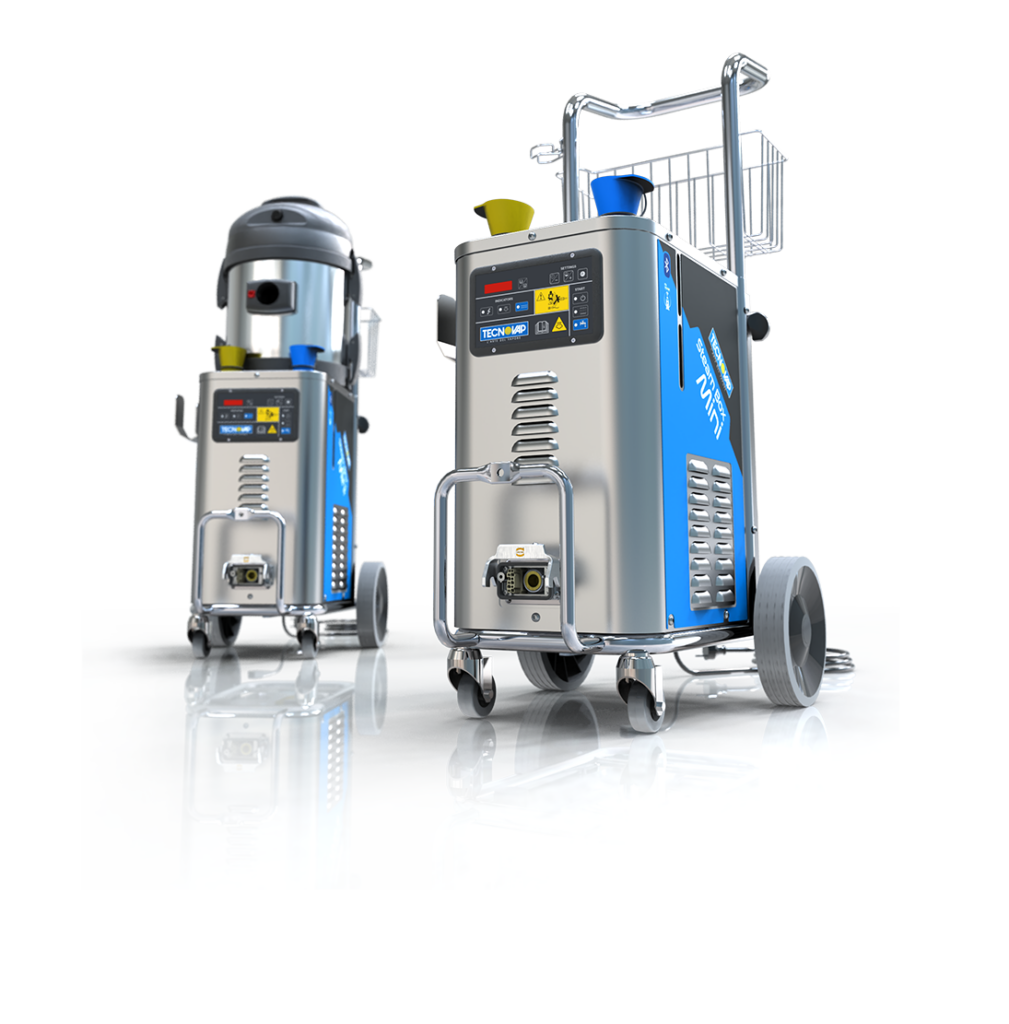
TECNOVAP, the Italian manufacturer whose generators AFE supplies, states that its EVO model can “deliver dry saturated steam 174°C” and that the Steam Box Vac Industrial produces “dry saturated steam at 183° C” and is “equipped with a wet/dry vacuum cleaner”. These are generator figures published by the manufacturer, not surface temperatures, so on their own they say nothing about what happens on a worktop or a fryer wall.
Three boundaries are worth writing into the scope from the start:
- Cleaning is not sanitization. Codex defines cleaning as “the removal of soil, food residues, dirt, grease, or other objectionable matter.” Sanitization and disinfection are separate outcomes that your hygiene program has to verify.
- Exhaust ductwork is excluded. Internal kitchen exhaust ducts belong to your exhaust contractor, who works to standards such as NFPA 96. A steam visit covers agreed, accessible surfaces only.
- No repairs or electrical work. Faults found during the visit are reported to you, not fixed.

In TECNOVAP’s film of a deep clean in a working restaurant kitchen in Italy, watch which equipment and surfaces are treated and how loosened residue is removed, then compare that with your own equipment list.
Which equipment should be on the list, and what details matter?
The equipment list is the most useful document you can send before a visit, because it lets the provider check compatibility, plan tools and estimate time. List every item you want included, with the details below.
| Item | Details to send | Why it matters |
|---|---|---|
| Cooking line: ranges, griddles, fryers, combi ovens, salamanders | Make, model, age, surface materials, manufacturer cleaning instructions | Some coatings, seals and control panels must not take direct steam; the instructions set the limits |
| Extraction canopies and accessible hood surfaces | Canopy material, filter type, who cleans filters today | Separates what the visit covers from your exhaust contractor’s work |
| Preparation areas: benches, sinks, shelving, splashbacks | Materials, joints and sealants, known problem spots | Joints and sealant hold residue and can be damaged by heat |
| Refrigeration: cold rooms, reach-ins, under-counter units | Door seals, whether units can be emptied and switched off | Steam condenses heavily on cold surfaces; units must be empty |
| Dishwash area, racks and trolleys | Machine model, number of racks and trolleys | Mobile items can be batched away from the cooking line |
| Floors, drains and wall bases | Floor finish, gully and grease trap locations | Loosened grease must be collected, not flushed to drain |
| Electrical items near the work | Controls, sockets and lighting in each area | Defines isolation and protection needs |
Photographs of each item, with close-ups of the worst deposits, help more than descriptions. Note how old each deposit is: a fresh film and a baked-on, carbonized layer behave very differently, which is why animal fats and vegetable oils need their own cleaning trials.
How should a kitchen rank its cleaning priorities?
Rank areas by food-safety risk first, then by grease load, then by how hard they are to reach in daily cleaning. A deep-clean visit is best spent where daily routines fall short, not on surfaces your team already cleans well.
- Food-safety risk. Food-contact and splash zones, preparation benches and equipment where soil can reach food. EU Regulation 852/2004, a widely used reference, requires equipment to be “effectively cleaned and, where necessary, disinfected” often enough to avoid contamination. Your HACCP plan should point to the critical items.
- Grease load. The cooking line, canopy surfaces and the floor around fryers, where grease builds up fastest and adds to fire load.
- Drain protection. Grease that is loosened must be captured. The US EPA reports grease as the most common cause (47%) of reported sewer blockages in the United States, because it solidifies in pipes.
- Access gaps. Behind and under heavy equipment, wall-floor junctions, castor assemblies and the tops of units that daily cleaning skips.
Agree a “must do, should do, if time allows” split with the provider. If the window runs short, the team works down the list instead of stopping wherever the clock runs out.
What must the kitchen prepare before the team arrives?
The kitchen must hand over equipment that is off, cool, empty and isolated, in a space that is clear and protected. Use this checklist the day before the visit:
- Cooking equipment switched off early enough to cool, and fryer oil drained and stored under your own procedure.
- Gas and electrical isolation carried out by your own competent staff or contractor, with a named person on site who can isolate and restore.
- Food, packaging, utensils and chemicals removed or sealed away from the work area; cold rooms in scope emptied.
- Access cleared: wheeled equipment unlocked and movable, storage pulled away from walls in scope.
- Power supply confirmed against the generator’s datasheet, with socket locations and any water connection agreed in advance.
- Ventilation agreed: extraction running or doors open, since steam work releases vapor and condensation.
- Fire detection discussed with your fire-safety provider, so detectors near the work are managed under their procedure and never covered or disabled informally.
- Drain gullies and grease traps identified, with covers or strainers in place.
- House rules shared: PPE, hygiene clothing, allergen controls and restricted zones.
- A contact person available for the whole window to answer scope questions and sign off.
How should the visit be scheduled around service hours?
Book the longest closed window you have and plan the visit in stages, so preparation and checks do not eat into steam time. For most kitchens that means overnight after the last service, a weekly closing day or a quieter season; service hours also shift during Ramadan, so plan the date with the calendar in mind.
Kitchen steam visit sequence
- Survey and list
- Test patch
- Prepare and isolate
- Steam top-down
- Check and sign off
- Survey. A walk-through confirms the equipment list, access, power and drainage, and picks the surfaces to test.
- Test patch. A small trial on representative surfaces and residues shows what steam removes, how long it takes and whether any surface reacts. Its result sets realistic expectations for the full visit.
- Written scope. Inclusions, exclusions, the priority split, the time window and who isolates what are agreed before the date is fixed.
- Preparation. Your team completes the checklist above, and the provider confirms generators, tools and consumables.
- Execution. Work runs top-down and from cleaner toward dirtier zones, so loosened residue does not fall onto finished surfaces. Removed grease is collected for your normal waste route.
- Handover. A joint walk-round checks each item against the scope. Equipment is then restored, and your own cleaning and sanitizing routine is completed before food production restarts.
Does a steam cleaning visit sanitize the kitchen?
Not by itself: a steam visit cleans, and any sanitization claim needs your own validated procedure and verification behind it. The distinction matters for audits and inspections.
Codex lists heat among the physical cleaning methods, while it defines disinfection as reducing viable microorganisms “to a level that does not compromise food safety and/or suitability.” In the US, the FDA Food Code defines sanitization of cleaned food-contact surfaces as a treatment that, when evaluated for efficacy, achieves a 5-log (99.999%) reduction of representative disease microorganisms. Boiler temperature alone does not show that a surface has reached that outcome.
TECNOVAP publishes AFNOR NF T72-110 laboratory results, but only for named models and accessories under test conditions. Treat them as manufacturer statements. Steam can support your sanitation program, subject to validation on your own surfaces, with your own tools and method; the article on evidence for steam sanitization claims explains what that involves.
What should you receive after the visit?
You should receive a record that shows what was done, what was not and what needs attention, so the next visit can be planned from evidence. Ask for:
- the scope checklist with each item marked done, partly done or excluded, with reasons;
- before-and-after photographs of priority areas, taken from the same angles;
- defects found, such as damaged door seals, loose panels or failing sealant, for your maintenance team;
- residue notes on deposits that did not shift and what trial is suggested next;
- a suggested revisit interval, which you can check against your own inspection notes.
Over two or three visits, these records show whether the interval is right and whether daily cleaning is improving. They also give you something concrete to show an auditor or a hotel group’s quality team.
Should a kitchen book visits or buy its own equipment?
Book visits when deep cleaning is periodic and your team lacks the time or training; consider buying when steam would be used every day or week by trained staff. AFE works both ways: it delivers the industrial steam cleaning service and supplies TECNOVAP dry steam generators and accessories, with spare parts and consumables after purchase.
- Service visits suit periodic deep cleans, preparation before an audit, kitchens without trained operators and a first trial of the technique.
- Equipment purchase suits a high daily cleaning load, several outlets or a central production kitchen, and staff who can be trained and supervised.
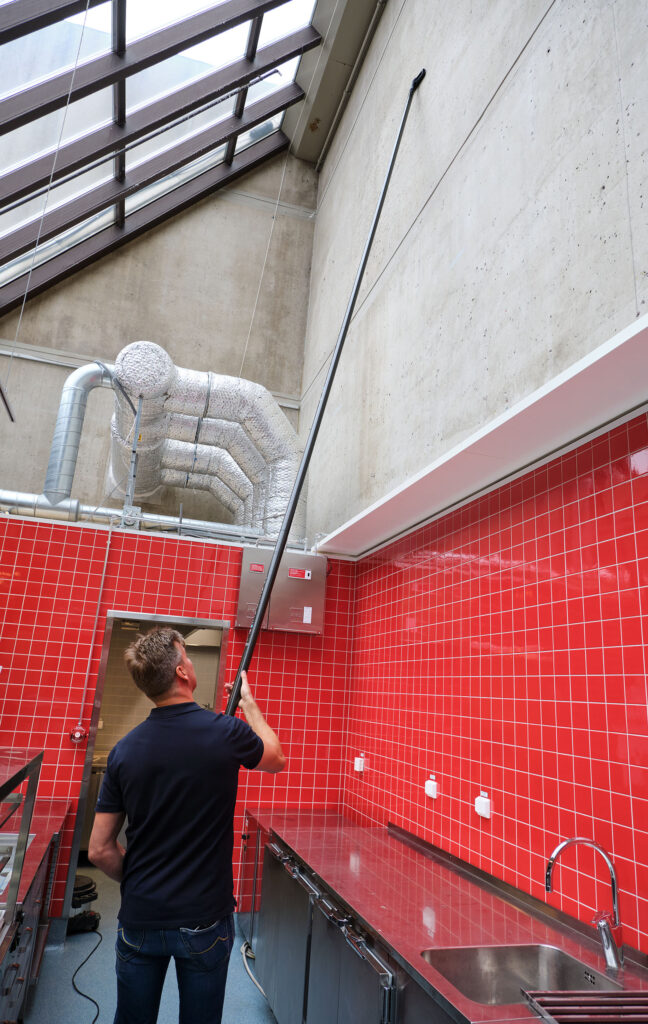
- Either way, high-level areas above the kitchen, such as canopy tops, lights and ceiling grilles, need a different method. AFE’s internal high clean dust removal covers them, and the guide to high-level dust removal before opening hours explains how to survey them.
More guides for hotels, restaurants and catering are collected in the HORECA insights section.
Al Faisaliah Enterprises · Aqaba
Plan your kitchen steam visit
Send AFE your equipment list, photos of priority areas and your closing window. AFE uses them to propose a survey, a test patch and a written scope with exclusions.
Frequently asked questions
How long does a kitchen dry steam cleaning visit take?
It depends on the number of items, the age and type of deposits, access around heavy equipment and how well the kitchen is prepared. A survey and a test patch give the provider a realistic cleaning rate for your residues. If the full scope does not fit one closed window, it is better to split the kitchen into zones over several nights than to rush the priority areas.
Can part of the kitchen keep working during the visit?
Only if the work zone can be physically separated from food production. Steam work releases vapor, moves equipment and needs isolation, so open food, packaging and staff should not share the space. Most kitchens close fully for the visit. If you must keep a section running, agree the zone boundary, food protection and the order of work in the written scope.
Do we still need detergents and our own sanitizing step?
Usually yes for the sanitizing step, because your hygiene procedure, not the steam visit, defines how food-contact surfaces are sanitized and verified. Whether detergent is needed during steam work depends on the residue; some TECNOVAP models, such as the EVO, are stated to offer detergent injection. The test patch shows whether steam alone shifts your deposits.
Who takes away the grease and residue removed during the visit?
Agree this in the scope before the visit. Loosened grease and debris are collected on site and should go into your kitchen's existing waste route, such as grease containers or a licensed collector you already use. It should not be washed into floor drains, where grease can solidify and cause blockages.
Can steam damage our kitchen equipment?
It can, if it is aimed at components the equipment manufacturer says must not take steam or moisture, such as some controls, seals, coatings or electrical parts. That is why the equipment list includes the manufacturers' cleaning instructions and why a test patch comes first. Anything the provider is unsure about should be excluded or tested before full treatment.
Sources and references
- EVO dry saturated steam generator (product page) — TECNOVAP
- Steam Box Vac Industrial (product page) — TECNOVAP
- AFNOR NF T72-110 test results — TECNOVAP
- General Principles of Food Hygiene (CXC 1-1969, rev. 2022) — FAO/WHO Codex Alimentarius
- Regulation (EC) No 852/2004 on the hygiene of foodstuffs — European Union
- FDA Food Code 2026 — U.S. Food and Drug Administration
- Controlling Fats, Oils and Grease Discharges from Food Service Establishments (EPA-833-F-12-003) — U.S. Environmental Protection Agency
This article is general technical guidance. Equipment suitability, ATEX conformity and hygiene performance must be confirmed for each site and application.
Written for plant, maintenance, HSE and quality teams in Jordan, Saudi Arabia and Iraq.