The short answer
Garment factory cleaning works best when each area gets its own routine: offcuts into closed bins, and lint and thread waste vacuumed rather than swept or blown, with small vacuums at sewing lines, larger or central systems for cutting rooms, and ground-based high-reach poles for light fittings and ledges above the lines.
Key takeaways
- Garment factories handle finished fabric, so the hazard is loose offcuts, thread waste and lint rather than raw-fibre fly.
- HSE lists fabric off-cuts and fluff on light fittings among textile fire risks, and advises keeping offcuts in bins, preferably metal.
- Vacuum lint and thread waste; brooms and compressed air push it into machines, light fittings and finished garments.
- Match equipment to the area: compact vacuums on sewing lines, higher-capacity or central systems in cutting rooms, high-reach poles overhead.
- Write the routine per area and shift so it survives peak production weeks.
A garment factory does not spin fibre, but it still fills with it. Cutting releases fabric dust and small offcuts, every seam leaves thread ends, overlockers trim edges into the air, and pressing and handling shed lint that drifts onto machines, light fittings and finished garments. In a busy plant the result is a constant background of soft, combustible waste that most of the workforce stops noticing.
Garment factory cleaning therefore needs a different set-up from a spinning or weaving mill. This guide works through the factory area by area, from cutting room to sewing lines, pressing and packing, and sets out the routines and equipment that keep lint and thread waste under control without spreading it.
Why is garment factory cleaning different from a spinning mill?
It is different because a garment plant processes finished woven or knitted fabric, so its waste is offcuts, thread and lint rather than the raw-fibre dust of opening, carding and spinning. The US OSHA cotton dust standard reflects that split: it covers yarn manufacturing, slashing and weaving, and states that it “does not apply to the handling or processing of woven or knitted materials.”
That does not make the waste harmless. The UK HSE’s textiles fire guidance lists “loose materials, eg fabric off-cuts or open layers of wadding” among the factors that increase fire risk, because “low density fibres burn very easily”, and names deposits of fluff and dust on light fittings as “a particular risk.” Its controls are simple: clean up fluff and dust regularly, “especially high ledges”, and “keep offcuts in bins, preferably metal.”
In a garment factory, then, the priorities are volume of light waste, fire load near lights and machines, and product cleanliness, more than airborne process dust.
Why does this matter for garment factories in Jordan?
Because the sector is large and export-driven, and its buyers look closely at working conditions. The ILO and IFC’s Better Work Jordan programme reports that garment exports reached a record US$2.4 billion in 2024 and that the exporting industry employed some 84,100 workers, mostly in large factories exporting to the US under the US-Jordan Free Trade Agreement. Its 2025 annual report also states that occupational safety and health “has remained the largest cluster of compliance gaps” since the programme began.
Housekeeping is one of the most visible parts of that picture. Overflowing waste, lint on fittings and blocked aisles are easy for any visitor to see, and they are also the easiest to fix with a written routine and the right equipment. Factories in Saudi Arabia and Iraq face the same practical problem, even where the market structure differs.
What does each area of a garment factory need?
Each area produces a different kind of waste, so each needs its own method and owner. A typical split:
| Area | Main waste | Risk if left | Method | Suggested equipment |
|---|---|---|---|---|
| Fabric store and spreading | Dust from rolls, packaging, loose layers | Fire load near stock | Vacuum floors and racks; keep storage in workrooms to a minimum | Mobile industrial vacuum |
| Cutting room | Offcuts, fabric dust, edge trims | Fast build-up around tables and under machines | Offcuts into closed bins; vacuum tables and floor at set times | Higher-capacity vacuum or central vacuum points |
| Sewing lines | Thread ends, overlock trim, lint at needles and under machines | Lint in machine housings and on garments | Short vacuum cycles per line, machines stopped | Compact single-phase vacuum with crevice tools |
| Pressing and finishing | Lint near hot irons and steam equipment | Lint close to heat sources | Vacuum around presses when cool; keep waste away from heat | Mobile vacuum with brush tools |
| Packing and dispatch | Carton dust, tags, poly waste | Clutter in exits and aisles | Bins and floor vacuuming | Mobile vacuum or sweeper for large floors |
| Overhead | Lint on light fittings, ledges, cable trays and ducts | Fire load near lights; falls onto lines | Ground-based high-reach capture | High-reach pole system and vacuum |
How should cutting rooms and sewing lines be cleaned?
They should be cleaned by capture, at fixed points in the shift, with machines stopped. HSE’s textiles dust guidance says cleaning “should be done using something like a vacuum cleaner, not a broom or brush or compressed air.” Blowing lint off a sewing machine with an air gun sends it into the next machine, the light fitting above and the garments on the line.
A workable routine for one sewing line or cutting table:
- Collect offcuts first. Operators drop offcuts and large waste into closed bins at the table or line, not onto the floor.
- Stop the machines. Cleaning is done at breaks or shift change, with machines switched off under the factory’s procedure.
- Vacuum from the top. Machine heads and tables first, then thread stands and frames, then under machines and the floor.
- Use the right tools. Crevice tools for needle plates and bobbin areas, brush tools for tables, a floor tool under the line.
- Empty and log. Empty the vacuum container and bins into the factory’s waste route and tick the line’s routine sheet.
Keep cleaning inside machine housings to the mechanics and the sewing machine maker’s instructions; the line routine covers what can be reached from outside.
How is lint removed from light fittings and ledges above the lines?
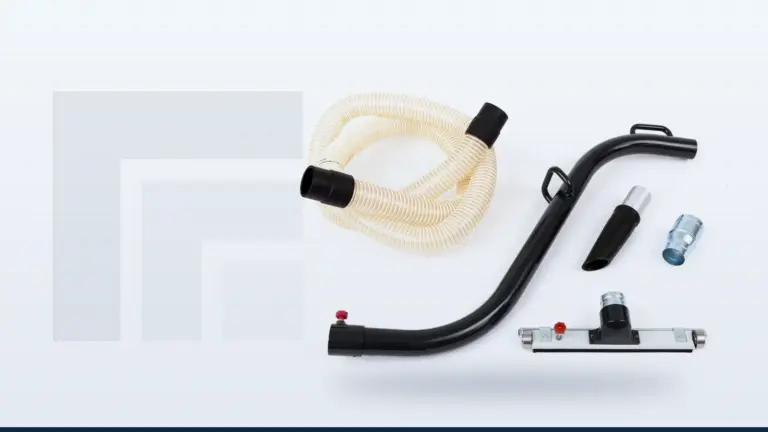
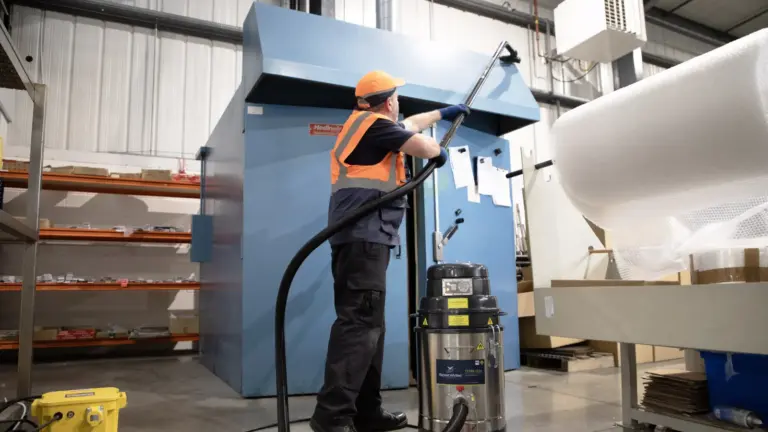
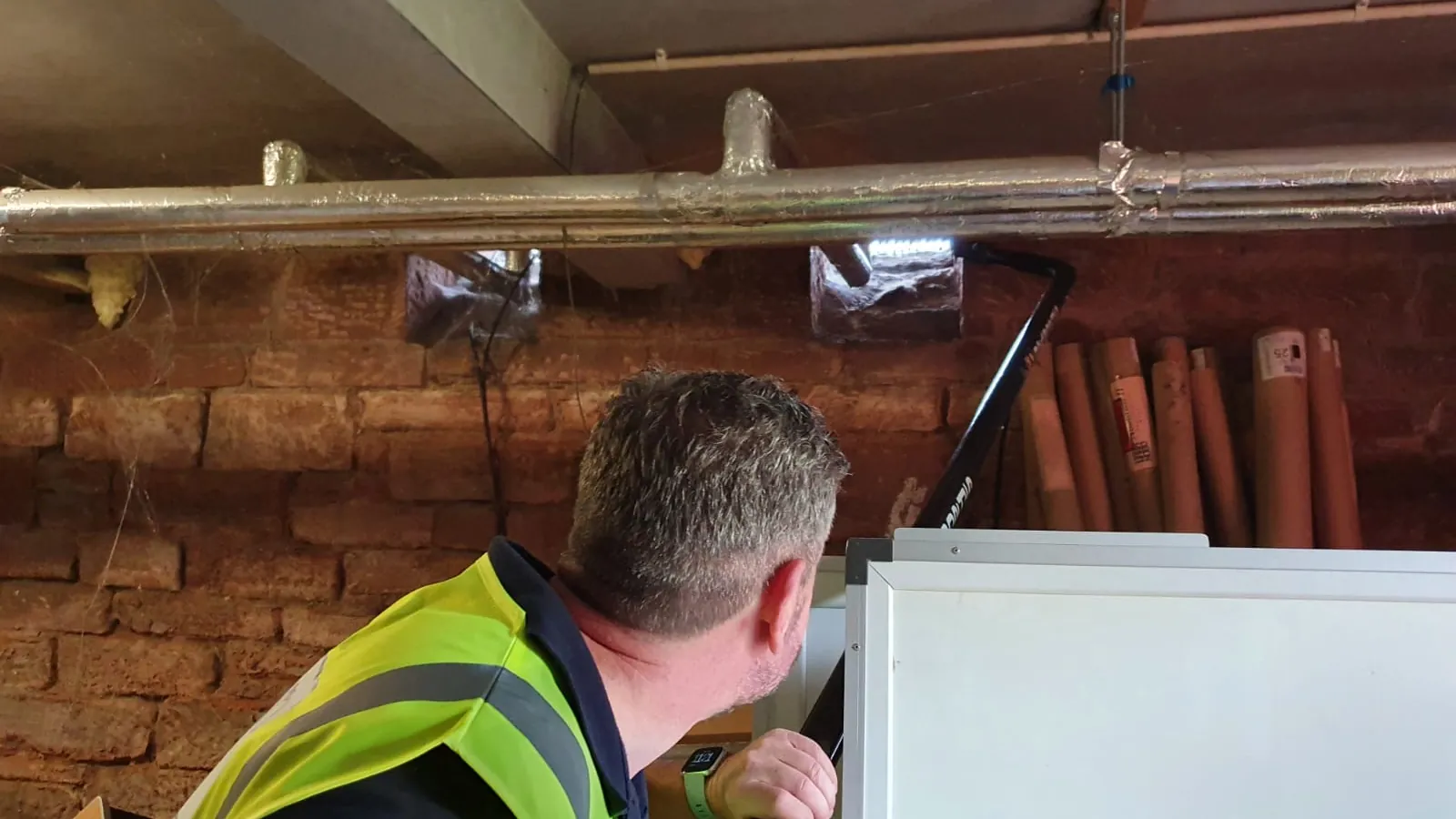
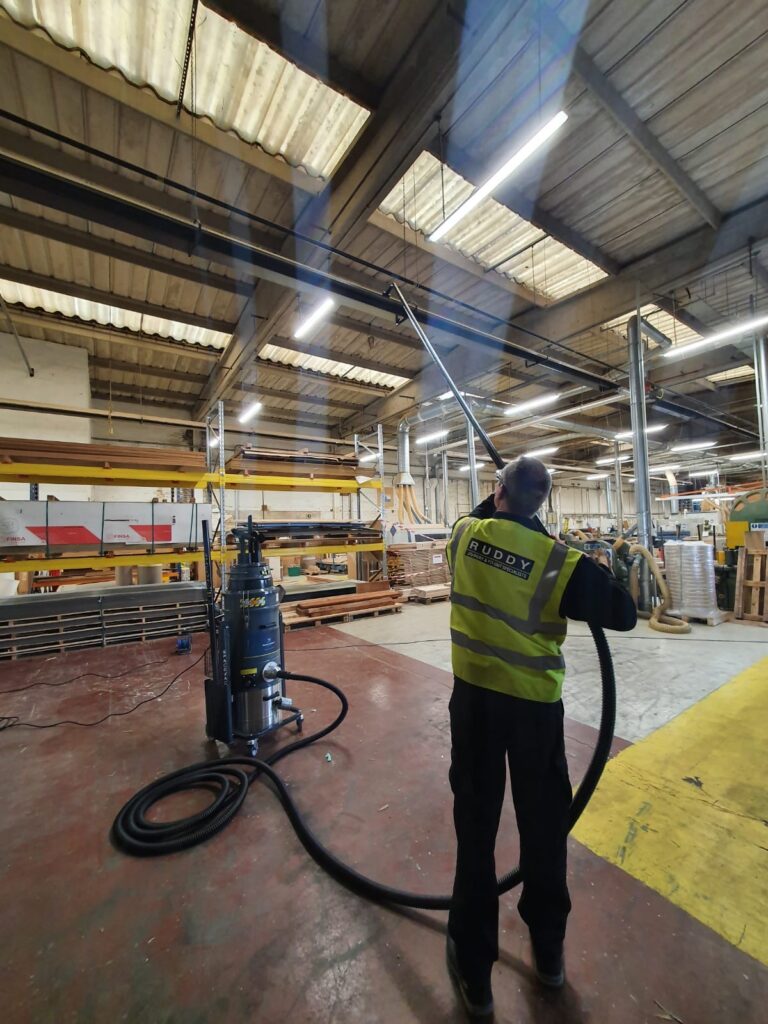
Lint above the lines is best removed from the ground with a high-reach pole system connected to a vacuum, so it does not fall onto sewing lines and garments. SpaceVac describes its systems as interlocking lightweight poles, mostly carbon fibre, that let operators clean high areas “from the ground.” Confirm the working height of the kit offered against your ceiling and fitting heights, because SpaceVac’s regional pages quote different reach figures.
Plan overhead cleaning zone by zone, outside production hours or above lines that are stopped, with finished goods covered or moved. Factories that prefer not to train their own team can use AFE’s Internal high clean dust removal service for this part, keeping access equipment off the production floor where the survey allows.
What should you look for in vacuum equipment for a garment factory?
Look for equipment sized for light, bulky waste and easy to use many times a day. Lint and thread fill a container quickly by volume while weighing very little. A buyer’s checklist:
- Container volume and emptying: easy tipping or bag removal matters more than peak suction.
- Filter cleaning: lint blinds filters; ask about filter area and the shaking or cleaning system.
- Hose diameter: thread wraps in narrow hoses; choose a diameter and tools that suit the waste.
- Weight and noise: compact units for lines that are cleaned at every break.
- Duty: three-phase or central systems for cutting rooms in continuous use; single-phase for lines and maintenance.
- Combustibility questions: if an assessment finds a combustible dust hazard, static control and certified equipment become part of the specification.
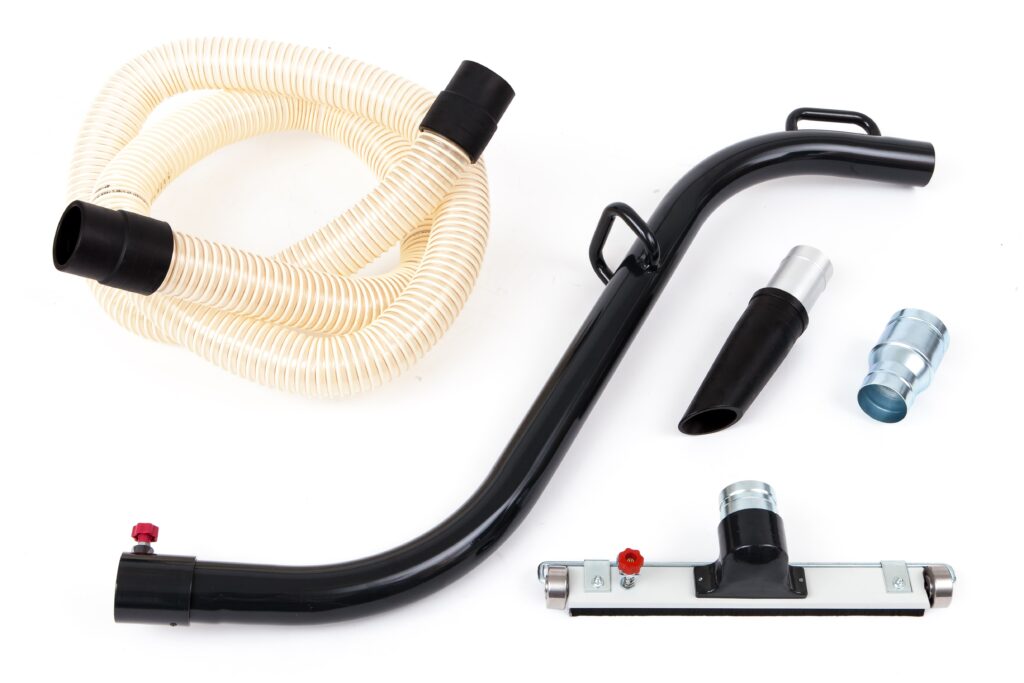
The guide on when a plant needs an industrial rather than a commercial vacuum explains why office-grade machines rarely last in this duty, and hospital laundry lint removal shows the same capture-first approach in another lint-heavy setting.
How do you check that the routine is working?
Check it with simple, repeatable observations rather than impressions. Useful indicators for a garment floor:
- Routine sheets completed for each line and cutting table, reviewed weekly by the supervisor.
- Photos from the same fixed points above the lines and at light fittings, taken before and after each overhead cycle.
- Bins: whether offcut bins are closed and emptied before they overflow.
- Vacuums: how often containers are emptied and filters cleaned, which shows where waste is heaviest.
- Findings from internal walk-throughs and buyer or compliance visits that mention housekeeping.
Where an indicator slips, change the routine or the equipment for that area, not the whole factory.
How AFE supports garment factories
AFE supplies DUPUY industrial vacuums, central vacuum systems and SpaceVac high-reach pole systems to factories in Jordan, Saudi Arabia and Iraq. Filters, hoses and tools for daily use come through AFE’s MRO and consumables service, and rental units let a factory trial a set-up on one line before equipping the floor. AFE approaches the selection area by area first, then equipment:
Garment factory cleaning set-up
Al Faisaliah Enterprises · Aqaba
Equip each area of your garment factory
Send your factory layout, number of lines and cutting tables, ceiling heights and photos of the worst lint. AFE will suggest vacuum and high-reach equipment area by area.
Frequently asked questions
Is sewing lint a fire hazard?
Lint and fabric waste are combustible. The UK HSE lists fabric off-cuts and deposits of fluff, especially on light fittings, among the factors that increase fire risk in textile workplaces, and recommends regular cleaning and keeping offcuts in bins, preferably metal. Whether lint in your factory also creates a dust explosion hazard is a question for a specific assessment.
Can operators use air guns to clean sewing machines?
It is better not to. HSE advises against brooms, brushes and compressed air for textile dust because they spread it. An air gun pushes lint into the next machine, light fittings and finished garments. A small vacuum with crevice tools captures it instead; cleaning inside the machine follows the maker's instructions and the factory mechanics.
Do we need a central vacuum system or mobile vacuums?
Many factories use both. Mobile and compact vacuums suit sewing lines, pressing and overhead work. A central system with fixed pipes and outlets can suit large cutting rooms where several people clean throughout the shift, but it needs design work for pipe routes, simultaneous users and discharge. A trial on one area often settles the choice.
How often should overhead lint be cleaned?
Set the first interval from a survey of how fast lint builds up on fittings and ledges, then adjust it from before-and-after photos taken at fixed points. Areas above cutting rooms and overlock lines usually load faster than above packing. Book the work outside production hours or above stopped lines, with garments covered.
Sources and references
- Textiles: Fire and explosion · UK Health and Safety Executive
- Textiles: Dust · UK Health and Safety Executive
- 29 CFR 1910.1043 Cotton dust · US Occupational Safety and Health Administration
- Better Work Jordan Annual Report 2025: An Industry and Compliance Review · International Labour Organization / International Finance Corporation
- Internal high-level cleaning · SpaceVac International
This article is general technical guidance. Equipment suitability, ATEX conformity and hygiene performance must be confirmed for each site and application.
Written for plant, maintenance, HSE and quality teams in Jordan, Saudi Arabia and Iraq.