The short answer
Printing plant cleaning works when each contaminant gets its own method: vacuum spray powder and paper dust from stopped, isolated presses with a bristle nozzle, never blow it down, and handle solvent wash-up separately. Starch-based spray powder is combustible, so vacuums for classified deliveries must be certified for that zone.
Key takeaways
- Most dust at a sheet-fed press delivery is spray powder mixed with smaller amounts of paper dust.
- BG ETEM found an explosion hazard above about 60 g of starch dust per cubic metre of air.
- Vacuum deliveries with a bristle nozzle and the press isolated; blowing down can create a brief explosive atmosphere.
- Keep solvent press cleaning and its waste separate from dust collection.
- Choose vacuum models certified for the zone, with dissipative hoses and a cleaning log at each press.
Walk along a sheet-fed offset press at the end of a shift and run a finger over the delivery guards: it comes away white. That film is mostly anti-set-off spray powder, blown onto every sheet to stop wet ink transferring to the sheet above. Add paper dust from feeders, folders and guillotines, and ink and solvent residues from press washing, and a pressroom collects three different kinds of contamination every day.
Printing plant cleaning has to deal with all three without making any of them worse. This guide explains where the dust comes from, why starch-based spray powder is treated as an explosion concern, how to clean a press delivery safely and what to look for when choosing vacuum equipment for a pressroom.
Where does dust in a printing plant come from?
Dust in a printing plant comes mainly from spray powder at the press delivery and from paper handling. The German statutory accident insurer for the printing industry, BG ETEM, states in its information sheet on dust explosion protection for sheet-fed offset presses that dust in these presses arises mainly from spray powder applied to the sheet with blown air. Air turbulence in the delivery then spreads it over the delivery and the surrounding area.
Paper itself is the second source. The UK HSE’s paper mill guidance notes that paper dust is generated where webs go over rollers, where they are slit or cut and where sheets hit stops, which describes feeders, web presses, folders and finishing equipment well. Trim and edge dust from guillotines and die-cutters add to it. In the delivery, BG ETEM says the deposit consists mainly of spray powder mixed with smaller amounts of paper dust.
Why is anti-set-off spray powder a fire and explosion concern?
Spray powder is a concern because many powders are combustible. BG ETEM states that spray powders based on starch or sugar are combustible and therefore explosible. In its investigations, an explosion hazard was found above roughly 60 g of starch powder dust per cubic metre of air, which it equates to a layer of about 1.5 mm over an area the size of an A5 sheet.
That small quantity is the point. A thin, even film inside a delivery does not look dangerous, yet stirring it up can create a cloud. BG ETEM therefore says the delivery is to be classified as Zone 22 where disturbing larger quantities of deposited dust could form a hazardous explosive atmosphere. Under the EU ATEX workplace directive 1999/92/EC (EU law, a reference rather than law in Jordan, Saudi Arabia or Iraq), layers and deposits of combustible dust must be considered like any other source of an explosive atmosphere.
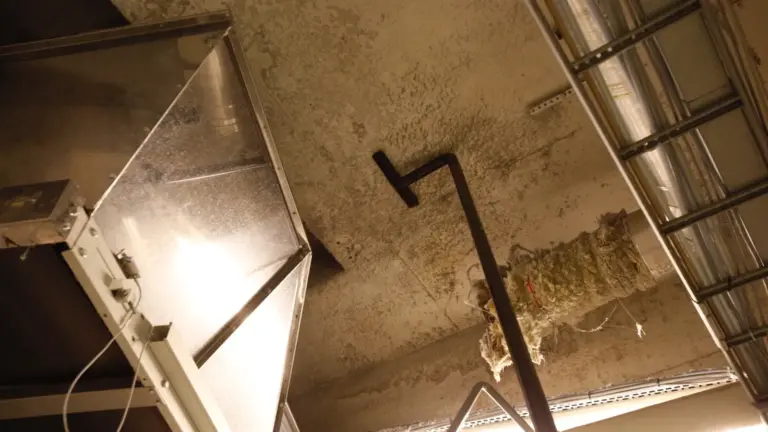
Dust on overhead surfaces adds a second risk. The US Chemical Safety Board reports that most deaths and serious injuries in its dust investigations came from secondary explosions fed by dust shaken off surfaces. A dusty pressroom ceiling is part of the same fuel load.
What should printing plant cleaning cover?
Printing plant cleaning should cover each contaminant where it collects, with a method that suits it. The table gives a practical split for a sheet-fed or web operation; adapt it to your own presses and finishing lines.
| Area | Main contaminant | Recommended method | What sets the interval |
|---|---|---|---|
| Press delivery and nearby frames | Spray powder with some paper dust | Vacuum with a bristle nozzle, press stopped and isolated | Your explosion risk assessment and visible build-up |
| Feeders, folders, guillotines, die-cutters | Paper dust and trim | Vacuum capture, plus extraction at cutting points where fitted | Production volume and paper grade |
| Rollers, blankets and ink units | Ink residues | Automatic wash-up where available, otherwise controlled manual cleaning | Job changes and ink type |
| Floors around presses | Settled powder and paper dust | Vacuum; avoid dry sweeping | Daily routine |
| Overhead steel, lights, cable trays, duct exteriors | Fine powder and paper dust carried by air | Ground-based high-reach vacuum poles or planned high-level cleaning | Survey of deposit depth and spread |
How should a press delivery be cleaned?
A press delivery should be cleaned on a fixed routine, with the press stopped and the dust captured rather than moved. BG ETEM accepts that some accumulation cannot be prevented even with dust-reducing measures, so regular cleaning can be set as the primary explosion protection measure in the risk assessment, supported by a written work instruction and trained staff.
Press delivery cleaning routine
- Stop and isolate press
- Vacuum delivery and frames
- Clean floor beneath
- Log date and name
- Stop and isolate. Follow your lockout procedure so nothing can move or start while hands and nozzles are inside the delivery.
- Vacuum, top to bottom. Use a suction brush on guards, chains, frames and the powder unit surroundings. BG ETEM strongly recommends a suction nozzle with bristles.
- Clean the floor beneath. Collect what has fallen with the same vacuum instead of sweeping it back into the air.
- Record it. BG ETEM recommends keeping a list at the machine with cleaning dates and the person responsible, so missed cleans are visible.
Reducing the dust at source makes every step lighter. BG ETEM points to low-dust powders listed under a voluntary German industry agreement and to dedicated powder extraction in the delivery. Using only as much powder as the job needs also reduces what has to be cleaned.
How does press cleaning with solvents fit in?
Press cleaning with solvents is a separate task with its own controls, and it should not be mixed with dust collection. HSE’s COSHH guidance for printers notes that frequent contact with solvent-based products can cause dermatitis and that high vapour concentrations can be harmful to breathe. Its sheet on manual cleaning of presses recommends automatic cleaning systems where reasonably practicable, extraction switched on during cleaning with the press stationary, and products with lower volatility or a higher flashpoint where possible.
The same sheet asks for contaminated cloths, wipes and gloves to be stored in fire-resistant, closed, metal containers. Keep solvent-wet waste away from the dust vacuum: a vacuum chosen for dry combustible powder is not automatically suitable for flammable liquids, and its manufacturer’s instructions decide what it may collect.
What vacuum equipment suits a printing plant?
A printing plant needs vacuums that are suitable for combustible dust where it is used, with conductive accessories and filters that hold fine powder. BG ETEM states that industrial vacuums for combustible dust must be suitable for this purpose because an explosive atmosphere can form inside them, and that nozzles, hoses and tubes must be electrostatically dissipative in every case.
Where the delivery or another area is classified as Zone 22, select a model certified for that zone. DUPUY publishes ATEX models with zone wording per model and lists other ranges as not ATEX, so the model and its certificate are what count. The guide to what dust zones 20, 21 and 22 mean explains the categories.
- Zone drawing for press deliveries, powder units and any other classified areas
- Powder type used (starch-based or other) and its safety data sheet
- Number of presses, distance between them and power points available
- Bristle suction tools that reach inside deliveries without dismantling guards
- Conductive or static-dissipative hoses and accessories, with grounding arrangements
- Filter type and replacement plan, so fine powder is held rather than exhausted
- Highest overhead deposits and the obstacles between floor and ceiling
How do you keep overhead dust out of the pressroom?
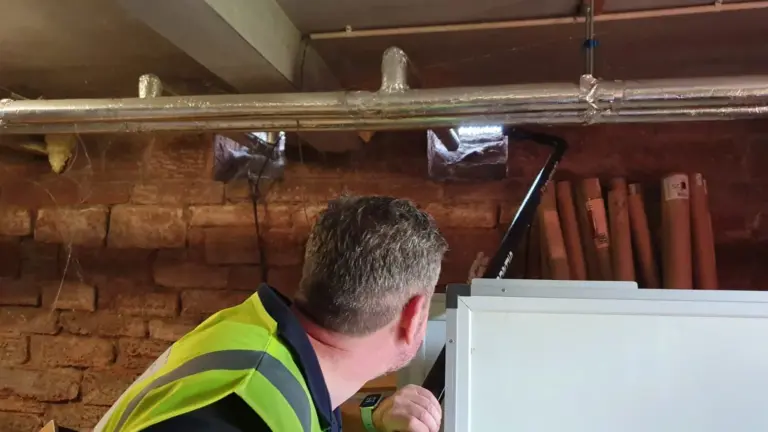
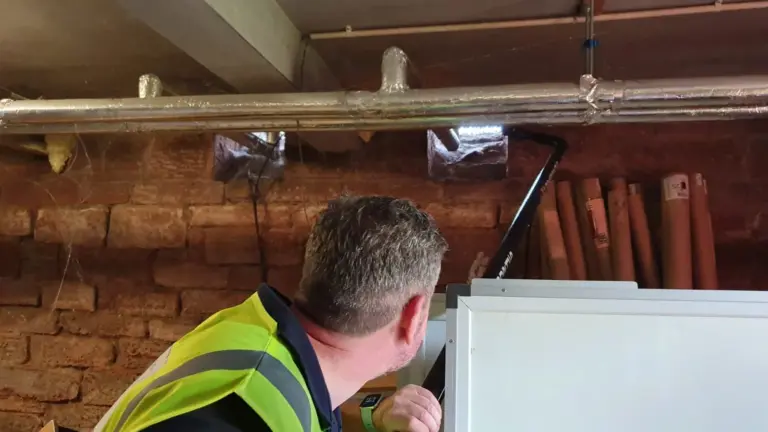
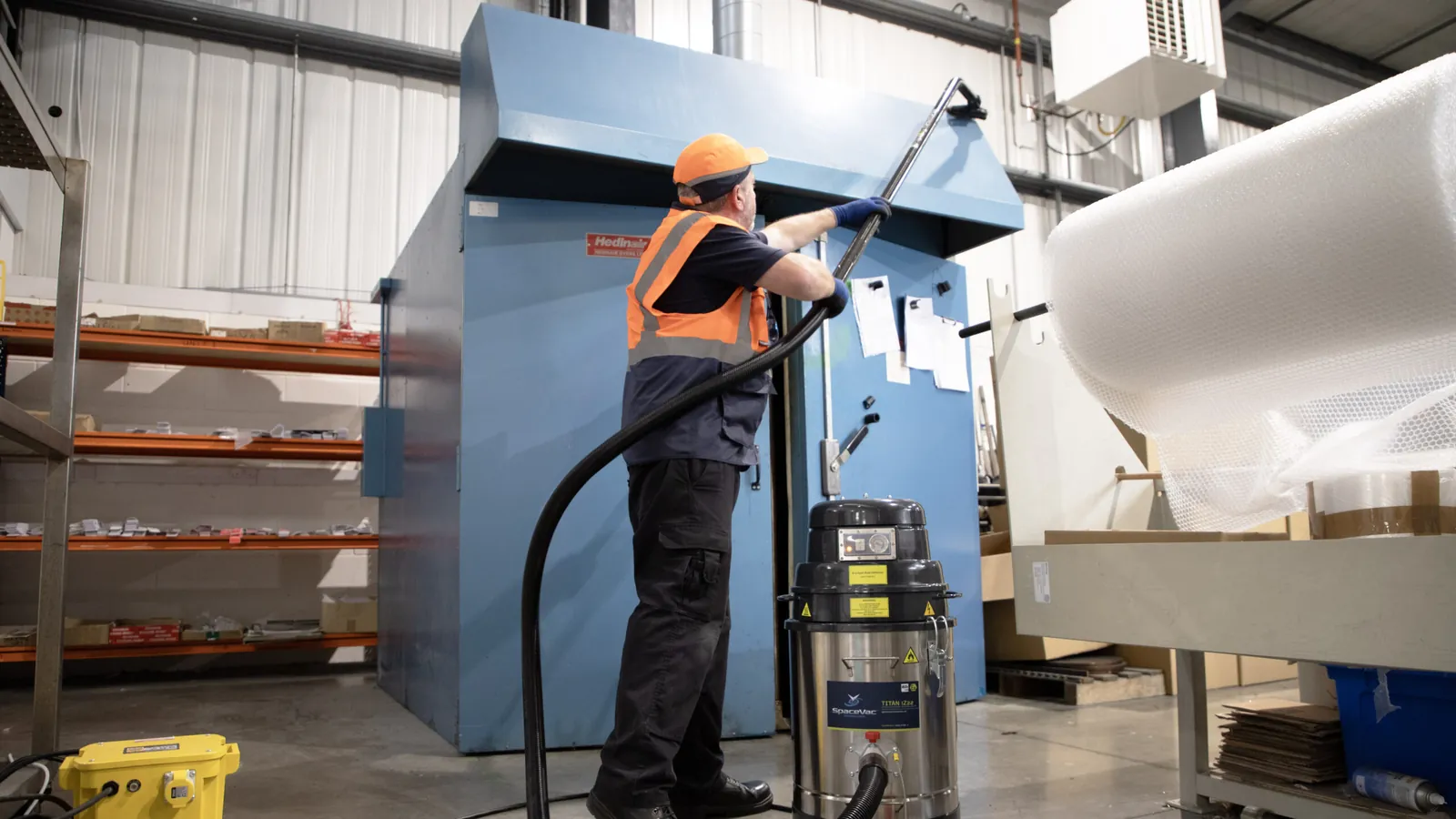
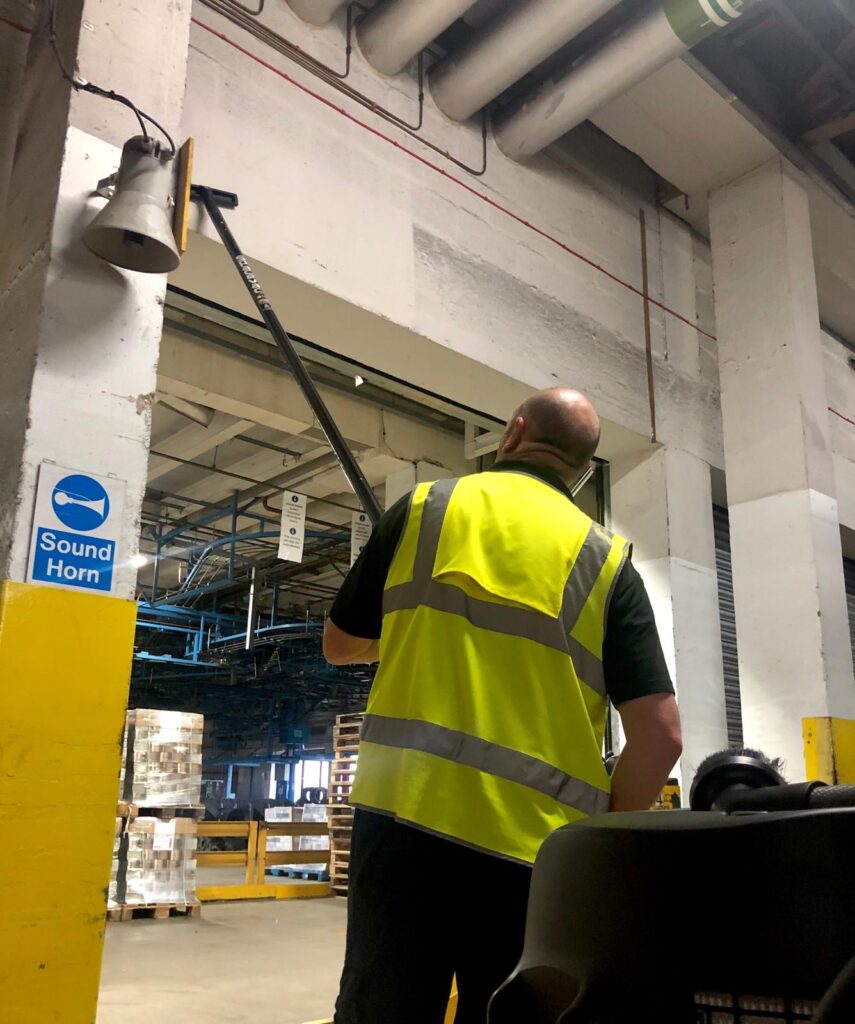
Overhead dust stays under control when the ceiling zone is cleaned on a planned interval, from the ground where possible, and before it can drop onto sheets or into deliveries. Plan high-level cleaning for press stops or weekends so falling dust cannot reach printed work.

Notice how the operator keeps the head on the surface and works along each beam, so the dust is drawn into the hose rather than dislodged.
SpaceVac offers ATEX pole kits but states that they must be paired with a certified industrial vacuum suitable for the site’s zone classification. AFE supplies DUPUY vacuums and SpaceVac pole systems through its industrial vacuum range, keeps filters, hoses and spare parts available, offers rental for trials and provides Internal high clean dust removal as a separate service. Before buying for a classified area, an ATEX compliance check of the proposed equipment is worthwhile; the article on what an ATEX compliance check should cover explains the scope.
Al Faisaliah Enterprises · Aqaba
Equip your pressroom for spray powder and paper dust
Send the number of presses, the powder you use, your zone drawing and photos of the worst deposits. AFE can propose vacuum, accessory and high-reach options with certificates.
Frequently asked questions
Is anti-set-off spray powder dangerous?
It depends on the powder and the quantity. BG ETEM states that starch- or sugar-based spray powders are combustible and explosible, and found an explosion hazard above about 60 g of starch dust per cubic metre of air. Check the safety data sheet of your powder and include the delivery area in your explosion risk assessment.
Can we use compressed air to clean the delivery?
BG ETEM advises against it: blowing only spreads the dust around the machine and stirs it up, which can briefly create an explosive atmosphere. Vacuum with a suitable industrial vacuum and a bristle nozzle, with the press stopped and isolated according to your own procedure.
Does low-dust spray powder remove the need for cleaning?
No. Low-dust powders and powder extraction reduce the deposit, but BG ETEM states that some accumulation cannot be prevented over longer periods. Regular vacuum cleaning, a written work instruction and a cleaning log at the machine are still needed.
Should our pressroom vacuum also pick up solvent and wash-up waste?
Only if its manufacturer states it is designed for that. A vacuum chosen for dry combustible powder is not automatically suitable for flammable liquids. HSE guidance asks for solvent-contaminated cloths and wipes to be kept in fire-resistant, closed, metal containers, which is a separate waste route.
How often should printing plant ceilings be cleaned?
Set the interval from a survey of where dust settles and how quickly it builds up, then adjust it from your records. Areas above deliveries and finishing lines usually need the shortest interval. Plan the work during press stops so dust cannot fall on printed sheets.
Sources and references
- BG-Infoblatt S328: Staubexplosionsschutz: Bogenoffsetdruckmaschinen · BG ETEM (Germany)
- COSHH essentials for printers P5: Manual cleaning of presses (conventional inks) · UK Health and Safety Executive
- COSHH essentials for printers P0: Advice for managers · UK Health and Safety Executive
- Paper mills: Guidance on fire risk (WEB08) · UK Health and Safety Executive / Paper and Board Industry Advisory Committee
- Drivers of Critical Chemical Safety Change: Combustible Dust (fact sheet) · US Chemical Safety and Hazard Investigation Board
- Directive 1999/92/EC (ATEX workplace directive) · European Union
- ATEX certified industrial vacuum cleaners · DUPUY
This article is general technical guidance. Equipment suitability, ATEX conformity and hygiene performance must be confirmed for each site and application.
Written for plant, maintenance, HSE and quality teams in Jordan, Saudi Arabia and Iraq.