The short answer
Medical device factory cleaning should be defined per area inside the quality system: grade each area by product exposure, write the procedure, use dedicated equipment with high-efficiency exhaust filtration in assembly and packaging, avoid dust-raising methods and keep records. ISO 13485:2016 requires documented contamination control but leaves frequencies and equipment to you.
Key takeaways
- Since 2 February 2026 the US FDA's QMSR incorporates ISO 13485:2016 by reference.
- ISO 13485 requires documented cleanliness and contamination control but sets no frequencies or equipment.
- Grade areas by product exposure and attach a defined cleaning routine to each grade.
- In assembly and packaging, choose vacuums by exhaust filtration and keep them dedicated to the zone.
- Use dry steam only on compatible surfaces and verify results; cleaning is not sterilization.
In a medical device plant, dust is not a housekeeping detail. A fiber on a catheter, a particle inside a sealed pouch or residue on a component can become a nonconformity, a complaint or a finding at the next audit. Yet the cleaning in assembly and packaging areas is often written as a janitorial task, with whatever vacuum and cloths happen to be available.
Medical device factory cleaning works better when it is treated as part of the quality system: defined per area, carried out with equipment that does not add contamination, and recorded. This guide sets out what the quality framework expects, how to split a plant into cleaning zones and what to check when you select vacuum and steam equipment for those zones.
What does the quality system expect from cleaning?
The quality system expects the manufacturer to decide where cleanliness affects the product, to document the controls and to show they are followed. The governing standard is ISO 13485:2016, the international quality management standard for medical devices. Since 2 February 2026 the US FDA’s Quality Management System Regulation incorporates ISO 13485:2016 by reference, so one standard now sits behind both US requirements and ISO 13485 certification.
The standard has a clause on work environment and contamination control, and its production clause covers cleanliness of product. In its final rule, the FDA summarised clause 7.5.2 as stating that in certain cases the organization “shall document requirements for cleanliness of product or contamination control of product,” including where process agents must be removed during manufacture. The FDA also describes the requirement to adequately control environmental conditions when those conditions could impact product quality.
Note what the standard does not do: it does not prescribe a cleaning frequency, a detergent or a vacuum type. Those choices belong to the manufacturer, based on product risk. That is why the cleaning plan, and the equipment in it, should be chosen deliberately and written down.
Which areas of a device plant need which level of control?
Areas need different levels of control depending on how close they are to the product and whether the product is exposed. A useful first step is to grade each area and attach a cleaning requirement to the grade, rather than writing one routine for the whole plant.
| Area | Typical contamination risk | Cleaning control to define | Equipment points to check |
|---|---|---|---|
| Goods-in and warehouse | Cardboard dust, outdoor dust, pallet debris | Routine floor and racking cleaning; keep outer packaging out of assembly | Robust industrial vacuum; sweeper only for large floors |
| Component preparation and machining | Chips, coolant, burrs, process residues | Machine-side cleaning before parts move on; removal of process agents | Vacuum able to separate liquids and solids where coolant is used |
| Assembly (controlled or classified) | Fibers, skin flakes, fine particles from people and materials | Defined routine per shift and per changeover; dedicated equipment | Filtered exhaust, cleanable housings, accessories kept in the zone |
| Primary packaging and sealing | Particles entering open packs before sealing | Cleaning before line start; no dust-raising methods during production | High-efficiency exhaust filtration; low-shedding tools |
| Support areas (trolleys, frames, workbench exteriors) | Residues and soil on hard surfaces | Cleaning, and disinfection where the procedure requires it | Dry steam for compatible surfaces, verified on site |
Where an area is a cleanroom, its air cleanliness class is defined under ISO 14644-1, which classifies air by airborne particle concentration. A classification describes particles in air; it does not by itself say how surfaces are cleaned, so the cleaning procedure still has to be written and checked for that area.
How should cleaning in assembly and packaging areas be organised?
Cleaning in assembly and packaging should follow a written sequence that removes dust without spreading it, ends before product is exposed and leaves a record.
Device area cleaning sequence
- Grade each area
- Write the procedure
- Select zone equipment
- Clean and record
- Review results
- Grade each area. Decide where product is exposed, where it is enclosed and where only packaging is handled. The grade drives everything else.
- Write the procedure. State what is cleaned, in which order (high to low, clean to dirty), with which tools and agents, how often, and by whom.
- Select equipment per zone. Keep vacuums, tools and cloths dedicated to controlled zones so they do not carry dust in from the warehouse or machine shop.
- Clean and record. Clean outside production or before line clearance, and log each clean against the area and the equipment used.
- Review results. Use your environmental monitoring, audit findings and complaint data to decide whether the routine is adequate, and change it through your normal change control.
Avoid methods that lift dust into the air. US CDC guidance for healthcare facilities advises against dusting methods that disperse dust, such as feather-dusting, and the same logic applies in device assembly: brooms, dry dusters and compressed air move particles rather than remove them.
What should a vacuum for device assembly areas offer?
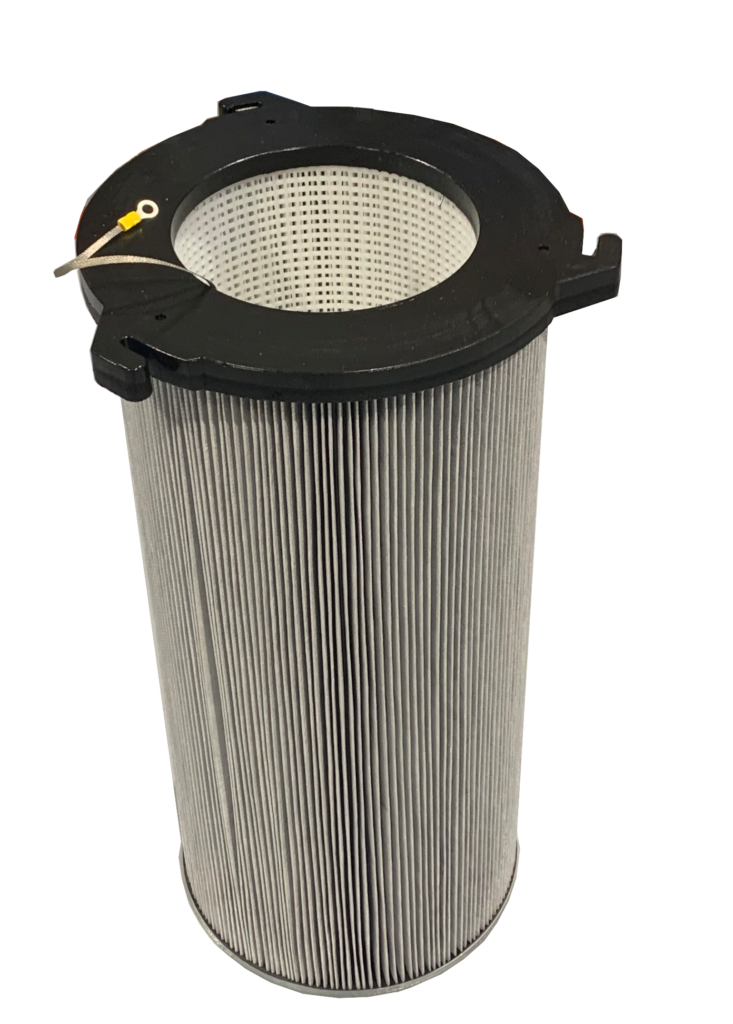
A vacuum for device assembly areas should hold fine particles in its filter, release clean exhaust air into the room and be easy to clean itself. Exhaust filtration matters more here than raw suction: a vacuum that blows fine dust out of its exhaust undoes the cleaning.
Two references help you compare filtration. Industrial vacuums are tested to dust classes L, M and H under IEC 60335-2-69; the German IFA summary gives maximum filter penetration of under 1%, under 0.1% and under 0.005% respectively. For HEPA, US OSHA’s silica standard defines a filter as at least 99.97% efficient for 0.3 µm particles. Ask for the class or filter rating of the complete machine, not only of the filter element. The guide on H, M and L vacuum dust classes explains the difference.
- Filter rating or dust class of the complete vacuum, with the test document
- Exhaust direction and filtration, so outlet air does not disturb work surfaces
- Housing materials that can be wiped and disinfected with your approved agents; DUPUY offers stainless steel versions for hygienic applications
- Safe filter change and emptying that does not release collected dust in the zone
- Dedicated hoses, nozzles and brushes stored in the zone they serve
- Noise and power supply suited to cleaning between or before shifts
- Spare filters and consumables available, so filters are changed on schedule
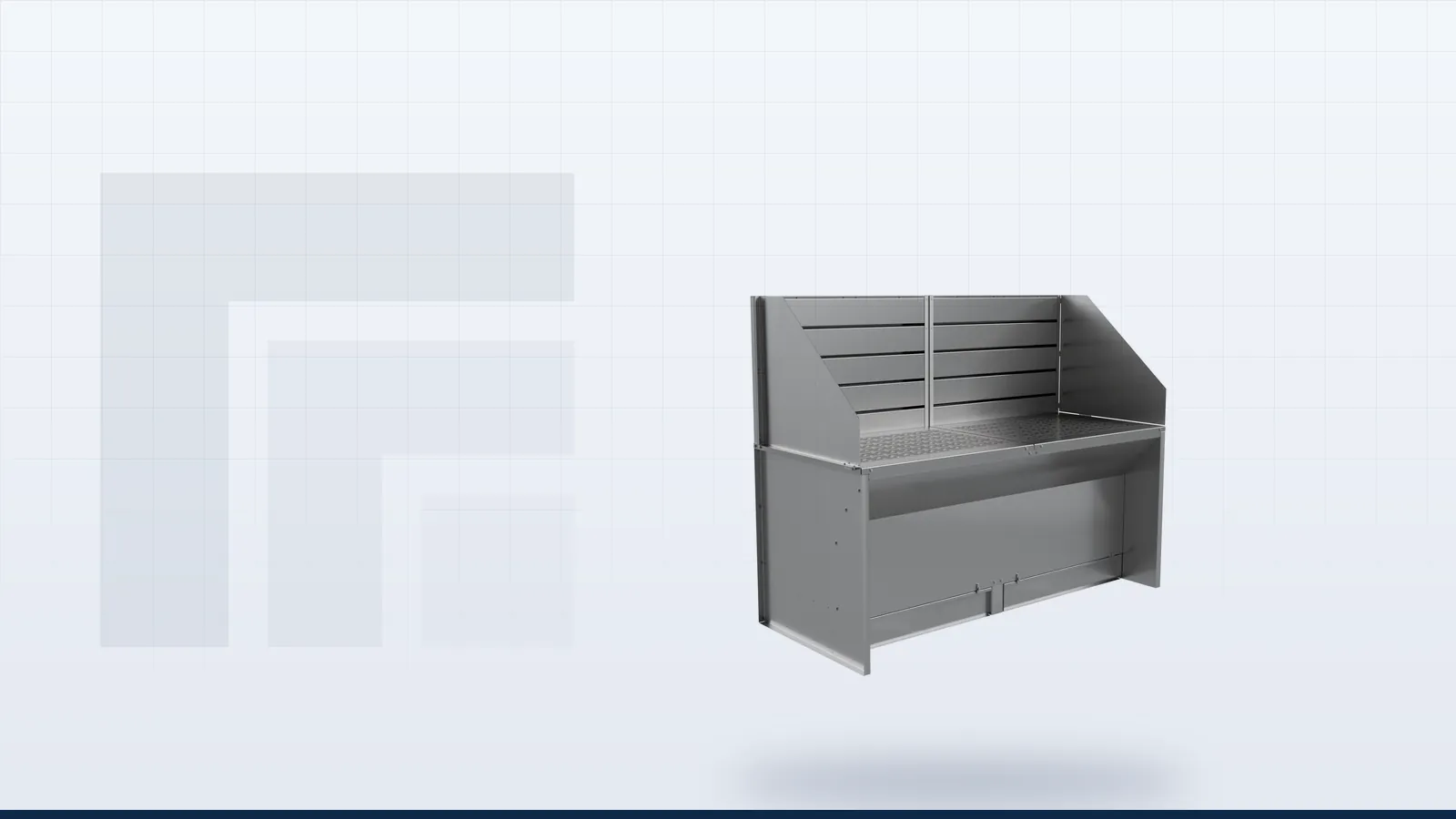
Where airborne fine dust comes from a process step such as trimming or grinding, capture at the source is more effective than cleaning afterwards. DUPUY dust collectors and extraction benches are options to discuss for those points.

DUPUY’s film shows a compact collector capturing fine airborne dust with an arm or hood; look at where the capture point sits relative to the work, since that decides how much dust escapes.
Where does dry steam fit in a medical device plant?
Dry steam fits in support areas and on compatible hard surfaces, such as trolleys, frames, workbench exteriors and floors, where heat and a small amount of moisture are acceptable. TECNOVAP supplies dry saturated steam generators for healthcare and industrial use, and some of its models have published laboratory results under the French standard AFNOR NF T72-110 for specific accessories and conditions.
Those results apply to the tested models, accessories and conditions only. Before steam enters a device plant, check material compatibility, the effect of moisture and condensation near open packaging, and how your procedure will verify the result on your own surfaces. Steam should be an added tool in a validated cleaning programme, not a replacement for one. The article on what evidence a steam sanitization claim needs covers that evidence in detail. AFE supplies TECNOVAP equipment through its dry steam generator range.
What should you ask an equipment supplier?
Ask a supplier for documents, not adjectives. A useful request covers the filter or dust class of each proposed model with its test basis, the materials of housings and accessories, the filter change procedure, the consumables needed per year and the lead time for spares. For classified or controlled zones, ask for a trial or demonstration in your own area before purchase.
AFE can help with equipment selection from its industrial vacuum range, supply filters and spare parts, and support process analysis where you are redesigning a cleaning plan. For broader cleaning validation questions, the guide on how equipment choice affects cleaning validation is a useful companion. More guides for the sector are in healthcare insights.
Al Faisaliah Enterprises · Aqaba
Select cleaning equipment for your device areas
Send your layout with area grades, your current procedure and the agents you use. AFE can propose DUPUY vacuum and TECNOVAP steam options with the documents your quality file needs.
Frequently asked questions
Does ISO 13485 say how often we must clean assembly areas?
No. ISO 13485:2016 requires the manufacturer to define and document contamination control and product cleanliness where they matter, but it does not set frequencies, agents or equipment. You decide these from product risk, write them into your procedures and show through records and monitoring that they work.
Do we need a HEPA vacuum in a device assembly area?
It depends on how the area is graded and what the product tolerates. In areas where product is exposed, high-efficiency exhaust filtration is a sensible requirement, because a vacuum with a poor filter returns fine dust to the room. Document the filter rating of the complete machine and the reason for your choice.
Can the same vacuum be used in the warehouse and in assembly?
It is better not to. Equipment moving between a dusty warehouse or machine shop and a controlled assembly area can carry dust with it. Dedicated vacuums and accessories for controlled zones, stored inside those zones, are easier to defend at audit.
Can dry steam be used to sanitize device packaging areas?
Dry steam can clean compatible hard surfaces in support areas, but any sanitization or disinfection claim needs evidence for your surfaces and conditions. Check moisture and condensation risks near open packaging first, and include the method in your validated cleaning programme rather than relying on boiler temperature.
What should we send AFE for an equipment proposal?
Send a layout with the grade of each area, your current cleaning procedure, the materials and agents you use, the power available and any classified or cleanroom zones. With that, AFE can propose specific vacuum or steam options and the documents you will need for your quality file.
Sources and references
- ISO 13485:2016 Medical devices: Quality management systems, Requirements for regulatory purposes · International Organization for Standardization
- Quality Management System Regulation (QMSR) · US Food and Drug Administration
- Medical Devices; Quality System Regulation Amendments (final rule, 89 FR 7496) · US Federal Register / FDA
- Testing of dust filters (dust classes L, M, H) · IFA / DGUV
- Guidelines for Environmental Infection Control in Health-Care Facilities: Recommendations · US Centers for Disease Control and Prevention
- Guideline for Disinfection and Sterilization in Healthcare Facilities: Glossary · US Centers for Disease Control and Prevention
- AFNOR NF T72-110 · TECNOVAP
This article is general technical guidance. Equipment suitability, ATEX conformity and hygiene performance must be confirmed for each site and application.
Written for plant, maintenance, HSE and quality teams in Jordan, Saudi Arabia and Iraq.