The short answer
Date factory cleaning works best with two methods matched to two kinds of soil: industrial vacuums for dry field dust, sand, caps and pits, and dry saturated steam with suitable tools to loosen sugary films on sorting tables, pitters and conveyors. Plan a full deep clean before and after the season, and verify hygiene results on site.
Key takeaways
- Saudi Arabia produced about 1,923 thousand tons of dates in 2024, according to GASTAT, so packing lines run hard in season.
- Dates carry sugars and up to 26-30% moisture under the Codex standard, which is why residues smear and stick.
- Vacuum dry debris first; then use dry steam on sticky films, keeping water use low on dry-process lines.
- Generator steam temperature does not prove surface sanitization; hygiene results must be validated on your own surfaces.
- Plan a pre-season and post-season deep clean, and a short daily routine during the packing peak.
A date packing house handles a product that is sweet, soft and straight from the field. Receiving brings in sand, dust, fronds, caps and the occasional stone; sorting, pitting, filling and packing leave sugary films that smear, stick and harden on tables, belts and machine parts. During the season the line rarely stops for long, and by the end of it residues have built up in every place a quick wipe cannot reach.
Date factory cleaning has to deal with both kinds of soil, dry and sticky, without spreading one into the other. This guide explains why dates behave the way they do on equipment, where residues collect, why vacuum and dry steam fit different jobs, and how to plan the deep cleans around the season.
What makes date factory cleaning different from other food plants?
The product itself sets the problem. The Codex Standard for Dates, as reproduced by FAO, classifies varieties as cane-sugar types (mainly sucrose) or invert-sugar types (mainly glucose and fructose), and allows moisture of up to 26% and 30% respectively. Optional ingredients include glucose syrup, sugars and vegetable oils, and a coated product may be labelled “Dates coated with Glucose Syrup.” Soft, sugary fruit leaves films that attract dust, stick fragments to surfaces and harden as they dry.
The same standard sets limits that depend on good housekeeping upstream: mineral impurities of not more than 1 g/kg, and dates free of live insects, insect eggs and mites. Field dust and debris tracked into the hall, and fruit fragments left under machines, work against both.
Scale matters too. Saudi Arabia’s General Authority for Statistics reports that date production reached about 1,923 thousand tons in 2024, from more than 37.6 million palm trees. Packing houses in the Kingdom and in Jordan work to the rhythm of the harvest, and while the season runs there is little time for anything beyond routine cleaning.
Where do residues and dust build up in a packing house?
They build up wherever fruit is handled, cut or dropped, and wherever dust from receiving can settle. A survey usually finds:
| Process area | Typical soil | Main method | Notes |
|---|---|---|---|
| Receiving and pre-cleaning | Sand, dust, fronds, caps, stones | Industrial vacuum, wet and dry | Keep field dust out of the processing hall |
| Sorting and grading tables | Sugary smears, skin fragments | Dry steam with cloth or brush tools | Short daily cycles in season |
| Pitting and capping machines | Syrup, pits, fruit pulp in moving parts | Vacuum loose pits and pulp, then steam on films | Machine stopped and isolated; follow the maker’s cleaning instructions |
| Conveyors and belts | Sticky films, fragments in joints and under belts | Steam belt-cleaning tools; vacuum under the line | TECNOVAP offers belt-cleaning heads for flat and mesh belts |
| Filling, coating and packing | Syrup drips, carton dust | Steam on drips; vacuum carton dust | Protect packed product |
| Floors, drains and under-line areas | Fallen fruit, pits, dust | Vacuum, then steam on residues | Fallen fruit attracts pests |
| Overhead | Settled dust on beams, lights, ducts | Ground-based high-reach vacuum | Before the season, top down |
Why use vacuum for debris and dry steam for sticky residues?
Because each method suits a different soil, and using the wrong one makes the job harder. Dry debris is best captured: brushing or blowing sand and dust around a packing hall sends it onto the very tables you are trying to keep clean. Codex’s General Principles of Food Hygiene list vacuum cleaning among physical cleaning methods “that avoid the use of water”, and note that dry cleaning may be needed “where water increases the likelihood of microbiological contamination”. Wetting dust and sugar together creates a paste that is harder to remove than either.
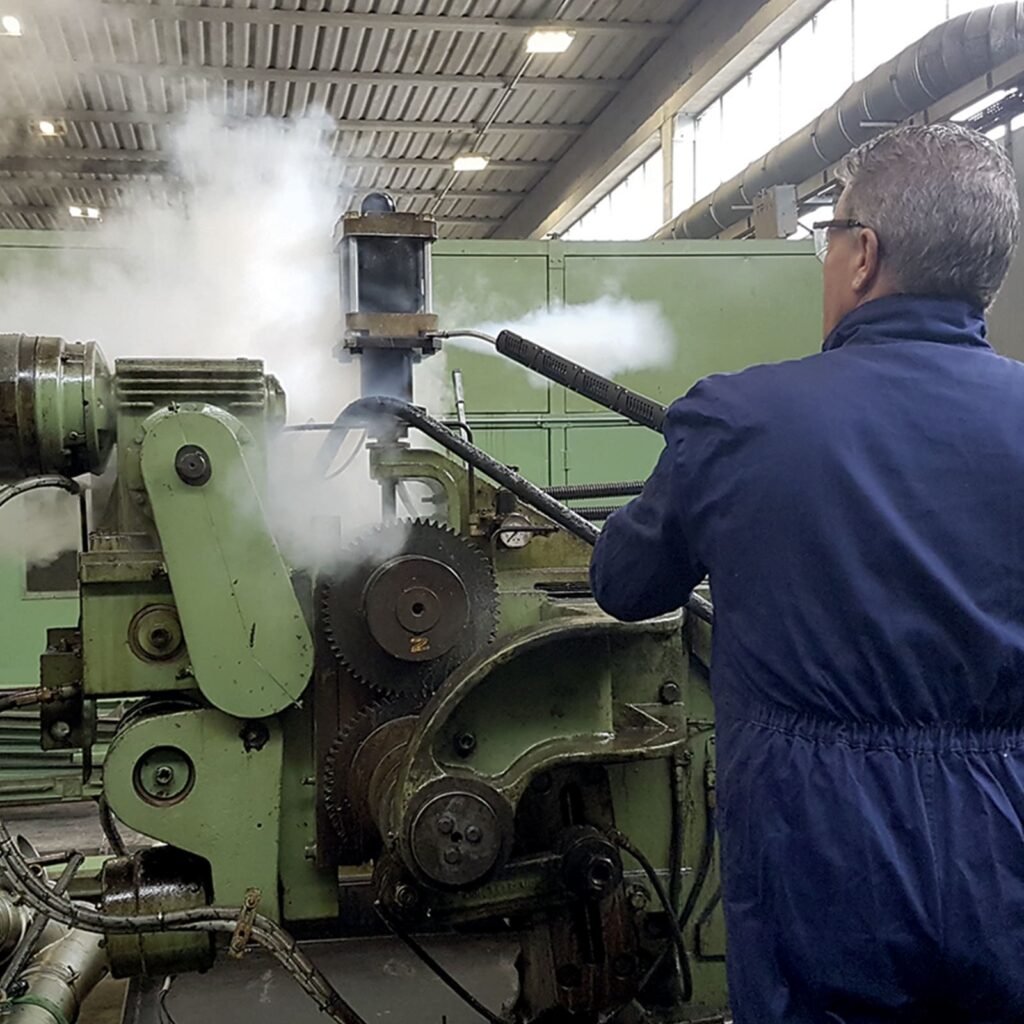
Sticky sugar films need heat and a little moisture to soften. Dry saturated steam supplies both with far less water than hosing. TECNOVAP states that its generators deliver dry saturated steam at, for example, 174 °C (EVO) and 183 °C (Steam Power Plus and Steam Box Vac Industrial); these are generator figures, not temperatures at the surface being cleaned. TECNOVAP also claims “considerable water and detergent savings” for food industry use, which is the maker’s statement rather than an independent result.
A practical order on any machine is: vacuum loose pits, caps and fragments; apply steam to soften films; wipe or vacuum the softened residue away; let the surface dry before production restarts.

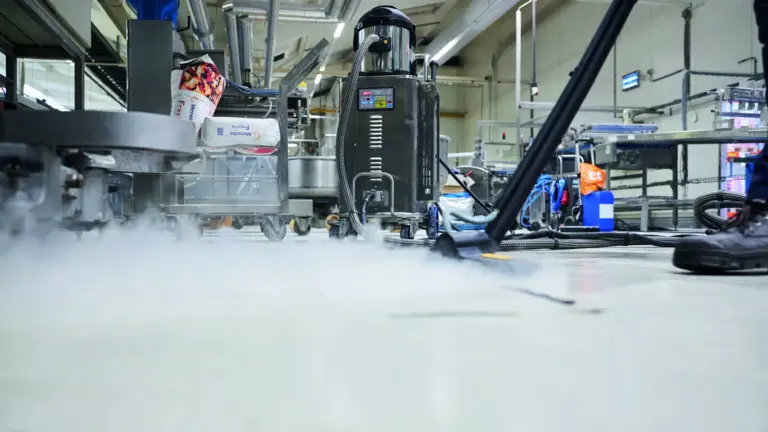
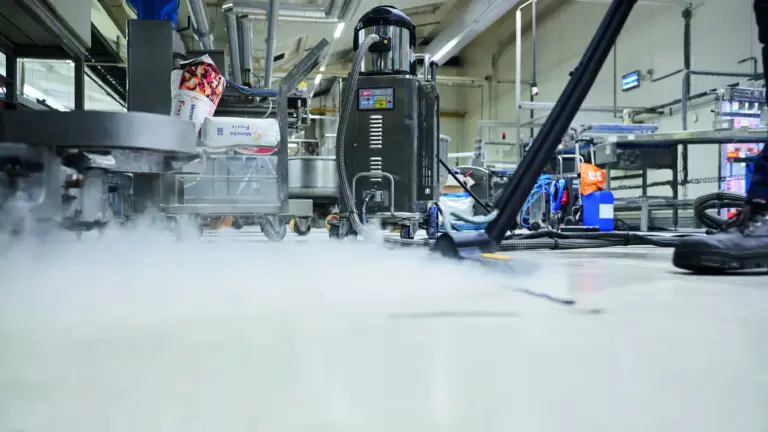
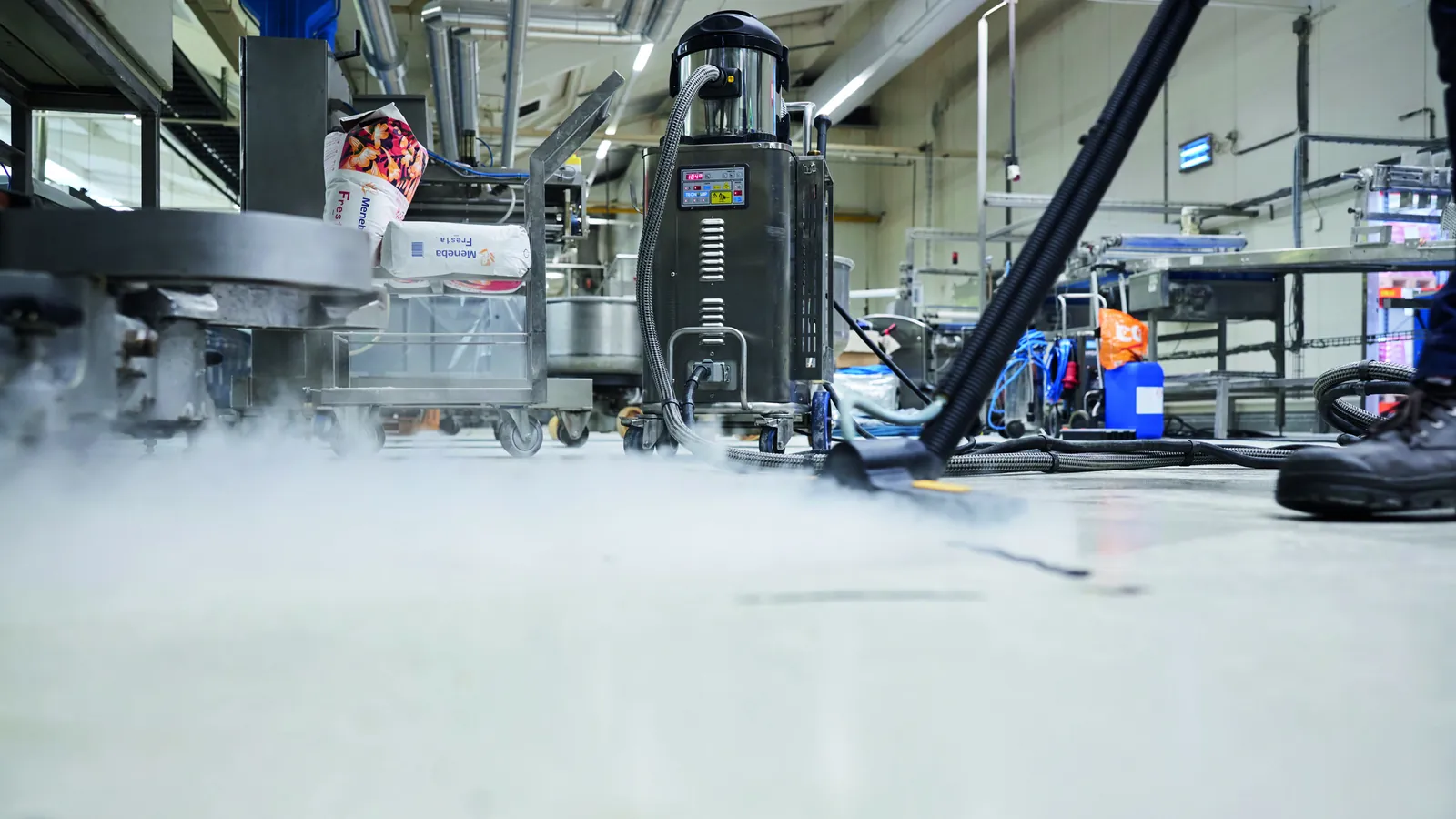
The film is from a bakery rather than a date house, but it shows the technique that matters here: dry steam lifting baked-on and sugary residues from production equipment, racks and benches, followed by wiping.
How should the seasonal deep clean be planned?
Plan two deep cleans, one before the season and one after it, and a short daily routine in between. The pre-season clean prepares a hall that may have stood idle; the post-season clean removes the build-up before it hardens and attracts pests during the off-season.
Seasonal deep clean sequence
- Overhead dust first
- Vacuum debris
- Steam sticky residues
- Dry and inspect
- Plan and isolate. Agree the machine list with maintenance, and have the site’s own staff stop and isolate each machine.
- Clean overhead first. Remove settled dust from beams, lights and ducts so nothing falls on cleaned equipment.
- Vacuum dry soil. Pits, caps, fragments, sand and dust from machines, under lines, drains and corners.
- Steam sticky films. Tables, pitters, belts and guards, working top down and wiping softened residue away.
- Dry and inspect. Allow surfaces to dry, inspect against a written checklist, and record what was found.
- Verify hygiene. Where the plan includes sanitation, verify it with the site’s own methods before restart.
What should the daily routine look like during the season?
It should be short, fixed in the shift plan and focused on the places where residues build fastest. A checklist for each line:
- Vacuum receiving areas so field dust and sand stay out of the processing hall.
- Collect fallen fruit and pits from under lines at every break, not at the end of the week.
- Steam and wipe sorting tables and pitter contact areas at the end of each shift.
- Check belts for sticky build-up at joints and edges; steam before it hardens.
- Empty vacuum containers and clean filters daily so suction stays consistent.
- Record what was cleaned, by whom, and anything that needs maintenance.
If your site also handles powdered sugar or date powder, the combustible dust question applies; the guide on sugar dust explosion prevention covers it.
What can dry steam claim, and what must be verified?
Steam cleans; any hygiene claim beyond cleaning must be verified on your surfaces. Codex defines cleaning as “the removal of soil, food residues, dirt, grease, or other objectionable matter”, while disinfection is a reduction in viable microorganisms to a level that does not compromise food safety. The US FDA Food Code defines sanitization on cleaned food-contact surfaces as a 5-log reduction of representative microorganisms.
TECNOVAP reports AFNOR NF T72-110 laboratory results only for specific models and accessories under test conditions. Boiler temperature alone does not prove that a surface has been sanitized. Treat steam as part of a validated sanitation programme, and see the evidence a dry steam sanitization claim needs before adding such claims to your procedures. The guide on dry cleaning in food plants explains when to keep water out of the process altogether.
Which equipment fits a date packing house?
Most packing houses need a dry steam generator with food-area tools, a wet-and-dry industrial vacuum, and a way to reach overhead structure. Questions to settle with the supplier:
- Steam generator size and power supply: TECNOVAP’s stainless steel range spans 2.45 kW to 40 kW, so match output and voltage to the number of operators and points of use.
- Combined steam and vacuum: TECNOVAP’s Steam Box Vac Industrial includes a wet/dry vacuum, which helps lift softened residue in one pass.
- Belt-cleaning heads for conveyors that can be cleaned in place.
- Vacuum capacity for pits, caps and sand: container size, wet and dry use, and easy emptying.
- Tool materials and documentation for food areas, checked against your own food-safety requirements.
How AFE supports date processors
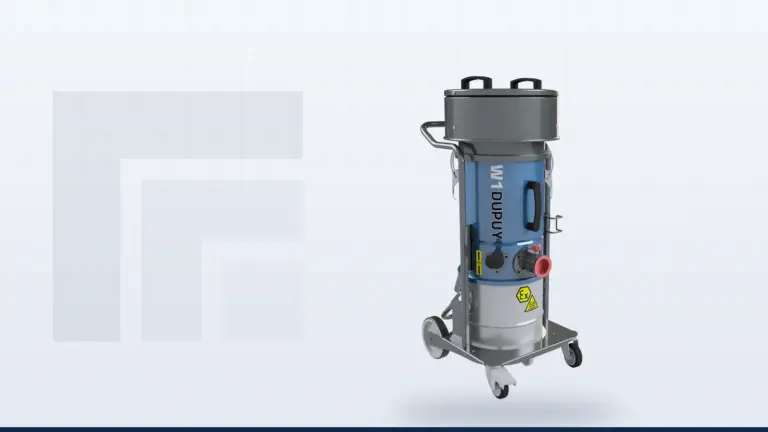
AFE supplies TECNOVAP dry steam generators and DUPUY industrial vacuums to food plants in Jordan, Saudi Arabia and Iraq, with filters, hoses and accessories for daily use. For the pre-season and post-season peaks, rental equipment can add capacity, and AFE’s steam cleaning service and Internal high clean dust removal can take on the overhead and deep-clean work where your team is busy with the harvest.
Al Faisaliah Enterprises · Aqaba
Prepare your packing house for the season
Send your line layout, the machines you clean and photos of the worst residues. AFE will suggest dry steam and vacuum equipment, and rental options for the peaks.
Frequently asked questions
Why not just wash the date line with water?
Water turns field dust and sugar into a paste that spreads and dries back onto surfaces, adds moisture to a product where moisture is controlled, and leaves wet areas that need drying. Codex recognises dry cleaning where water increases the likelihood of microbiological contamination. Vacuuming dry debris and using dry steam on sticky films keeps water use low; any wet cleaning should follow your own hygiene plan.
Does dry steam sanitize date processing equipment?
Steam can support a sanitation programme, but a sanitization claim needs evidence on your own surfaces. TECNOVAP's laboratory results apply only to specific models and accessories under test conditions, and generator temperature alone does not prove surface sanitization. Clean first, then verify hygiene with the methods your food-safety plan requires.
When should a date packing house do its deep clean?
Twice a year is a practical pattern: before the season, to prepare equipment that has stood idle, and immediately after it, before residues harden and attract pests during the off-season. During the season, a short daily routine on tables, pitters and belts prevents build-up. Rental equipment can add capacity for the two peaks.
Can steam be used on pitting machines?
Often on the contact parts and guards, but only with the machine stopped and isolated and within the machine maker's cleaning instructions. Keep steam away from motors, sensors and electrical panels unless the maker approves it. Vacuum loose pits and pulp first, then soften the films with steam and wipe them away.
Sources and references
- GASTAT: Date production in the Kingdom reaches 1,923 thousand tons in 2024 · General Authority for Statistics (Saudi Arabia)
- Codex Standard for Dates (reproduced in Date palm products) · Food and Agriculture Organization of the United Nations
- General Principles of Food Hygiene (CXC 1-1969) · Codex Alimentarius Commission (FAO/WHO)
- Food Code 2026 · US Food and Drug Administration
- Food industry · TECNOVAP
- Steam Box Vac Industrial · TECNOVAP
This article is general technical guidance. Equipment suitability, ATEX conformity and hygiene performance must be confirmed for each site and application.
Written for plant, maintenance, HSE and quality teams in Jordan, Saudi Arabia and Iraq.