The short answer
A high-level dust survey in a mining building should record every overhead surface to be cleaned, the type, depth and hazards of the dust, measured heights and obstacles, floor access, production and isolation constraints, and the evidence needed to verify the result. Its output is a scope and method showing what can be cleaned safely from the ground.
Key takeaways
- Survey surfaces, dust, reach, access and constraints separately; each one can change the method.
- Identify the dust before choosing equipment: silica content and combustibility decide filter class and system rating.
- Measure real heights and obstacles; published pole reach figures vary and must be checked against the structure.
- Plan top-down, zone by zone, around shutdowns, isolations and summer heat.
- Agree before-and-after evidence, such as photos or inspection-camera images, as part of the scope.
Dust in a mining facility does not stay on the floor. In crushing, screening, drying and bagging buildings, fine material settles on roof trusses, purlins, crane girders, pipe and duct exteriors and cable trays, and wind-blown desert sand adds its own layer. Left in place, it falls back onto equipment, product and people, and it hides the condition of the steelwork underneath.
High-level dust removal in mining facilities is usually safest when it can be done from the ground, but only a proper survey shows whether that is possible and what it will take. This planning guide sets out what the survey should cover, what to send before a site visit, and how the findings become a work plan for AFE’s Internal high clean dust removal service.
What should a high-level dust survey cover in a mining building?
A high-level dust survey should cover five things: the surfaces to be cleaned, the dust itself, reach and access, the operating constraints, and how the result will be verified. Each can change the method, so record them separately.
| Survey area | What to record | Why it matters |
|---|---|---|
| Surfaces | Type (truss, beam, purlin, girder, pipe or duct exterior, cable tray, fitting), extent and condition | Sets the heads, brushes and time needed; fragile items may be excluded |
| Dust | Material, approximate depth, extent, caking or moisture, hazard data | Decides the vacuum filter class, any rated system and the handling route |
| Reach and access | Measured heights, obstacles, line of sight, floor condition, space for the vacuum unit | Shows what can be reached from the ground and what needs a different access method |
| Constraints | Operating hours, shutdowns, isolations, permits, mobile plant traffic, heat | Determines when and in what sequence each zone can be cleaned |
| Verification | Before-and-after photos, inspection-camera images, sign-off points | Agrees what “clean” means before work begins |
Which overhead surfaces should be mapped?
Map every surface where dust settles and can fall back, zone by zone, and mark clearly the items excluded from the scope.
- Roof trusses, rafters, purlins and bracing.
- Crane runway girders and the tops of crane beams, cleaned only while the crane is isolated.
- Conveyor gallery steelwork and transfer tower structures.
- External surfaces of pipework and ducting; internal duct cleaning is a separate specialist task.
- Cable trays and their supports, external surfaces only; any electrical isolation is decided and carried out by the site.
- Light fittings, louvres, roof vents and high ledges, after a fragility check.
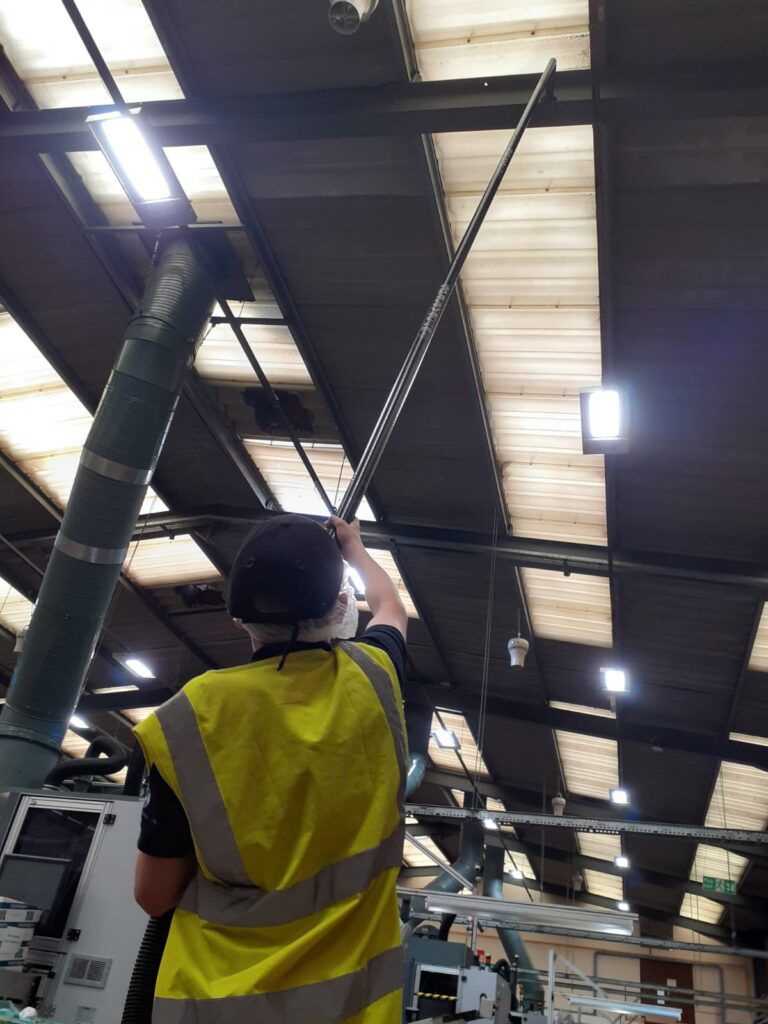
Horizontal surfaces deserve the most attention, because that is where layers build up. Where dust is combustible, overhead deposits are part of the hazard: OSHA’s archived 2008 combustible dust emphasis program, a US document, said accumulations on overhead beams, joists, ducts and the tops of equipment should be included when determining dust coverage.
What does the survey need to know about the dust?
The survey needs to know what the dust is, how much there is and what hazards it brings, because those facts decide the vacuum, the filter class and the method.
- Identity. Ore, concentrate, product, process dust or desert sand, ideally confirmed from the site’s safety data sheet or laboratory results.
- Quantity. Approximate layer depth and extent at representative points, photographed with a scale reference.
- Health hazards. If the dust may contain respirable crystalline silica or other hazardous substances, the method must keep exposure low. UK HSE advises vacuum attachments fitted to an H or M class extraction unit for finer material; in the IFA summary of the vacuum standard, class M filters allow less than 0.1% penetration and class H less than 0.005%.
- Combustibility. Decided by the site’s own assessment, not assumed. EU Directive 1999/92/EC states that layers, deposits and heaps of combustible dust must be considered like any other source that can form an explosive atmosphere, and it places zone classification with the employer.
- Condition. Loose, caked or damp dust needs different heads and brushes, and possibly more than one pass.
For rated systems in more detail, see assessing combustible dust on overhead structures.
How should reach and access be checked?
Measure rather than estimate: record the actual height of each surface, the obstacles in between and the floor space below, then compare them with the specific pole configuration proposed.
- Heights to each surface, taken with a laser distance meter.
- Obstacles between floor and target: cable runs, sprinkler lines, lighting, conveyors and crane rails.
- Line of sight from the floor, which affects how well the operator can see the cleaning head.
- Floor conditions below each zone: level, clear of spillage, with room for the vacuum unit, the hose and an exclusion zone.
- Areas beyond the reach of ground-based equipment, which need a separate access decision.
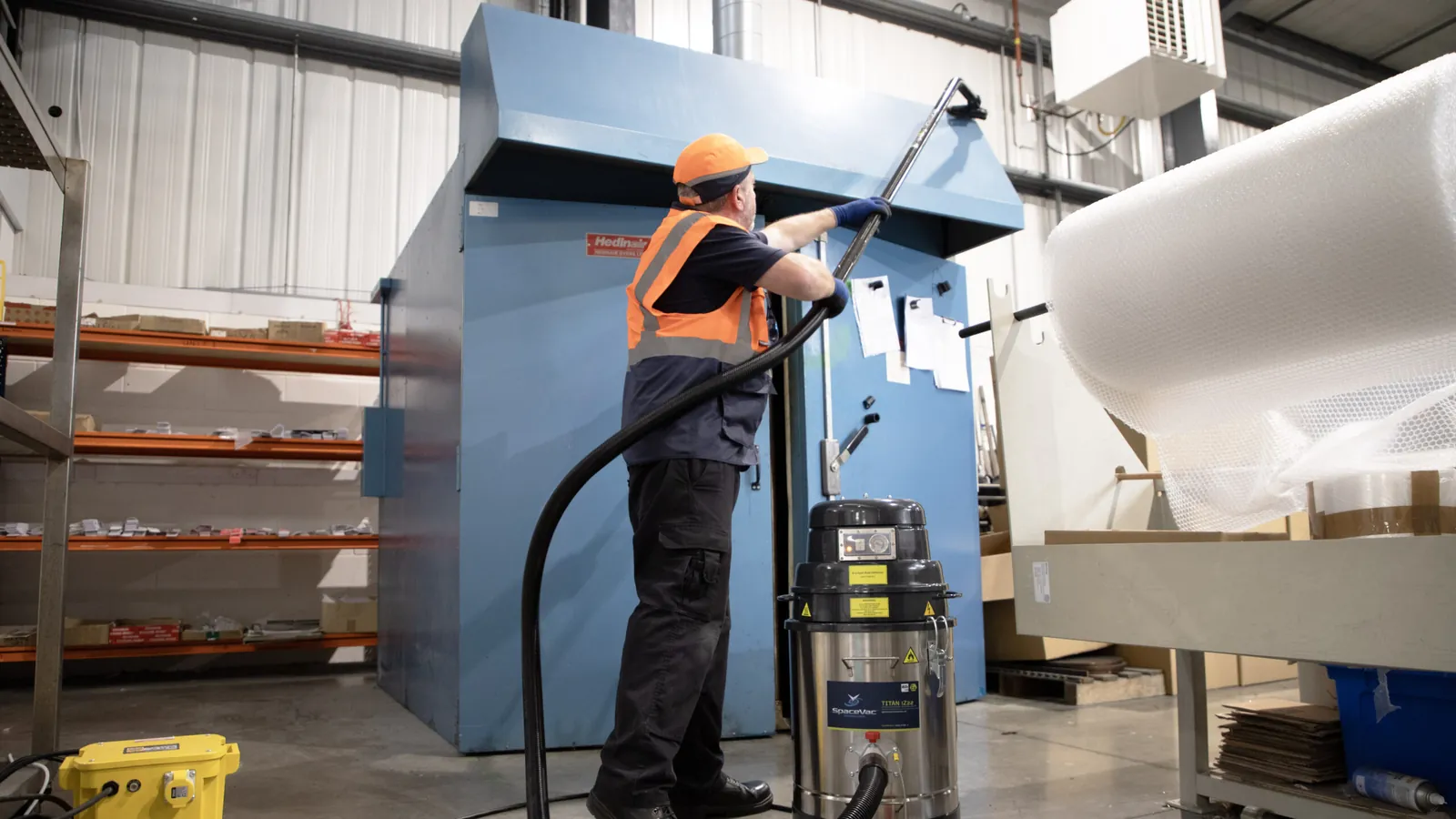
SpaceVac publishes working heights for each of its pole systems, but the figures differ between its regional pages, so the survey should test the actual configuration against measured heights rather than rely on a catalog number. Working from the ground also reflects a recognized hierarchy: the UK Work at Height Regulations 2005 require employers to avoid work at height where the job can reasonably be done safely another way. That UK law does not bind sites in Jordan, Saudi Arabia or Iraq, but it is a widely used benchmark, and it is the logic behind AFE’s ground-based high-reach cleaning.
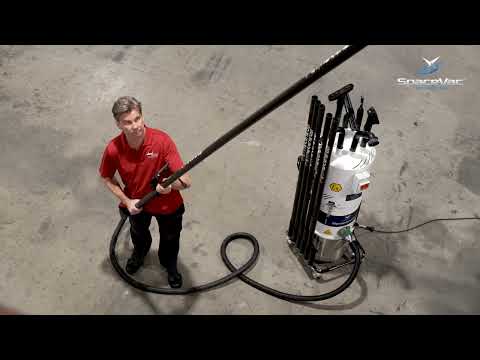
Watch how dust and debris are removed from high-level areas while the operator stays on the ground; that working principle is what the survey has to confirm, zone by zone.
Which operating constraints shape the plan?
Production, isolation and climate constraints decide when, and in what order, each overhead zone can be cleaned.
- Production status. Dust dislodged above running conveyors, open product or sensitive equipment can contaminate them, so some zones only fit shutdown windows.
- Isolations. Cranes, conveyors and moving plant below the work zone are isolated under the site’s procedure.
- Traffic. Loaders and forklifts are kept out of the work area with barriers and, where needed, a banksman.
- Permits and inductions. Site permits, PPE and respiratory protection are agreed in advance.
- Heat and dust storms. In uninsulated buildings, summer afternoons are hard on crews, so early shifts help; after a dust storm, overhead structures may need an extra inspection.

This film shows wind-blown desert sand being cleared from high-level surfaces with a ground-based pole system, the kind of deposit many buildings in the region collect after a storm.
What should you send before a site visit?
A good pre-visit pack lets AFE judge feasibility remotely and keeps the site visit short and focused.
- Wide photos of each zone, plus close-ups of the dust layer with a scale reference.
- Drawings or sketches with approximate heights.
- Material name, safety data sheet and any occupational hygiene data on silica.
- The site’s hazardous-area classification, if one exists.
- Operating hours, planned shutdowns and isolation points.
- Access rules: inductions, permits, PPE and vehicle access for equipment.
- Your definition of “clean”: target surfaces and the evidence you will accept.
How does the survey become a work plan?
The findings are turned into a zoned, top-down sequence with the right equipment for each zone and agreed evidence of completion.
- Zone the building. Group surfaces by height, dust type and constraint.
- Match the equipment. Select the pole configuration, heads and brushes, and a vacuum with a suitable filter class; where the site’s classification requires it, a complete system rated for the zone.
- Sequence top-down. Clean the highest surfaces first, then walls and equipment tops, so cleaned areas are not dirtied again.
- Protect and isolate. Set barriers below, isolate conveyors and cranes, and cover sensitive equipment.
- Verify. Take before-and-after photos; a camera on the pole shows surfaces that cannot be seen from the floor.
- Set the interval. Use the findings to decide when each zone should be inspected again.
From survey to clean structure
- Survey surfaces and dust
- Measure reach and access
- Agree method and windows
- Clean top-down by zone
- Verify with photos
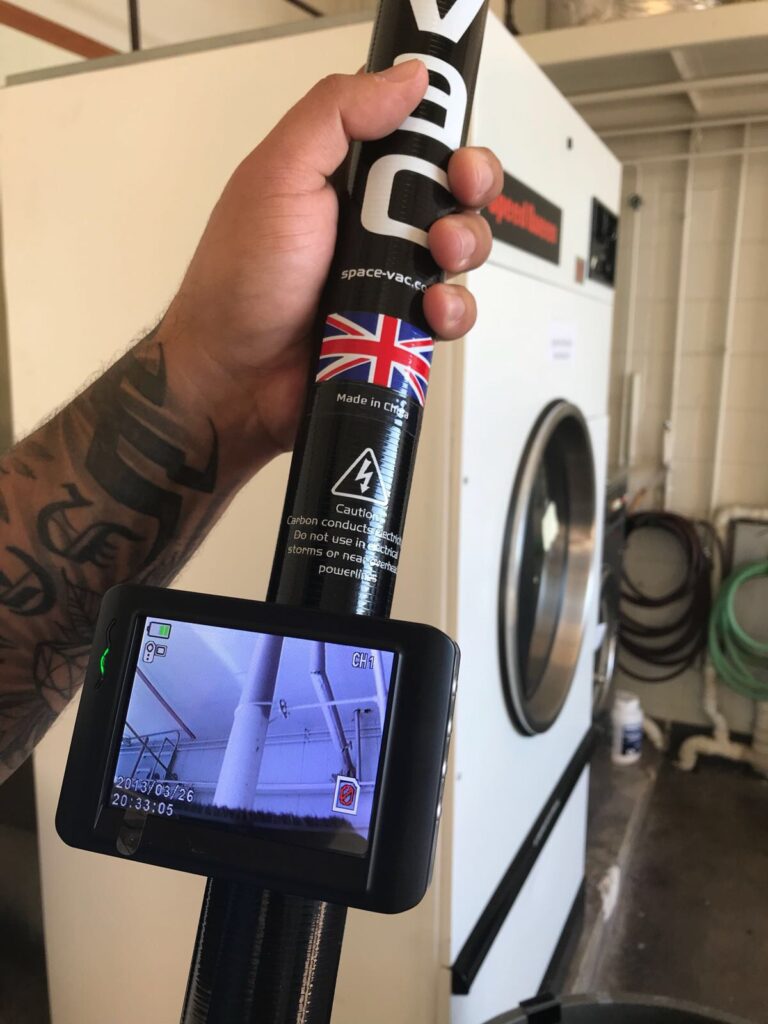
SpaceVac sells its Explorer camera and monitor systems separately from the standard kits, including a version for ATEX areas. AFE delivers Internal high clean dust removal (often searched as high-level dust removal) as an on-site service, working from the ground with carbon-fibre high-reach pole systems and compatible vacuums. Sites that prefer to clean in-house can buy high-reach poles, heads and vacuums instead, with consulting on method and ATEX compliance checks. Collected dust stays with the site for its own handling route. Floor-level spillage below conveyors is a separate job, covered in recovering conveyor spillage at a mining site; more sector articles are on the mining insights hub.
Al Faisaliah Enterprises · Aqaba
Plan your overhead dust survey
Send photos, approximate heights and any dust or hazardous-area data for your building. AFE reviews feasibility and proposes a site assessment for Internal high clean dust removal.
Frequently asked questions
Can overhead dust be removed while the plant is running?
Sometimes. Zones where dislodged dust cannot fall onto running conveyors, open product, sensitive equipment or people can often be cleaned during production, behind barriers. Zones above moving plant or product usually need a shutdown or an isolation window. The survey identifies which is which, so the work can be split between running time and planned stoppages.
How high can ground-based pole systems reach?
It depends on the system and configuration. SpaceVac publishes working heights per system, but its regional pages give different figures, so AFE checks the proposed configuration against heights measured during the survey. Surfaces beyond reasonable ground reach, or where line of sight is poor even with a camera, need a separate access decision.
Does the service include cleaning inside ducts or work on electrical equipment?
No. Internal high clean dust removal covers the external surfaces of overhead pipework and ducting and the outer surfaces of cable trays and supports. Internal duct cleaning is a separate specialist task, and any electrical isolation or electrical work stays with the site and its authorized personnel.
What happens to the dust that is collected?
It is contained in the vacuum unit and then handed over to the site in closed bags or containers for its own handling route. If the dust is hazardous or recoverable, the site decides how it is classified and where it goes; AFE does not transport or dispose of it.
How often should overhead structures in a mining building be cleaned?
There is no universal interval. Set it from the survey: how quickly dust builds up again, what hazards it brings, and how it affects equipment and product. Re-inspect zones with photos after a fixed period, add checks after dust storms or process upsets, and adjust the interval once you have two or three cycles of evidence.
Sources and references
- Internal high-level cleaning · SpaceVac International
- ATEX cleaning equipment · SpaceVac International
- Directive 1999/92/EC on minimum requirements for workers potentially at risk from explosive atmospheres · European Union (EUR-Lex)
- The Work at Height Regulations 2005, regulation 6 · UK legislation.gov.uk
- Sweeping and cleaning: construction dust · UK Health and Safety Executive
- Testing of dust filters (dust classes L, M, H) · IFA, German Social Accident Insurance
- Combustible Dust National Emphasis Program (archived 2008 edition) · US Occupational Safety and Health Administration
This article is general technical guidance. Equipment suitability, ATEX conformity and hygiene performance must be confirmed for each site and application.
Written for plant, maintenance, HSE and quality teams in Jordan, Saudi Arabia and Iraq.