The short answer
MDF dust is demanding because sanding and cutting fibre boards create large amounts of very fine dust that escapes weak capture, loads filters fast and is combustible. Control it with enclosed extraction at each sanding head and saw, collectors with automatic filter cleaning, and daily Class M vacuum cleanup instead of sweeping or compressed air.
Key takeaways
- MDF dust is fine and abundant, so capture must be enclosed and close to the source.
- HSE lists wood composite dusts as a common cause of occupational asthma.
- Fine dust loads filters fast; specify filter cleaning, pressure indicators and safe discharge.
- Formaldehyde from resins is a separate gas question that dust filters do not answer.
- Clean settled dust with a Class M vacuum, never by sweeping or compressed air.
MDF and particleboard behave differently from solid timber when they are cut and sanded. The board is made of fine wood fibres or particles bound with resin, so machining breaks it down into a light, fine dust that spreads easily, loads filters quickly and settles on every surface in a panel plant or a furniture line that processes boards.
This guide explains what makes MDF dust demanding, where it is generated, how to capture it at sanding and cutting points, and how to keep settled dust under control. It is written for plant, maintenance and HSE managers in Jordan, Saudi Arabia and Iraq who process or produce wood-based panels.
What makes MDF dust harder to control than solid wood dust?
MDF dust is harder to control mainly because it is fine and abundant: sanding and cutting a fibre board produce a high share of small particles that stay airborne and travel. Three properties drive the control effort.
- Particle size: fine dust escapes weak capture, drifts beyond the workstation and settles far from the machine. The UK Health and Safety Executive (HSE) notes that settled dust “contains the fine particles that are most likely to damage the lungs.”
- Health classification: HSE lists “wood composite dusts,” alongside hardwood and softwood, as “a common cause of occupational asthma,” and IARC classifies wood dust as carcinogenic to humans (Group 1).
- Combustibility: HSE states that “wood dust can cause fire and explosion” and that “many fires start in the extraction system.” Fine dust disperses into a cloud more easily than chips.
Formaldehyde is a separate question. US OSHA notes that urea-formaldehyde and phenol formaldehyde resins are used “as adhesives in the production of particle board and plywood,” and sets a US limit of 0.75 ppm as an 8-hour average. A dust filter is designed for particles, not gases, so if formaldehyde is a concern on your line, assess it separately with your HSE team.
Where is MDF dust generated in a panel plant?
Most MDF dust comes from sanding, sizing and machining, with smaller amounts from handling and storage. Map these points first, because each one needs its own capture.
| Point | Dust character | Typical control | What to check |
|---|---|---|---|
| Wide-belt and calibrating sanders | Very fine, high volume | Dedicated enclosed extraction at each sanding head | Leaks at housings; dust on machine tops |
| Panel sizing and trimming saws | Fine dust plus edge strips | Blade hoods and under-table extraction | Dust thrown clear of the hood |
| CNC routing and edge machining | Fine dust and chips at the tool | Spindle hood or table extraction | Capture when the tool moves away |
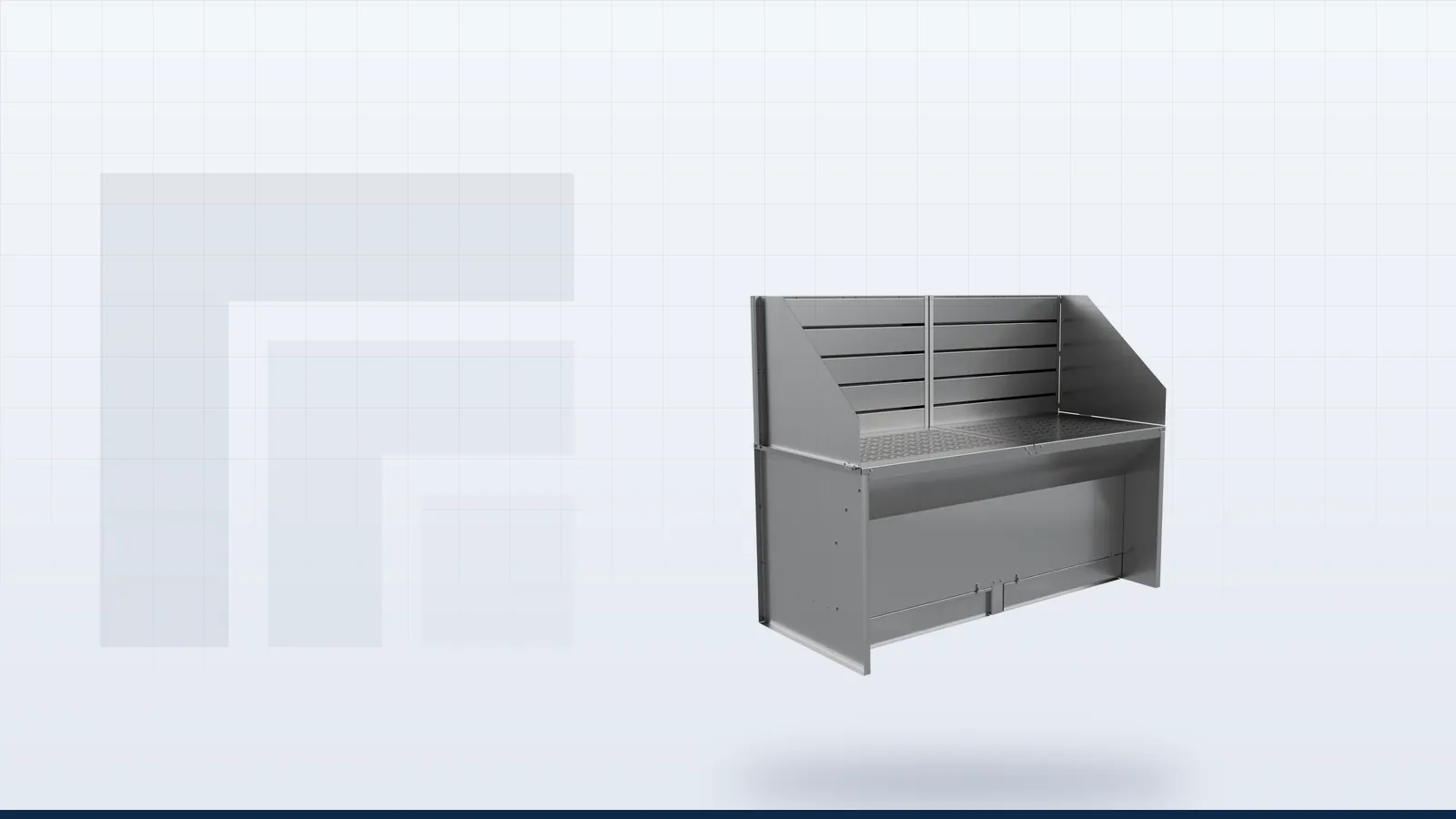
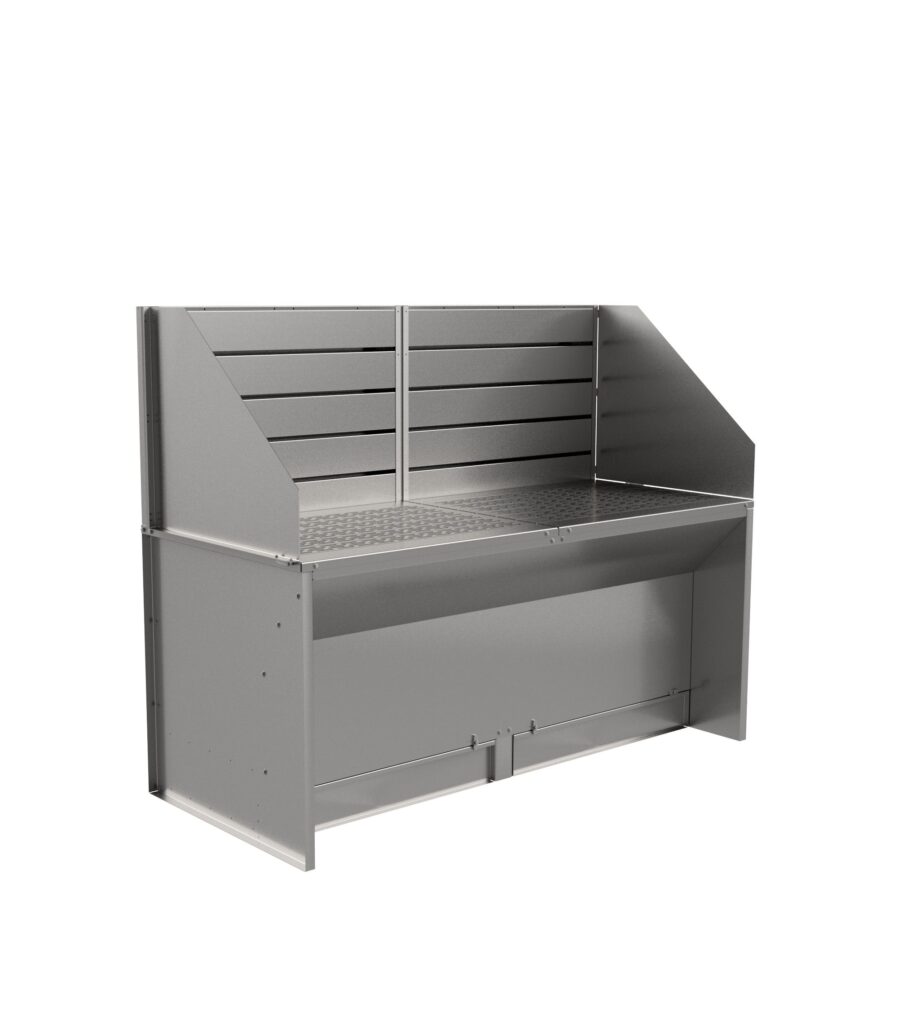
| Manual sanding and finishing | Fine dust in the breathing zone | On-tool extraction or a downdraught bench | Visible dust on operators and benches |
| Dust silos, hoppers and transfer points | Fine dust released on discharge | Sealed connections and local extraction | Deposits around discharge points |
| Overhead structure | Layers of settled fine dust | Planned high-level removal | How fast layers return |
Start with the sanding line. It usually produces the largest share of fine dust, and a leak there spreads across the whole hall. Then work outward to saws, machining centres and hand finishing, and finally to the points where collected dust is stored and emptied. A dust map drawn this way also shows where cleaning effort is being spent on dust that better capture would have stopped.
How should MDF dust be captured at sanding and cutting?
Capture should be as close and as enclosed as the machine allows, because fine dust escapes any gap. HSE’s LEV guidance states that enclosures are always more effective than capturing hoods, and that a capturing hood only works when the source sits close to it.
- Enclose the sanding heads. Wide-belt sanders should have extraction at each head, with housings kept sealed and doors closed in operation.
- Hood the saw blades. Combine a hood above the blade with extraction below the table so dust thrown in both directions is caught.
- Keep the hood close. On CNC and hand work, check that capture continues when the tool moves; capture that only works in one position is not enough.
- Size for simultaneous use. Count the points that run together and size airflow for that case, not for one machine.
- Fit indicators. A pressure gauge across the filter shows when airflow is falling, before dust starts to escape.
MDF dust capture and cleanup
- Enclose sanding heads
- Hood the saws
- Filter and discharge
- Vacuum settled dust
For hood design in more depth, see dust extraction hood design.
What does fine MDF dust demand from filters and collectors?
Fine dust loads filters faster than coarse chips, so filter area, cleaning and discharge decide whether a collector keeps its airflow. Ask about these before choosing a unit.
- Filter cleaning: DUPUY describes its DEDUST collectors as using cartridge filters with “an automatic filter cleaning system using compressed air,” and lists wood among their applications.
- Filter class for cleanup vacuums: HSE advises cleaning up wood dust with an industrial vacuum “that at least meets the Class M classification.”
- Discharge: plan how collected dust leaves the unit (bins, bags or a silo) without a new dust cloud at emptying.
- Fire planning: HSE advises considering “the location of the fan and air cleaner”; where zones are documented, the collector and its accessories must be suitable for them.
- Spare filters: keep replacement filters of the same class in stock; see dust collector filter replacement.

The film presents the DEDUST ELF range for centralized extraction of dry, light and fine dust; watch how the collector connects to the extraction network, because connection and filter cleaning decide how well it copes with fine panel dust.
How should settled MDF dust be cleaned?
Settled MDF dust should be vacuumed on a fixed routine, never swept or blown down. HSE states: “never sweep up or use compressed air lines as this will disturb the dust and allow it to become inhaled.”
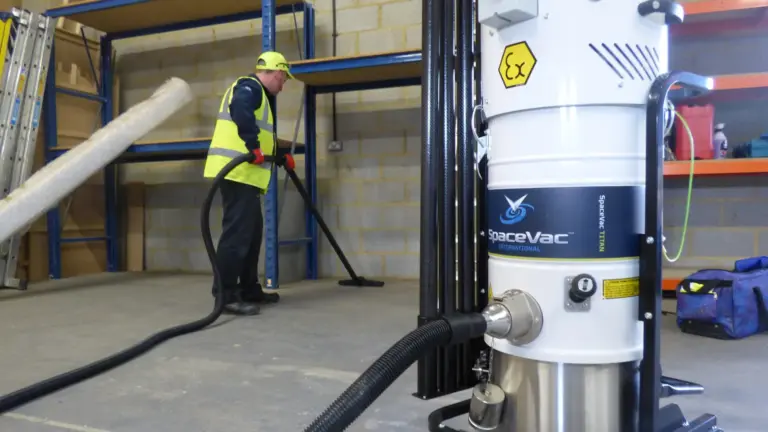
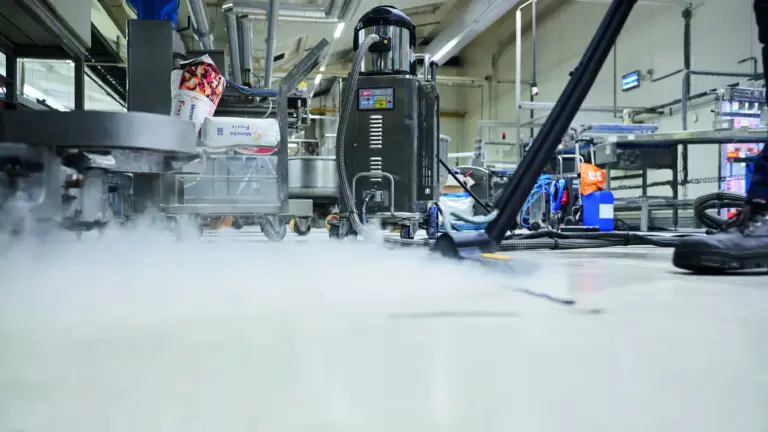
- Vacuum floors, benches and machine tops at each shift end with a Class M (or better) industrial vacuum.
- Clean machine housings, motor covers and cable trays near sanders weekly or faster where dust builds quickly.
- Check the areas around collectors, silos and discharge points for deposits.
- Use conductive or antistatic hoses and grounded tools where the dust is combustible.
- Consider a central vacuum network if many points are cleaned every shift; see central vacuum system specification.
- Remove overhead layers from the ground on a planned interval rather than brushing them down.
AFE supplies DUPUY dust collectors, industrial vacuums and central vacuum systems through its industrial vacuum systems range, and offers Internal high clean dust removal for overhead structure.
What information does a supplier need for a panel plant?
A supplier needs to know the machines, the dust and the duty cycle before it can size anything. Prepare:
- The list of sanders, saws and machining centres, with the points that run at the same time.
- Board types processed (MDF, particleboard, coated panels) and sanding grit stages.
- Existing extraction: collector type, filter area, cleaning system and pressure readings.
- Where collected dust goes today (bins, bags, silo, reuse as fuel) and how it is emptied.
- Your dust hazard analysis and zone drawings, if available.
- Photos of deposits on machines and overhead structure, with heights.
For a layout review or trial before you buy, AFE’s consulting team and rental options can help.
How do you keep MDF dust control working over time?
Control stays effective when someone checks it regularly and acts on the readings. Build these checks into maintenance:
- Filter pressure: record the reading daily; a steady rise means cleaning or replacement is due.
- Leaks: inspect sander housings, flexible hoses and duct joints for escaping dust.
- Return rate: note how fast dust returns on machine tops and beams after cleaning.
- Examination: HSE requires UK extraction systems to be examined by a competent person at least every 14 months; use a similar interval as good practice.
- Changes: recheck capture whenever a machine, grit or board type changes.
Keep the readings, inspection notes and cleaning records together. When an auditor, insurer or your own HSE team asks how MDF dust is controlled, that file is the answer, and it shows which machine to fix first when dust starts to return.
Al Faisaliah Enterprises · Aqaba
Size extraction for fine panel dust
Send your line layout, simultaneous points and current filter readings. AFE proposes collectors, vacuums and cleanup equipment matched to fine MDF dust.
Frequently asked questions
Is MDF dust more dangerous than ordinary wood dust?
MDF dust is wood fibre bound with resin, and HSE groups wood composite dusts with hardwood and softwood dusts as a common cause of occupational asthma. What makes it harder in practice is that sanding and cutting produce a high share of fine particles, which escape capture and spread further. Treat it at least as strictly as wood dust.
Will our dust collector remove formaldehyde from MDF?
A dust collector is designed to separate particles from the air, not gases. US OSHA notes that formaldehyde resins are used as adhesives in particle board, and sets a separate exposure limit for formaldehyde. If it is a concern on your line, ask your HSE team to assess it separately; do not assume the dust filter covers it.
Why do our collector filters block so quickly on the sanding line?
Fine sanding dust builds a dense layer on the filter faster than coarse chips. Check that filter area suits the airflow, that the automatic cleaning system works, and that the pressure reading is recorded daily. A steady rise points to cleaning or replacement; a sudden drop can mean a damaged filter.
Can we use compressed air to clean MDF dust off machines?
HSE advises never using compressed air lines on wood dust, because it disturbs the dust and allows it to be inhaled. It also lifts fine combustible dust into a cloud and spreads it onto other surfaces. Use an industrial vacuum of at least Class M with suitable tools for machine tops and housings.
Sources and references
- Asthma: Woodworkers · UK Health and Safety Executive
- Wood dust · UK Health and Safety Executive
- Fire and explosion (woodworking) · UK Health and Safety Executive
- Formaldehyde · US OSHA
- 29 CFR 1910.1048, Formaldehyde · US OSHA
- Clearing the air: A simple guide to buying and using local exhaust ventilation (LEV), INDG408 · UK Health and Safety Executive
- Industrial dust collectors for fine suspended dusts · DUPUY
This article is general technical guidance. Equipment suitability, ATEX conformity and hygiene performance must be confirmed for each site and application.
Written for plant, maintenance, HSE and quality teams in Jordan, Saudi Arabia and Iraq.