The short answer
A practical container yard setup combines a ride-on sweeper sized to the sweepable area per cycle, a zone-by-zone routine booked with yard planning, and a vacuum loader for spills, drains and heaps a sweeper should not handle. Size it from measured debris and real hourly output in a trial, not from the yard's total area.
Key takeaways
- Fine dust from trackout and wind is the fraction traffic lifts back into the air; remove it before it builds up.
- Size the sweeper from the sweepable area per cycle and the emptying point, not from total yard area.
- Manufacturer m²/h figures are maxima; confirm real output and hopper fill rate in a site trial.
- Send heaps, drains, fluids and dangerous goods spills to other methods, not to the sweeper.
- Book sweeping windows with yard planning and keep machines out of active handling areas.
A container yard looks clean from the gate, but its paving collects sand, dust, packaging fragments and the occasional cargo spill every day. Heavy trucks, reach stackers and straddle carriers then grind that material into fine dust and lift it back into the air. Container yard sweeping is the routine that keeps this cycle under control, and it works best when it is planned like any other yard operation rather than added at the end of a shift.
This guide is for terminal, inland depot and logistics-park managers. It explains what ends up on a yard surface, how to size a sweeper from the area you can actually reach, which jobs a sweeper should not attempt, and what to send a supplier. For bulk quays, conveyors and stockpiles, see port dust control at quays and conveyors; this article stays with paved container stacks, lanes and gates.
What ends up on a container yard surface?
What a container yard sweeper collects usually falls into four groups: fine mineral dust brought in by wheels and wind, bulky debris from handling and packaging, spilled cargo and fluids. Recording which of these dominates in each area is the first step, because it decides brushes, filters and hopper size.
- Fine dust and sand: carried in by trucks from unpaved roads and staging areas, and blown in during dust storms. This is the fraction that becomes airborne.
- Bulky debris: wood splinters, plastic film, strapping and seal fragments from packing, stuffing and inspection.
- Spilled cargo: material escaping from damaged or badly closed containers, from bagged minerals to food products.
- Fluids: oil and hydraulic leaks from vehicles and handling equipment, mainly in lanes, parking areas and near workshops.
The US Environmental Protection Agency’s AP-42 emissions guide explains the mechanism. Dust from paved surfaces comes largely from resuspension of loose material, and at industrial sites that loose layer is replenished by spillage and by trackout from unpaved roads and staging areas. The EPA adds that vehicle weight and speed influence road dust emissions, which is exactly the traffic a container yard carries.
Why plan container yard sweeping instead of cleaning on request?
Planned sweeping removes the fine layer before traffic grinds and resuspends it, while cleaning on request usually starts only once dust or debris is already a complaint. A plan also lets sweeping fit between container moves rather than compete with them.
There are three practical reasons to plan. First, loose material is replenished every day, so a one-off clean has a short life. Second, debris such as strapping and wood fragments can damage tyres and get caught in moving equipment. Third, the UK Health and Safety Executive lists workplace transport, lifting operations and freight container safety among the common risks at ports and docks, so every cleaning machine on the yard adds to a busy traffic system and must be scheduled like one.
How do you size a sweeper for container yard sweeping?
Size the sweeper from the sweepable area per cycle, the debris load and the emptying point, not from the yard’s total area. Stack blocks that are full, reefer rows with cables and workshop zones cannot be swept on the same pass as open driving lanes.
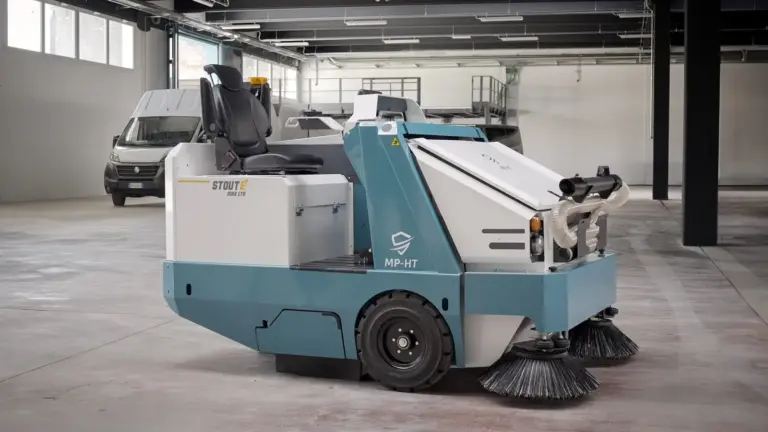
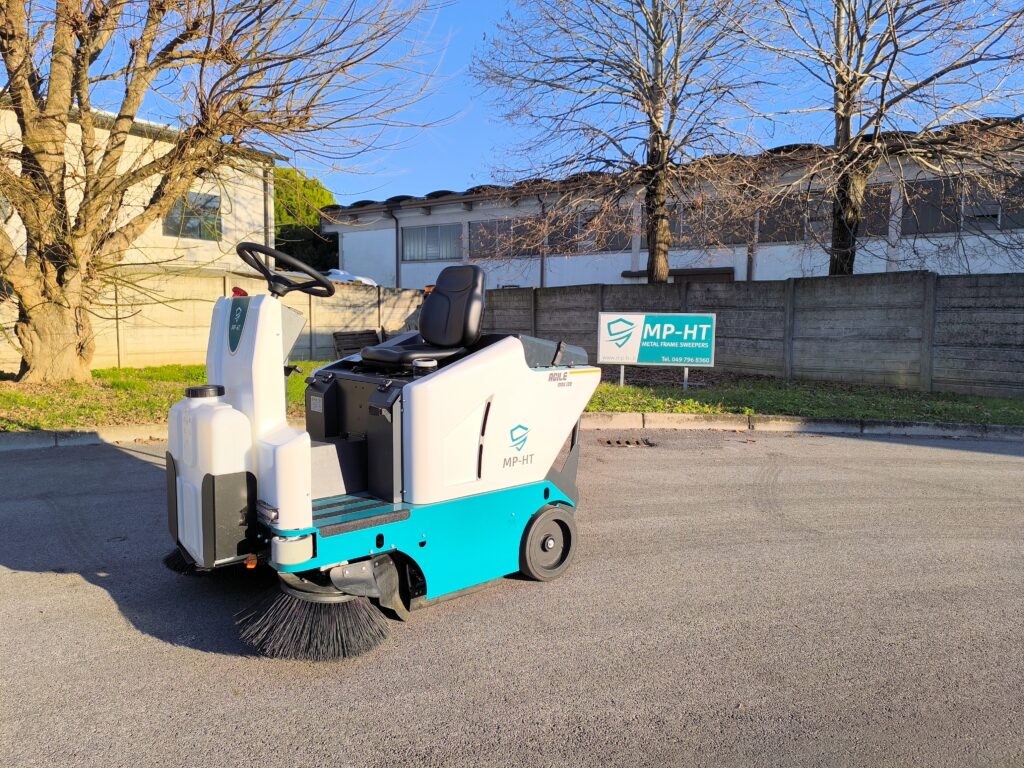
MP-HT publishes clear figures for its ride-on sweepers, and they show how widely machines differ. The table lists MP-HT’s stated values; the hourly figures are manufacturer maxima, so real output on a yard with turns, traffic and emptying stops will be lower.
| MP-HT model (stated data) | Max hourly performance | Working width | Hopper | Where it fits on a yard |
|---|---|---|---|---|
| Stout E+ (Max 170), ride-on industrial | 16,000 m²/h | 1,700 mm | 500 L, high discharge up to 1,550 mm | Long driving lanes and large open blocks; MP-HT lists ports, freight villages and large parking lots |
| Wind Ant E4H, ride-on street sweeper | 15,000 m²/h | 1,550 mm | 270 L (up to 370 L for bulky light debris) | Mixed fine dust and bulky debris; conveyor-belt collection |
| Agile E+ Max 107, compact ride-on | 9,000 m²/h | 1,200 mm | 70 L | Gates, offices, workshops and covered sheds; light debris loads |
Use the table to frame the arithmetic, then confirm it on your own paving. A 40,000 m² sweepable area would need at least 2.5 hours per pass even at the Stout E+’s stated maximum, before any turns, waiting or emptying. A short trial that records actual area swept per hour and how often the hopper fills gives the real figure. Also check how far the machine must travel to empty: a high-discharge hopper that tips straight into a skip saves trips on a large yard.
Which jobs should not go to the sweeper?
A sweeper handles routine dust and light debris on open paving; heaps, liquids, drains and hazardous spills need other methods. Sending a sweeper into the wrong job overloads its filters and can spread the problem.
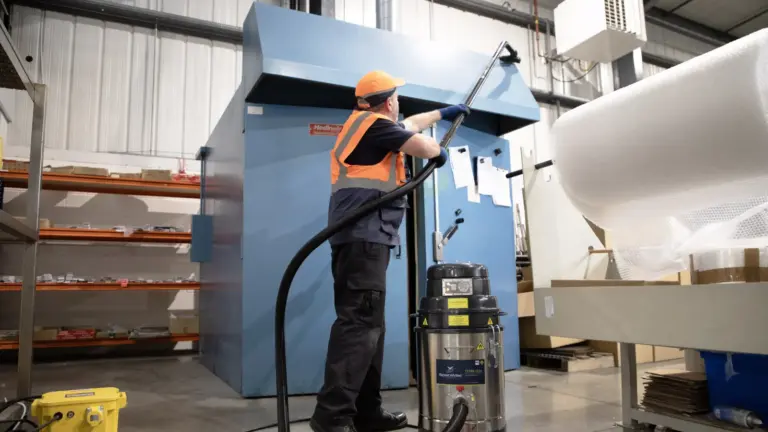
- Large cargo spills: heaps of bagged or bulk material from a damaged container are faster and cleaner to recover with a heavy-duty vacuum loader into a separate container. DISAB builds vacuum trucks and mobile units for this kind of bulk recovery.
- Fluids: oil leaks need absorbent and the site’s spill procedure; a dry sweeper is not designed to collect liquids.
- Drains and gullies: silt in drainage channels is a vacuum job, not a brush job.
- Dangerous goods: a leaking hazardous cargo follows the terminal’s dangerous goods emergency procedure, not the routine cleaning plan.
Choosing between a floor sweeper and an industrial vacuum covers this trade-off in more detail for warehouses and yards.

Watch for how the vacuum units handle wet and dry spillage that a sweeper could not pick up; this is DISAB’s own footage, not an AFE site.
How should a yard sweeping routine run around live traffic?
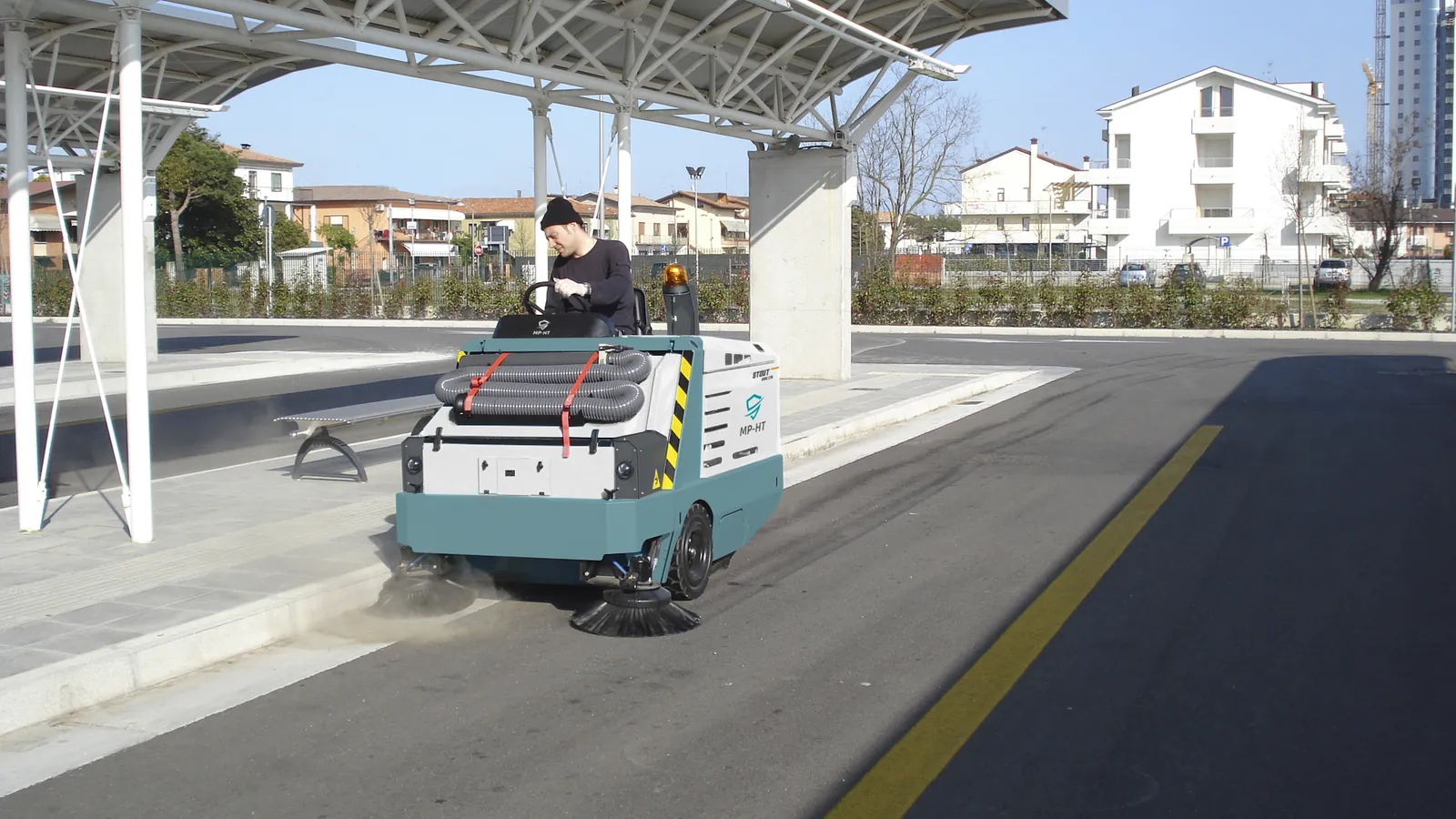
Run sweeping as a zone-by-zone routine agreed with yard planning, so each block is swept when it is empty or quiet. The sequence below works for most terminals and depots.
- Zone the yard. Split it into driving lanes, stack blocks, gate and truck lanes, reefer rows, empty-container depot and workshop areas.
- Set frequencies by evidence. Start with a frequency per zone, then adjust it from the weight collected and photos, not from habit.
- Book windows with yard planning. Sweep blocks when they are emptied or between peaks; never weave through active handling.
- Fix the emptying point. Agree where the hopper is emptied and keep sweepings apart from recoverable cargo and from fluids.
- Review monthly. Compare collected weight, debris complaints and tyre damage reports, and move hours to the zones that need them.
Container yard sweeping routine
How do you keep dust down while sweeping in heat and sand?
Use the sweeper’s own dust control and the right filter, and avoid moving dust from one place to another. Dry, hot conditions and wind-blown sand make the fine fraction the main concern in Jordan, Saudi Arabia and Iraq.
MP-HT states that the Stout E+ and Wind Ant E4H use water misting on the brushes to reduce dust dispersion, and that the Stout E+ filter can be configured with polyester bag filters or paper, polyester or HEPA panel filters, cleaned by an electric filter shaker. Ask which filter suits your dust and how often it must be shaken or changed. Two cautions follow from the EPA guide: brushing material from gutters and kerbs into travel lanes can raise the fine load where traffic runs, so collect it rather than spread it; and preventive measures, such as covering loads and controlling trackout at the gate, are usually more cost-effective than cleaning alone. After a dust storm, sand and dust control across the region explains how to restart routines.
What should a depot send a supplier for sweeper selection?
Send the yard’s geometry, traffic pattern and debris evidence, so the supplier can propose a configuration and say what a trial must confirm.
- A yard plan with the sweepable area per zone, lane widths, kerbs, drains and gradients.
- Traffic windows: when each block is empty and when lanes are quiet.
- Photos of typical debris and an estimate of the volume collected per day today.
- Paving condition: concrete, asphalt or block paving, and any damaged areas.
- Where sweepings can be emptied and who removes them.
- Charging or fuelling options, shift lengths and operator availability.
- Whether a rental or trial period is wanted before purchase.
AFE supplies MP-HT sweepers and DISAB vacuum trucks for bulk spillage, with short- and long-term equipment rental and brushes, filters and spare parts. It works from Aqaba, the location of the Aqaba Container Terminal, which the Aqaba Development Corporation says has an annual handling capacity of 1.5 million TEU and serves Iraq, Saudi Arabia and other neighbours (see the Aqaba regional gateway). More logistics guides are on the logistics insights hub.
Al Faisaliah Enterprises · Aqaba
Size a sweeper for your yard
Send AFE your yard plan, traffic windows and photos of typical debris. You get a proposed sweeper size and set-up, the jobs that need a vacuum loader, and what a trial should confirm.
Frequently asked questions
How often should a container yard be swept?
There is no single correct frequency. Start with a frequency per zone, for example daily on gate and truck lanes and when blocks are emptied in the stacks, then adjust it using the weight of material collected, photos of the same spots and debris or tyre damage reports. Zones near unpaved staging areas or after dust storms usually need more frequent passes.
Is a ride-on sweeper or a truck-mounted sweeper better for a depot?
It depends on area, distances and debris. A ride-on industrial sweeper is manoeuvrable around stacks and gates, while larger machines suit long lanes and public-road style work. Compare the sweepable area per cycle, travel distance to the emptying point and debris type, and ask for a trial on your own paving before deciding.
Can a sweeper pick up spilled cargo from a damaged container?
Small amounts of dry material, yes, but heaps of bagged or bulk cargo are better recovered with a heavy-duty vacuum loader into a separate container, so the material is not mixed with yard sweepings. Liquids need absorbent and the site's spill procedure, and any dangerous goods leak follows the terminal's emergency procedure.
Do electric sweepers cope with a full shift in hot weather?
MP-HT states autonomy of up to 8 hours for the Stout E+, but it does not publish performance figures for high ambient temperatures. Ask the supplier about battery type, charging time and cooling, and check charging locations against your shift pattern before choosing between electric and engine-powered models.
What does AFE supply for container yards?
AFE supplies MP-HT sweepers and DISAB vacuum trucks, with equipment rental, spare parts such as brushes and filters, and selection advice. It does not transport or dispose of yard waste. Send your yard plan, traffic windows and debris photos so AFE can propose a configuration and a trial.
Sources and references
- AP-42, Section 13.2.1: Paved Roads · U.S. Environmental Protection Agency
- Ports and docks · Health and Safety Executive (UK)
- Stout E+: Industrial Ride-on Sweeper · MP-HT
- Wind Ant E4H: Ride-on Street Sweeper · MP-HT
- Agile Max 107: Ride-on Sweeper · MP-HT
- Transport & Logistics · Aqaba Development Corporation
- Our vacuum trucks · DISAB
This article is general technical guidance. Equipment suitability, ATEX conformity and hygiene performance must be confirmed for each site and application.
Written for plant, maintenance, HSE and quality teams in Jordan, Saudi Arabia and Iraq.